

Forget fatigue — we’re now in the age of “subscription captivity,” per the WSJ
Could the Netflix-WBD deal tighten streaming’s stranglehold further?
For many of us, monthly charges for services that let us enjoy free delivery from our favorite retailers, watch thousands of movies and shows, listen to millions of songs (and then get told how old our taste makes us), stay up to date with the latest news, and literally keep us fed have become second nature.
Whether we’re happy about it is, of course, a different point entirely. However, according to a Wall Street Journal article over the weekend, we don’t exactly have much choice in the matter, graduating from a collective sense of subscription fatigue to “subscription captivity,” wherein “we aren’t just overwhelmed. We’re locked in.”
Nowhere is this more true than in the world of TV and film, even before Netflix’s blockbuster $83 billion deal for Warner Bros. Discovery’s studio and streaming businesses threatened to upend the industry as we know it.
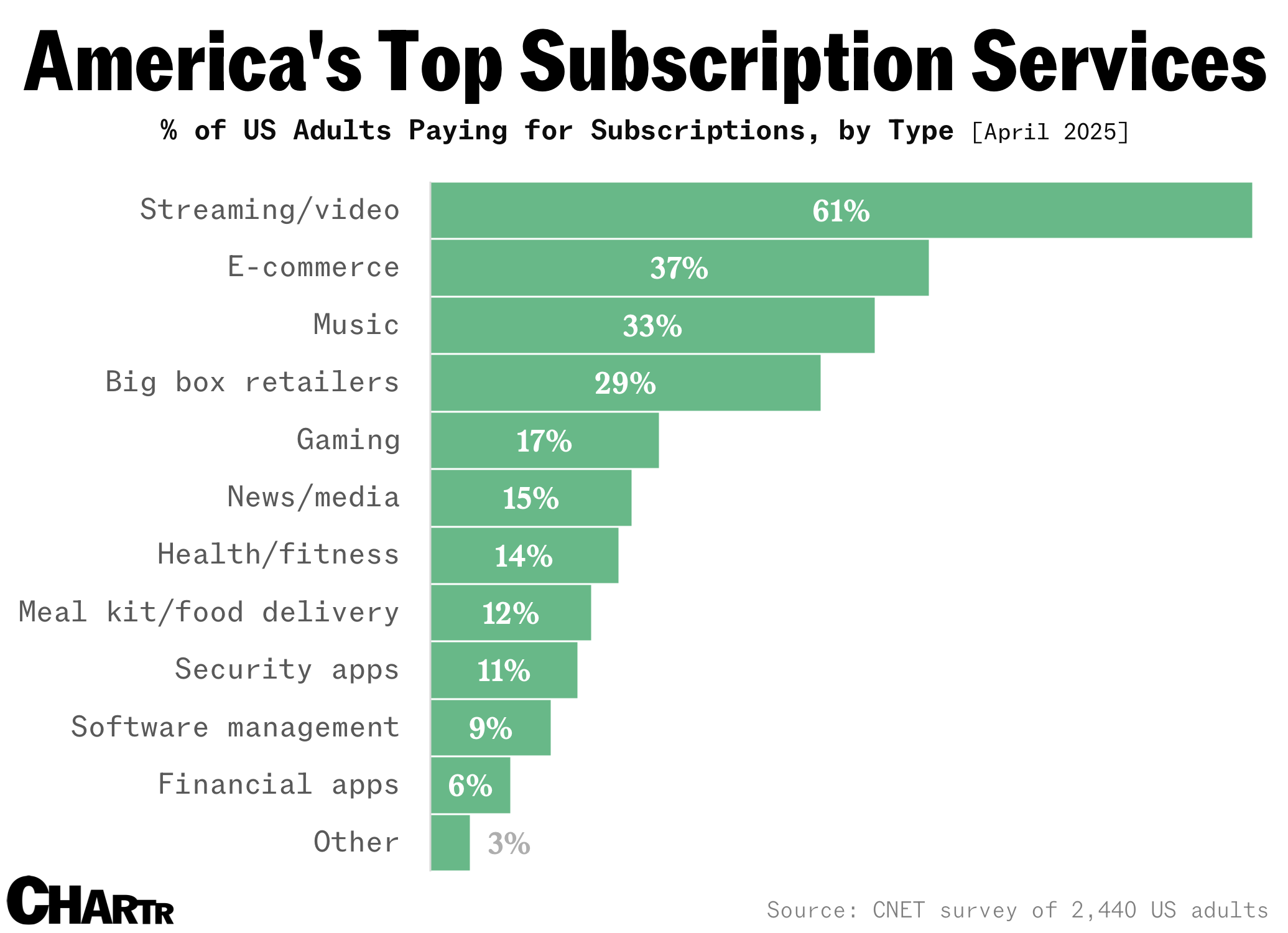
If the buyout does break through the wall of opposition it now faces — with even the president having weighed in to say the deal “could be a problem” — the lure of having the platforms’ combined content mega-libraries under one roof could help boost the share of Americans who pay for streaming/video subscriptions, which currently sits at 61% per an April CNET survey conducted by YouGov.
While that figure might seem low (looking at you, people who still sign in to their parents’/friends’/ex’s account), it still makes streaming services the biggest subscription category in 2025, ahead of e-commerce and music platforms. CNET found that four in five Americans had paid for a subscription service in the last 12 months, spending an average of $90 each month, though Gen Z and millennials had both pared back their outlays.