Tech
Waymo With Bay Bridge
Waymo with the Bay Bridge in the background in San Francisco, California (Smith Collection/Getty Images)

Mapped: Where Google’s Waymo is, will be, and might go

Waymo is operating more than 2,000 autonomous vehicles and testing in many markets. Meanwhile, Tesla’s autonomous operations are tiny, but its ambitions are huge.

As Tesla stakes its future on autonomous cars and as self-driving competitors like Amazon’s Zoox start popping up, Google’s Waymo remains the elephant in the room.

Currently, Waymo is publicly operating more than 2,000 autonomous vehicles in five markets — Los Angeles, Atlanta, Austin, Phoenix, and the San Francisco Bay Area — and the company already intends to launch in five more: Dallas, Denver, Miami, Seattle, and Washington, DC.

It has also tested, or is currently testing, the service in a dozen other markets. We’ve comprehensively mapped Waymo’s operations for the first time, showing that the service has quietly made inroads across the country:

Meanwhile, Tesla CEO Elon Musk is pushing to surpass Waymo with the flip of a switch, as he theorizes that once the technology is tested sufficiently, many Teslas can drive themselves autonomously with the parts and software they already have.

“I think we’ll probably have autonomous ride-hailing in probably half of the population of the US by the end of the year,” Musk said on the company’s earnings call in July.

Tesla currently operates approximately 30 autonomous ride-hailing vehicles in Austin with safety monitors sitting in the passenger seat. The company is also operating a more traditional ride-hailing service in the Bay Area, where people can pay to be driven around by a person in the driver’s seat using the company’s supervised full self-driving tech.

While the public can download the app and join the waitlist for both, the company hasn’t stated how many people it’s allowing to use the program. (I’m still on the waitlist.)

Musk has repeatedly said Tesla will be able to scale its autonomous driving service far faster than Waymo, as Tesla owners will be able to add their personal vehicles to the robotaxi network for extra income. On the last earnings call, he pegged that milestone for “next year.”

But for now at least, Waymo is far in the lead.

More Tech

See all Tech
tech

Both companies are warning lawmakers that without a federal framework for autonomous vehicles — something Congress has debated for years and is now considering again as part of broader transportation legislation — China will seize the lead.

“The United States is locked in a global race with Chinese AV companies for the future of autonomous driving, a trillion-dollar industry comparable in strategic importance to flight and space travel,” Waymo Chief Safety Officer Mauricio Peña said in written remarks ahead of the event. “In the absence of US leadership on a national AV legislative framework, Chinese AV competitors will fill the gap and set the safety and technical standards for the rest of the world.”

Tesla Vice President of Vehicle Engineering Lars Moravy, for his part, wrote, “If the US does not lead in AV development, other nations — particularly China — will shape the technology, standards, and global market.” He added, “China will be the dominant manufacturer of transportation for the 21st century.”

The two companies face steep competition from Chinese firms, including Baidu, which operates a robotaxi service, and BYD, whose EVs offer driver assistance technology similar to Tesla’s Full Self-Driving and which has been outselling the US automaker.

Both companies are warning lawmakers that without a federal framework for autonomous vehicles — something Congress has debated for years and is now considering again as part of broader transportation legislation — China will seize the lead.

“The United States is locked in a global race with Chinese AV companies for the future of autonomous driving, a trillion-dollar industry comparable in strategic importance to flight and space travel,” Waymo Chief Safety Officer Mauricio Peña said in written remarks ahead of the event. “In the absence of US leadership on a national AV legislative framework, Chinese AV competitors will fill the gap and set the safety and technical standards for the rest of the world.”

Tesla Vice President of Vehicle Engineering Lars Moravy, for his part, wrote, “If the US does not lead in AV development, other nations — particularly China — will shape the technology, standards, and global market.” He added, “China will be the dominant manufacturer of transportation for the 21st century.”

The two companies face steep competition from Chinese firms, including Baidu, which operates a robotaxi service, and BYD, whose EVs offer driver assistance technology similar to Tesla’s Full Self-Driving and which has been outselling the US automaker.

$126B

Waymo is now worth $126 billion, after raising $16 billion in a funding round led by its parent company, Google. With this capital, Waymo plans to expand its robotaxi service to more than 20 new cities, including international markets.

On Wednesday, Waymo’s chief safety officer will testify at a Senate Committee on Commerce, Science, and Transportation hearing, alongside a representative for Tesla, urging lawmakers to create a national regulatory framework for autonomous vehicles.

tech

Dan Ives thinks Tesla will someday merge with SpaceX, too

Wedbush Securities analyst Dan Ives is just like us: he thinks that Elon Musk’s Tesla and SpaceX could someday become one company.

In a note this morning, Ives argued there’s a “growing chance” Tesla will eventually merge in some form with newly merged SpaceX and xAI, as Musk builds what he sees as a single, sprawling AI ecosystem spanning both space and Earth.

Over time, Ives wrote, he thinks Musk will look to “combine forces/technologies,” with the long-term goal of owning and controlling more of the AI stack. Ives thinks Musk could achieve that “holy grail” over the next year and a half.

Earlier today, we pointed out the myriad similarities between Tesla and SpaceX — shared impossible missions, common methods for achieving those goals, and a physics-first, economics-later ethos — as well as Musk’s long-standing penchant for knitting his companies together in the first place.

Over time, Ives wrote, he thinks Musk will look to “combine forces/technologies,” with the long-term goal of owning and controlling more of the AI stack. Ives thinks Musk could achieve that “holy grail” over the next year and a half.

Earlier today, we pointed out the myriad similarities between Tesla and SpaceX — shared impossible missions, common methods for achieving those goals, and a physics-first, economics-later ethos — as well as Musk’s long-standing penchant for knitting his companies together in the first place.

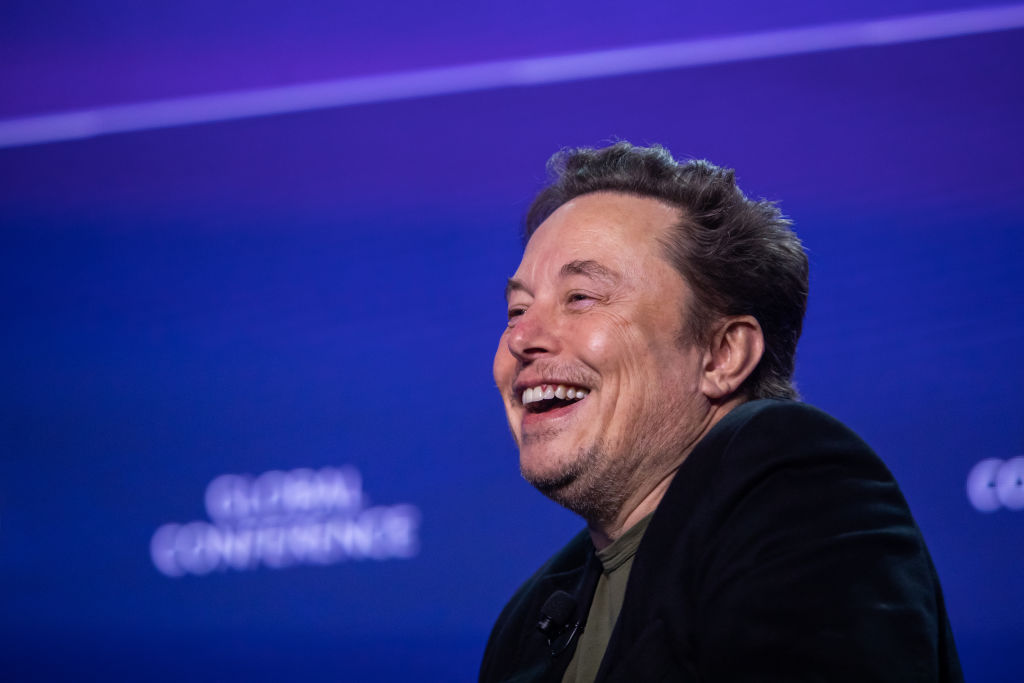
Elon Musk laughing

SpaceX merges with xAI, reportedly will seek an IPO valuation of $1.25 trillion

Elon Musk says his space company has merged with his AI company, with the lofty goal of eventually putting data centers in space.

Latest Stories

Sherwood Media, LLC produces fresh and unique perspectives on topical financial news and is a fully owned subsidiary of Robinhood Markets, Inc., and any views expressed here do not necessarily reflect the views of any other Robinhood affiliate, including Robinhood Markets, Inc., Robinhood Financial LLC, Robinhood Securities, LLC, Robinhood Crypto, LLC, or Robinhood Money, LLC.