



Lost in translation

Lost in translation
Tesla says FSD is “available” in China. What does that actually mean?
State of play

State of play
Quantum stocks soar after Trump administration awards $2 billion in grants
bellwether

bellwether
Walmart gives disappointing Q2 guidance after Q1 results hit estimates

Meta released a Reddit dupe. Reddit investors don’t like it.

Ross Stores surges as Q1 results beat expectations, full-year guidance raised
Imax surges on report it’s approached entertainment companies for a sale
AMD rises as CEO forecasts massive 5-year CPU demand growth
Chinese stocks drop as Beijing regulators launch crackdown on illegal cross-border securities activities
Zoom surges after beating estimates and raising forecasts
Latest News
Deep Dives
- Robinhood traders bought the dip — and that one, that one, and that one
- The power play behind Hyperion, Mark Zuckerberg’s colossal data center being built in rural Louisiana
- The cruise industry is booming thanks to younger consumers looking to “seacation”
- Reading an article online? It’s now a coin flip whether it was authored by a human or AI
Latest Stories

Take-Two’s “GTA 6” forecast feels absurdly conservative
Take-Two issued a 2027 net bookings forecast about $1 billion below Wall Street’s estimates. The stock is falling on Friday.

Report: White House AI oversight executive order DOA
After weeks of uncertainty, the White House’s plan to review frontier models before release appears dead.
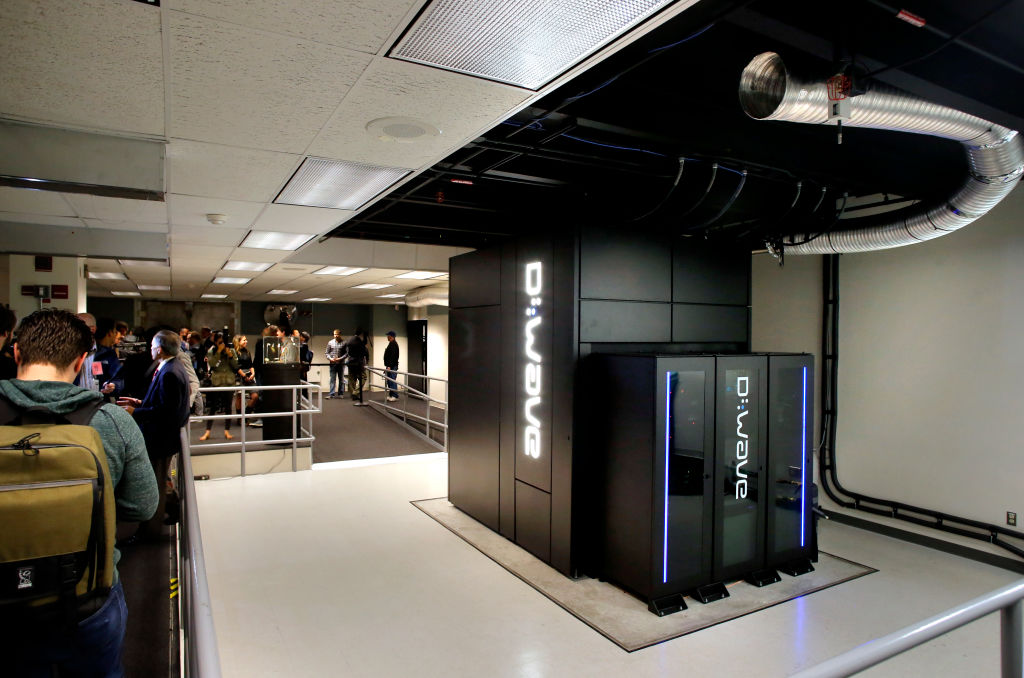
Quantum computing CEOs hope “validating” government backing proves their technology is no longer speculative
The government funding is a push to boost the foundational elements of quantum computing to get the industry ready for prime time. The CEOs of Infleqtion and D-Wave give us their thoughts.
Meta released a Reddit dupe. Reddit investors don’t like it.
Fresh on the heels of releasing a Snapchat dupe, which sent Snap down earlier this month, Meta seems to be meddling with Reddit, quietly releasing a Reddit-like Facebook app called Forum yesterday. After news of the “dedicated space built for deeper discussions, real answers and the communities you care about,” Reddit’s stock is down 4.5% today.
Last month, Reddit’s earnings report handily beat analysts’ expectations, but it continues to struggle with the perception that bigger tech companies — including Meta — investing heavily in AI will eat its lunch. The stock is down nearly 40% year-to-date.
Ross Stores surges as Q1 results beat expectations, full-year guidance raised
Ross shares are rising after the company delivered strong Q1 results, with sales topping Wall Street’s projections.
The stock soared 6.3% just after the open.
Key numbers:
Earnings per share of $2.02 vs. $1.47 year over year (estimate: $1.72).
Sales of $6.01 billion, up 21% year over year (estimate: $5.61 billion).
Comparable sales growth of 17% (estimate: 8.58%).
CEO Jim Conroy attributed the results to better traffic in stores. “Customer traffic was the primary driver of the strong sales trend as compelling merchandise assortments, higher customer acquisition and engagement from our ongoing marketing initiatives, and an improved in‑store experience are resonating with shoppers.”
The company also noted that transaction volume grew across all key demographics, including “income levels, ethnicities, and age groups, including younger customers.” Sales were also likely buoyed by standard seasonal tailwinds, including consumer spending from tax refunds.
Backed by the strong quarter, the company lifted its full-year targets. Ross now projects same-store sales growth of 6% to 7%, up from the prior forecast of 3% to 4%, topping Wall Street’s estimate of 4.64%. It boosted its annual EPS guidance to a range of $7.50 to $7.74, versus the prior outlook of $7.02 to $7.36.
Ross Stores has been one of the retail sector’s standout performers this year, rising around 20% year to date as of Thursday’s close.
Imax surges on report it’s approached entertainment companies for a sale
Imax is on pace for its best trading day since 2021 following a Wall Street Journal report that it’s exploring a sale. Shares are up more than 15% in premarket trading on Friday.
The premium screen company has reportedly approached entertainment companies for a deal, though talks are early and may not come to fruition. Imax has been boosted in recent years by its higher ticket prices — a K-shaped trend in movie theaters — and last year accounted for more than 5% of domestic box office sales.
Theatrical release windows have become a large debate in Hollywood this year, amid the bidding war between Paramount and Netflix for Warner Bros. Discovery. It’s unclear if an entertainment buyer would favor its own films for Imax over a rival’s.
In the first quarter, Imax booked $81.4 million in sales, beating Wall Street expectations but down about 6.5% from last year, when China’s “Ne Zha 2” smashed records.

AMD rises as CEO forecasts massive 5-year CPU demand growth
AMD’s shares are rising in premarket trading after CEO Lisa Su delivered an optimistic demand forecast, predicting that the global market for CPUs will grow by more than 35% annually over the next five years, according to Nikkei Asia.
“About six months ago or 12 months ago, nobody was talking about CPU shortages,” Su said at an event in Taipei. “But as [AI] inferencing and agentic AI have really started to ramp up, the CPU market [will] continue to grow very much. Over the next five years, we see the CPU market growing at over 35% each year, and this is an area where we’re seeing very strong demand.”
The comments come as the computing demands of AI agents (in particular, the so-called “orchestration” of tasks) increase the need for CPUs in running models.
AMD also said this week it plans to invest more than $10 billion into Taiwan’s AI ecosystem alongside supply chain partners as it ramps production capacity for next-generation AI infrastructure. This investment will support the manufacturing ramp of AMD’s sixth-generation EPYC CPUs, code-named “Venice.”
Su added that CPU supply is now “tight” as inference demand accelerates, while bottlenecks are emerging across memory, power availability, and advanced packaging.
AMD shares have climbed sharply this year amid broader enthusiasm around AI infrastructure spending. The stock has risen more than 100% year to date. During AMD’s last earnings call, management told investors it now sees the server CPU total addressable market reaching $120 billion or more by 2030, according to Yahoo Finance.
Chinese stocks drop as Beijing regulators launch crackdown on illegal cross-border securities activities
Beijing’s top securities watchdog launched a crackdown against illegal cross-border trading and announced that it will penalize several popular online brokerages on Friday, bringing many Chinese ADRs lower in premarket trading, as the affected brokers’ clients will now only be allowed to sell shares, not buy.
Eight governmental agencies, including the China Securities Regulatory Commission, issued a joint statement on their comprehensive two-year plan to combat illegal cross-border trading after mainland markets closed on Friday, per Bloomberg.
The securities regulator separately followed with plans to impose penalties on online brokerages Tiger Brokers, Futu Holdings, and Longbridge Securities for operating in domestic markets without a license, with plans to confiscate all “illegal gains” from these firms. Hong Kong’s markets regulator also said that it had ordered all licensed corporations to address money laundering risks and ensure additional measures for Mainland Chinese investors.
US-listed shares of Futu and Up Fintech, which owns Tiger, sank as much as 40% on the news. Shares of other Chinese ADRs, including Big Tech names Baidu, Alibaba, and Temu owner PDD Holdings, also dipped following the announcement.
Zoom surges after beating estimates and raising forecasts
Zoom is up around 8% in premarket trading after posting earnings Thursday that beat analysts’ expectations and raising its fiscal-year guidance.
For its Q1 FY 2027, the video communications platform reported:
Adjusted earnings per share of $1.55, versus analysts’ $1.42.
Revenue of $1.24 billion, up 5.5% from a year earlier and above the consensus estimate of $1.22 billion.
Guidance for 2027 fiscal-year revenue of $5.08 billion to $5.09 billion, up from its earlier forecast of $5.07 billion to $5.08 billion. Zoom now expects annual adjusted EPS to be between $5.96 and $6.00, up from its prior forecast of $5.77 to $5.81.
The company reported strong enterprise sales growth as well as strong demand for its AI products, including AI Companion and My Notes.
The company’s $51 million investment in Anthropic also appears to be paying off. Zoom reported a $152 million gain on strategic investments, which are currently worth $1.9 billion. Last quarter the company disclosed that the “most significant portion” of its strategic investment assets comes from Anthropic, whose valuation has skyrocketed.
Today, Wedbush Securities analyst Dan Ives raised his Zoom price target to $120 from $110, “reflecting greater confidence in the ZM AI story that continues gaining momentum.”
While the stock has increased 20% year to date, it’s still far off its pandemic-era highs.

Workday jumps on positive Q1 earnings under returning CEO
Workday spiked as much as 10% after-hours on Thursday as the B2B software-as-a-service company announced first-quarter results.
Here are the numbers:
Q1 revenue of $2.54 billion (compared to analyst estimates of $2.51 billion).
Q1 adjusted earnings per share of $2.66 (estimate: $2.51).
Q1 subscription revenue of $2.35 billion (estimate: $2.33 billion).
This was Workday’s first quarter with its returning CEO, cofounder Aneel Bhusri, who retook the reigns in February of this year. It was also a test to see how the company’s ongoing AI pivot has been going, as AI investment often comes with steep costs that may not initially be fully counterbalanced by savings through efficiency.
Workday has been trading down 40% since the beginning of 2026.
In February, the company also cut about 2% of its global workforce (~400 positions) — which follows larger-scale layoffs last year as the company leaned into AI.
The software company is also still litigating a nationwide class-action lawsuit that alleges it uses said AI to algorithmically discriminate against certain job seekers based on age, race, and disability (which the company disputes).
Looking ahead, the company said it projects 2027 subscription revenue outlook of $9.925 billion to $9.950 billion, on par with analyst estimates.
“Our focus remains on executing on our agentic AI roadmap while driving operational efficiencies as we scale,” said CFO Zane Rowe. The company said in a Q4 earnings call that AI was involved in roughly half of all customer base transactions.

Take-Two reaffirms November release for “GTA 6,” reports better-than-expected Q4 net bookings
Take-Two said Rockstar will kick off its “GTA 6” marketing campaign this summer.

Report: OpenAI’s Q1 revenue was $5.7 billion, beating Anthropic
The neck-and-neck race between OpenAI and Anthropic as the AI companies barrel toward their expected IPOs this year is shaking out some internal numbers for would-be investors to ponder.
The Information is reporting that OpenAI’s first-quarter revenue was ~$5.7 billion, about $1 billion ahead of Anthropic’s revenue for the same period.
The Wall Street Journal recently reported that Anthropic is on course to more than double its first-quarter revenue of $4.8 billion to $10.9 billion in the second quarter. It is not known what OpenAI is projecting for Q2.
Recently, The New York Times reported that Anthropic’s current fundraising round seeking to raise between $30 billion and $50 billion comes with a valuation of up to $950 billion, putting it ahead of OpenAI’s latest reported valuation of $850 billion.
The Wall Street Journal recently reported that Anthropic is on course to more than double its first-quarter revenue of $4.8 billion to $10.9 billion in the second quarter. It is not known what OpenAI is projecting for Q2.
Recently, The New York Times reported that Anthropic’s current fundraising round seeking to raise between $30 billion and $50 billion comes with a valuation of up to $950 billion, putting it ahead of OpenAI’s latest reported valuation of $850 billion.
US gas prices rise again, sitting at their highest levels in 4 years ahead of Memorial Day weekend
Just days away from Memorial Day weekend, the national average of US gas prices has risen from a week earlier, sitting at the highest they’ve been in four years.
The price is currently $4.56 a gallon, up $0.03 from last week and $1.38 higher than this time last year, according to the American Automobile Association. Today’s prices are right around what customers were paying four years ago, when the price on Memorial Day was $4.61. Gas prices experienced a short-lived dip earlier this month before rising again.
Gasoline is in high demand ahead of Memorial Day weekend, and the Strait of Hormuz remains closed because of the war in Iran, leaving prices elevated as more drivers hit the road. GasBuddy’s Patrick De Haan predicts that gas prices could soon hit $4.80 a gallon soon amid the strait’s closure.
Oil prices ticked up slightly on Thursday, with West Texas Intermediate sitting around $100 a barrel, after plunging on Wednesday.
(Event contracts are offered through Robinhood Derivatives, LLC — probabilities referenced or sourced from KalshiEx LLC or ForecastEx LLC.)

Gasoline is in high demand ahead of Memorial Day weekend, and the Strait of Hormuz remains closed because of the war in Iran, leaving prices elevated as more drivers hit the road. GasBuddy’s Patrick De Haan predicts that gas prices could soon hit $4.80 a gallon soon amid the strait’s closure.
Oil prices ticked up slightly on Thursday, with West Texas Intermediate sitting around $100 a barrel, after plunging on Wednesday.
(Event contracts are offered through Robinhood Derivatives, LLC — probabilities referenced or sourced from KalshiEx LLC or ForecastEx LLC.)


Alphabet’s Waymos are still getting caught in floods after recall
Waymo, the self-driving subsidiary of Alphabet, has paused operations in Atlanta after a new report of a vehicle driving into a flooded roadway and getting stuck, TechCrunch reports. The news comes just weeks after the company recalled its fleet of nearly 4,000 driverless cars to deal with a previous flood incident in San Antonio, where the service is also paused.
After that incident, Waymo instituted an “interim remedy” to make the vehicles “exclude additional operating conditions that present an elevated risk of encountering a flooded, higherspeed roadway,” but added that it was still “developing the final remedy for this recall.”
As we’ve noted, Waymo has mostly kept its rollout — now public in 11 cities — to more temperate climates, as severe weather poses more challenges to autonomous vehicles.

After that incident, Waymo instituted an “interim remedy” to make the vehicles “exclude additional operating conditions that present an elevated risk of encountering a flooded, higherspeed roadway,” but added that it was still “developing the final remedy for this recall.”
As we’ve noted, Waymo has mostly kept its rollout — now public in 11 cities — to more temperate climates, as severe weather poses more challenges to autonomous vehicles.