

Morepassengers
fewer planes
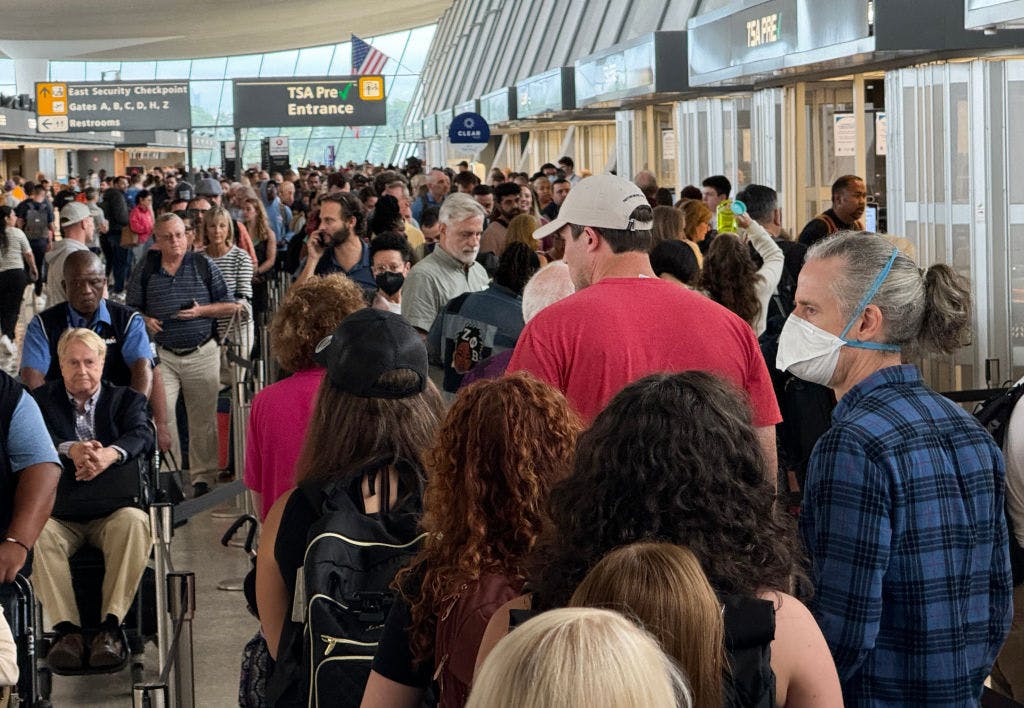
We’re flying in record numbers. Why are so many planes grounded?
Demand for air travel is skyrocketing, but even more planes are sitting unused than before the pandemic. And it’s not just because of Boeing.
Air travel took a massive, Covid-induced hit in 2020. Almost overnight, as the world shut down to try to stem the spread of coronavirus, airlines grounded planes. Nearly 80% of aircraft were stuck on the tarmac in Europe, according to aviation-analytics firm Cirium. In the United States, which took a more lax approach to lockdowns, half of planes were grounded at the May 2020 peak.
We’re now four years removed from the peak of the pandemic — even though the virus is still with us — and travel of all types has seen a resurgence. A basket of more than 1,500 stocks in hotel and entertainment services has risen 40% since March 2020.
Air travel is booming, the International Civil Aviation Organization, a UN agency, reported. Passenger demand is 3% higher than 2019 levels, ICAO data shows, and could reach 4%. Asian routes are still experiencing lower demand than they did prepandemic, but almost everywhere else in the world has recovered. The ICAO estimated that airlines’ operating profits last year reached $39 billion — roughly even with 2019.
Yet the proportion of the world’s plane fleet that remains stuck on the tarmac is still higher than it was before the pandemic. Then, about 1 in 10 aircraft was grounded. Now 14% are, according to Barclays research. This July, the last data available, more than 4,300 commercial aircraft were grounded, including 11% of Boeing 777s, 15% of Airbus A330s, and 27% of Airbus A380s.
Demand is booming, but planes are being left in hangars. What gives?
“There’s a paradox,” Robert W. Mann, principal at aviation-industry analyst R.W. Mann & Company, said. “On the one hand, travel is very strong. On the other hand, there’s evidence that there’s still too much capacity flying, and that’s evident in pricing.”
Some of the planes also are the wrong size, said John Strickland of aviation analyst JLS Consulting: large jumbo jets like the Boeing 747 and Airbus A380s are seen as too big to run on some routes, while some airlines see the 747 as too inefficient to make money.
“There were definitely cases of regret from some airlines,” Strickland said. “British Airways, for example, retired over 30 jumbos and has been left quite short of capacity,” he added.
Along with a mismatch in plane types to meet demand, there are other issues compounding the problem and causing the topsy-turvy aviation market, where business is booming but planes are sitting on the ground. Some planes have encountered engine troubles and require maintenance or checking. Most recently, in September an Airbus A350 engine fire during a Cathay Pacific flight led to Europe-wide inspections.
“To the issue of why aircraft are in storage or not being flown, the primary reason at this point is a shortage of serviceable engines,” Mann said. “Engines are coming out of service early due to defects in design and manufacture.” While it would be expected that older planes are more likely to be grounded long-term — about 30% of those that’ve been in service for more than 25 years are — 1 in 10 planes under 5 years old is parked, too.
There’s an issue here, too: what should be a simple check and fix often isn’t.
“The amount of specialist manpower that was let go of by many parts of the supply chain, not least manufacturers and subsuppliers, during the pandemic has not been replaced, and those kinds of skills cannot just be picked up at a moment’s notice,” Strickland said.
Production backlogs “have been a really serious headache,” Strickland explained. Boeing’s production woes have hit the headlines most frequently, but its major competitor, Airbus, is also facing issues.
The Pratt & Whitney engines that power many Airbus planes used on short flights have encountered problems. About a quarter of Airbus jets from low-cost European carrier Wizz Air have been grounded, with numbers expected to increase to a third of the carrier’s Airbus fleet by next summer.
Strickland said fixes are taking on average around 300 days to happen. “There are no spare engines — or very few — available to replace those while they’re in the repair shop,” he said.
The Pratt & Whitney issue isn’t a problem affecting just Wizz Air. AirBaltic, another low-cost European airline, has about a third of its A220 fleet grounded for an average of 13 months, Mann said. Roughly a fifth of Spirit Airlines’ fleet is grounded for the same issue. Planes with Pratt & Whitney account for the largest proportion of park-ups worldwide, Barclays found — 21% of the total.

Spirit sees engine issues as a problem that isn’t going away any time soon. On September 1, it furloughed 186 pilots, and physically doesn’t have enough planes for all the pilots it employs.
The industry is managing to get away with two seemingly opposite market-moving issues — tight supply and increased demand — by reconfiguring aircraft to take more passengers and flying them for longer. That’s insulating them from the worst of the problems.
“We have this situation where we’re short of airplanes, and we’re short of new airplanes in particular,” Mann said. “When you’re short of aircraft, you try to fly earlier in the day and you fly later at night, so you get more serviceable hours or revenue hours on the aircraft each day. But in this case, you’re also producing more seats every flight.”
It’s not a sustainable strategy in the long term, Mann reckons, and he said the industry has to untangle itself to continue growing. But that requires reliable engines being installed on aircraft, making them serviceable, and getting them back in the air — something the industry is struggling with and could find problematic for a while yet.
Chris Stokel-Walker is a UK-based journalist. His latest book is How AI Ate the World.



