
Business
Elon Musk
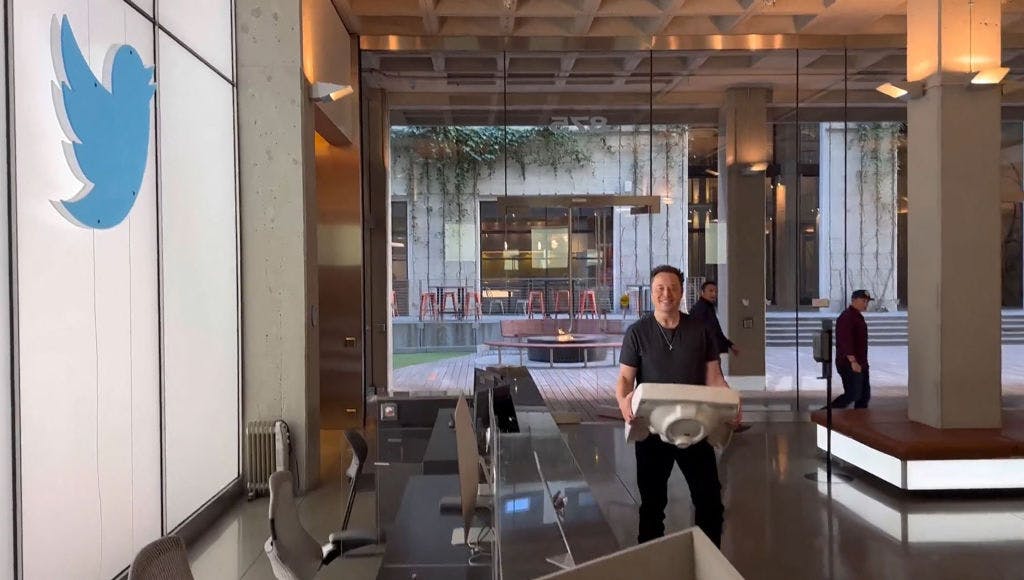
Elon Musk (AFP via Getty Images)
Weird Money

Investors in flailing social network X might snatch victory from the jaws of defeat

While X the social-media company hasn’t been doing so hot, X the xAI shareholder is looking pretty good.

Jack Raines

Elon Musk’s acquisition of Twitter was, in a purely financial sense, a bad deal, and everyone (including Musk!) knew it was a bad deal. 

The primary issue was that Musk agreed to pay $54.20 per share, or $44 billion, to acquire the company right as the entire tech sector sold off. Musk made the initial bid of $44 billion on April 14, 2022, and, after trying to bail, he finally closed the deal on October 27, 2022. For context: in that time frame, Meta’s stock price slid from $210 to $99 per share.

Say what you want about the value of X as a beacon of free speech or a “digital town square” or whatever, but the price he paid at the time that he paid it was way too high — hence why Musk tried and failed to bail. To make matters worse, the post-acquisition business continued to deteriorate, with advertisers like Apple, Coca-Cola, and Uber leaving (though, since the election, many of these companies are looking to come back to the site). Between the steep acquisition price and decline in advertising revenue, investors have since marked down their internal valuations of X big time, with Fidelity pricing its stake in the company 79% lower than its acquisition price, effectively valuing X at ~$9.4 billion.

However! A pending fundraise for one of Musk’s other ventures, AI startup xAI, has introduced an interesting wrinkle for X shareholders.

The most visible connection between X and xAI is X Premium users’ access to xAI’s chatbot, Grok. But it’s X investors, not users, that have the most to gain from Musk’s AI business. Musk, an OpenAI cofounder, launched xAI in March 2023 to compete against his former project, and since then he’s had no issues attracting investors. Yesterday, I wrote about xAI closing in on a $6 billion fundraise that will value the company at $50 billion. This 11-figure price tag is huge for shareholders in his struggling social-media company, thanks to a Musk tweet from last November: “X Corp investors will own 25% of xAI.”

To do some quick math here, per Fidelity’s estimate, X was worth $9.4 billion in September, and per Musk’s tweet (assuming this figure is still accurate), X Corp investors will own a $12.5 billion stake in xAI after the fundraise. Even if we account for some dilution as a result by outside fundraising, it’s quite possible that X’s stake in xAI is worth at least as much as the equity value of X itself: an 18.8% ownership stake in xAI would equal the total equity value of X.

And, unlike X, which has seen its business deteriorate over the last two years, xAI is booming. Last week, The Information published a piece covering xAI’s newest data center in Memphis, Tennessee:

Two things about Musk’s supercomputer have jolted competitors: its size and the speed with which xAI built it. The supercomputer, fittingly known as Colossus, consists of 100,000 graphics processing units, the chips best suited to training and running AI software. That is several times bigger than similar supercomputers built in the past by Meta and other tech giants.

Stringing together so many GPUs into a single supercomputer isn’t as simple as it sounds because of how much power the servers consume and bottlenecks in the networking equipment used to connect the chips to each other. And completing the project as quickly as xAI did is unheard of.

Musk and Nvidia, the AI chip powerhouse that supplied the GPUs for Colossus, said the data center and supercomputer were built in just 122 days. On a recent podcast, Nvidia CEO Jensen Huang said a GPU cluster of that size would normally take three years to plan and design and an additional year to get working.

The speed with which xAI built “the world’s largest supercomputer,” 122 days, has put Big Tech companies, AI competitors, and investors on notice. AI has largely been seen as a compute arms race: the companies with the most computing power can build the most powerful models, and the most powerful models will, eventually, come out on top. While OpenAI and Anthropic’s revenue figures still dwarf xAI’s, the latter now has the most powerful supercomputer on the market, and he wants to triple its size to 300,000 GPUs by next summer.

While Musk hasn’t shown much success running a social-media company profitably, you can’t deny his track record when it comes to infrastructure and manufacturing-related products. Tesla and SpaceX revolutionized their industries, and they’re now worth $1.1 trillion and $255 billion, respectively. AI warehouses feel more like Tesla and SpaceX than they do social media, and investors have been more than willing to bet on another Musk success story.

Thanks to xAI’s ballooning valuation, X shareholders are in an interesting position. On one hand, they paid way too high of a price for a social-media site that is, by any conventional measure, on the decline. And yet, that same investment proved to be a call option for Musk’s AI venture that could, quite possibly, more than compensate for paper losses on the social-media company.

Think about it like this: if you invested $4.4 billion in X for 10% of the company, and it’s down 75%, you’re left with a $1.1 billion stake in the social-media company. But let’s say that xAI becomes the big winner of the AI-model companies, hitting, I don’t know, a $200 billion valuation — it sounds crazy, but Musk is about to raise a $50 billion valuation, and OpenAI is worth almost $160 billion — and X shareholders maintain a 20% stake in xAI which would, at that point, be worth $40 billion. Your 10% stake in X would now control a $4 billion stake in xAI.

Investors who joined Musk’s bid to acquire Twitter were buying a social-media company (and allegiance with Musk, which, presumably, is worth a premium), but they may or may not have an interest in xAI. On the other hand, there are definitely investors who would like to invest in xAI, but can’t get allocation in a competitive round.

I feel like theres a trade to make here where an investor in X, who isn’t interested in xAI and wants to off-load their stake, could sell to another party who isn’t all that interested in X, but wants to backdoor their way to having a stake in xAI, no? If you’re bullish on xAI at a $50 billion valuation, wouldn’t you be willing to invest in the X stake that controls 25% of xAI?

For Musk, the biggest value prop of buying X was probably some mixture of enforcing “free speech” and ensuring that your tweets end up at the top of everyone’s timelines. For other investors, the biggest benefit might be its investment in Musk’s better performing AI startup.

More Business

See all Business
business
Tom Jones

Prime Day is here again and Amazon’s subscription service has never been more popular

Well, it’s that time of year again: many have made their wish lists, people are scraping together the money they’ve saved to pick out a perfect gift, some are presumably leaving out refreshments for the weary delivery drivers and, more and more, drones.

It’s Amazon Prime Day — meaning that it’s the second day of the four-day promotional event that Amazon still calls Prime Day — of course, and it’s even come early this year, with the company bringing the period into late June from July, when it’s been traditionally held for the last five years.

The Prime Age

Alongside the eyes and endless clicks that the arbitrary stream of listicles on “The Best Prime Day Deals” that almost every media outlet pours into, Amazon will also be cheering the fact that there’s now more Prime users than ever before to devour the retailer and its sellers’ sometimes-contested “discounts.” Indeed, according to the latest annual estimates from Consumer Intelligence Research Partners (CIRP), there were just over 200 million American shoppers using Amazon’s massive subscription service at the end of 2025.

business

Electronic Arts launches a platform to put more ads in its games

Video game publishing giant EA launched a new platform on Monday designed to make the process of selling immersive ad space in its popular games easier.

The company says the platform, called EA Advertising, allows brands to “integrate directly into gameplay through dynamic, real-time placements, from stadium signage to custom in-game content.”

More so than other studios, EA has incorporated advertising into its most popular titles. As Kotaku points out, the company’s ad efforts stretch as far back as 2006. Several of its sports franchises already feature partnerships with brands like Visa, Lowe’s, Red Bull, and PepsiCo.

In-game advertising hasn’t exactly been embraced by fans, but industry experts expect it to ramp up as companies seek more revenue to offset higher games budgets and surging memory costs. EA rival Take-Two has taken a different approach, with CEO Strauss Zelnick recently saying the company was “not at risk of doing brand partnerships” in the forthcoming “Grand Theft Auto VI,” and that ads in full-price games seems “unfair.”

The $55 billion deal to take EA private, led by Saudi Arabia’s Public Investment Fund, is set to close at the end of this month. Being the largest leveraged buyout in history, EA will likely look for more ways to boost revenue to cover interest payments.

More so than other studios, EA has incorporated advertising into its most popular titles. As Kotaku points out, the company’s ad efforts stretch as far back as 2006. Several of its sports franchises already feature partnerships with brands like Visa, Lowe’s, Red Bull, and PepsiCo.

In-game advertising hasn’t exactly been embraced by fans, but industry experts expect it to ramp up as companies seek more revenue to offset higher games budgets and surging memory costs. EA rival Take-Two has taken a different approach, with CEO Strauss Zelnick recently saying the company was “not at risk of doing brand partnerships” in the forthcoming “Grand Theft Auto VI,” and that ads in full-price games seems “unfair.”

The $55 billion deal to take EA private, led by Saudi Arabia’s Public Investment Fund, is set to close at the end of this month. Being the largest leveraged buyout in history, EA will likely look for more ways to boost revenue to cover interest payments.

business

JM Smucker says it sold $1 billion worth of Uncrustables in FY2026

After years of booming sandwich sales, JM Smucker has finally earned a billion-dollar crust.

On Tuesday, the company reported results for fiscal year 2026, highlighting better-than-expected profits driven by higher prices for coffee and sweet baked goods. However, at another point on the earnings call, CEO Mark Smucker pointed to one particularly jammy figure: in line with previous forecasts, the company sold $1 billion worth of its (almost always) crustless sandwiches, Uncrustables, in the last year alone.

business

Paramount reportedly offers concessions to resolve multistate antitrust investigation

Paramount has reportedly offered up some concessions in an effort to prevent an antitrust lawsuit by California and about 10 other states, according to Bloomberg reporting on Monday.

Reuters first reported on the potential suit from a group of unnamed states last week, which could throw a wrench in Paramount’s plans to buy rival Warner Bros. Discovery in a Hollywood megamerger.

The list of concessions is unknown, though Bloomberg previously reported that Paramount is open to divesting some of its kids TV assets to appease EU regulators.

Late last month, reports said US regulators appeared likely to approve the $110 billion merger, following a meeting between Paramount CEO David Ellison and DOJ antitrust staffers.

The list of concessions is unknown, though Bloomberg previously reported that Paramount is open to divesting some of its kids TV assets to appease EU regulators.

Late last month, reports said US regulators appeared likely to approve the $110 billion merger, following a meeting between Paramount CEO David Ellison and DOJ antitrust staffers.

$98B ⛽

The IATA released its latest financial outlook for the airline industry over the weekend, forecasting a $98 billion jump in the sector’s collective fuel bill. The world’s largest trade group representing airlines expects the oil spike to halve profits by 49% from last year to $23 billion.

The group also expects profit margins to halve year over year, falling from 2025’s 4.2% to 2%. Still, revenue is expected to climb to $1.17 trillion from $1.07 trillion.

A surge in the cost of jet fuel has rocked US and global airlines this year, leading Delta Air Lines, United Airlines, American Airlines, Southwest Airlines, JetBlue, and others to raise fares and ancillary charges like bag fees. Low-cost carriers, which operate on smaller margins, have been squeezed the hardest, resulting in Spirit’s shutdown.

“It’s a tough year for all airlines, especially those whose balance sheets had not yet recovered from COVID. And, of course, for those operating in the Gulf,” said IATA Director General Willie Walsh, who added that demand is holding up and about half of passengers expect to spend more on travel this year. “That bodes well for a strong northern summer peak season. The big unknown is how long travelers and shippers can tolerate the higher costs of connectivity.”

Latest Stories

Sherwood Media, LLC and Chartr Limited produce fresh and unique perspectives on topical financial news and are fully owned subsidiaries of Robinhood Markets, Inc., and any views expressed here do not necessarily reflect the views of any other Robinhood affiliate, including Robinhood Markets, Inc., Robinhood Financial LLC, Robinhood Securities, LLC, Robinhood Crypto, LLC, Robinhood Money, LLC, Robinhood U.K. Ltd, Robinhood Derivatives, LLC, Robinhood Gold, LLC, Robinhood Asset Management, LLC, Robinhood Credit, Inc., Robinhood Ventures DE, LLC and, where applicable, its managed investment vehicles.
