

Pep in your step
Caffeination Nation
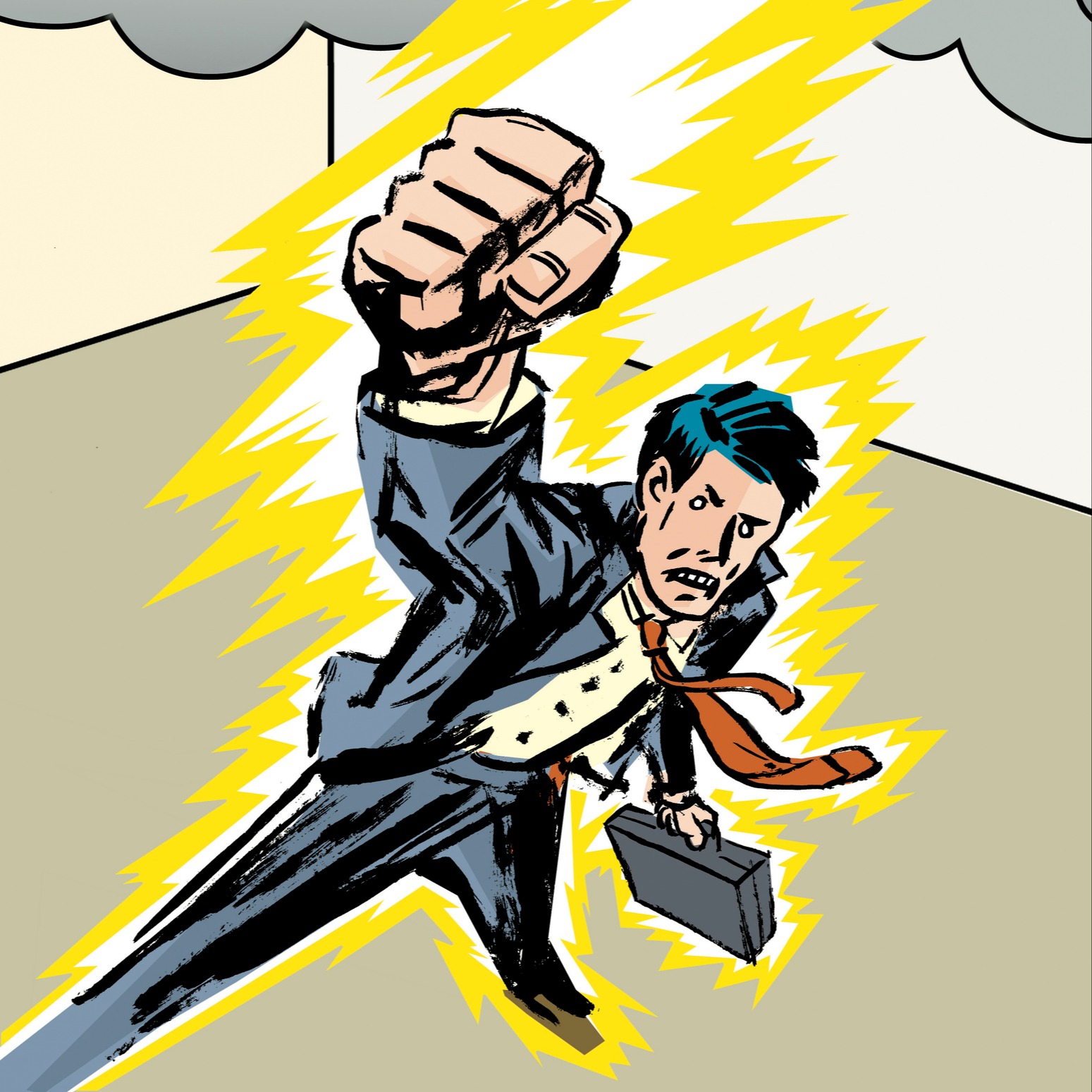
America’s rising addiction to caffeine has fueled a $21B energy drinks industry
Celsius, Monster, Rockstar — the people need their boost
Since prehistory, humans have been on the hunt for a bigger and better drinkable pick-me-up. Tea was first: the Chinese discovered its energy-enhancing properties a millennia or so BC. Then coffee, which came some 2,000 years later by way of Ethiopia. The caffeine-bearing kola nut was used medicinally as far back as the 12th century and found its way into 18th-century British medicine chests as cola tonic. The first Coca-Cola, with cocaine from the coca leaf and caffeine from the kola nut, was first served in Atlanta in 1886.
Today the industry behind liquid pick-me-ups is evolving furiously. Nowhere is this more obvious than the beverage fridge at your local gas station. “The energy-drink category is a maturing category yet still incredibly innovative,” Jeff Lenard, a spokesman for the National Association of Convenience Stores, said. C-stores, as they’re known, are a vital retail foothold for new beverage brands. An apocryphal industry tale has it that Red Bull only started really moving units in the US after the company realized that quick-stop owners and customers were more willing to test-drive their new drink, a dynamic borne from smaller volume targets and younger, thirstier, more harried shoppers, compared to slower-moving grocery-store patrons. (Beverages are the top purchase for roughly half of all c-store visitors, NACS data has shown.)
“Whether it’s a pick-me-up or some sort of diet function… this beverage solves a problem,” Lenard said. No waiting for a pot of coffee to brew, no debating whether a soda is worth the sugar. Energy drinks are portable, flavorful, and promise to put some pep in your step — perfect for immediate gratification.
Red Bull is the world’s best-selling energy drink. But at 80 milligrams of caffeine in an 8.4-ounce can (a concentration of 10mg per ounce), it’s not even the strong stuff. Celsius, one of the hottest brands in the category, contains 200mg of caffeine in each 12-ounce can. Bang, among the category’s most colorful entrants, offers 300mg per 16-ounce can. In 2006, the top five best-selling energy drinks had a caffeine concentration of 9.9mg/ounce, on average, based on sales and nutrition data analyzed by Johns Hopkins University researchers. In 2023, that figure crept to 13mg/ounce, according to national sales figures from Circana and some back-of-the-napkin math by Sherwood Media.
These bigger buzzes, along with attention-grabbing, Jolly Rancher-meets-Miss Chiquita flavors, are driving serious sales volume. The American energy-drinks segment is up nearly 10% in chain retail last year on sales of over $21 billion, Nielsen scan data analyzed by consulting group 3Tier Beverages showed. Monster is said to be the best-performing stock of the past three decades, and Celsius is up about 5,000% in the past five years. The sustained, explosive growth is changing customer expectations for caffeine delivery in bold new ways.
“Carbonated soft drinks, specifically sodas, have been the vast majority of non-alc beverages, and it's been losing that for 20 or 30 years now,” said Jim Watson, the executive director of beverage research at Rabobank. Some of that volume has shifted to no-calorie seltzers, waters, and the like.
But the addled among us have graduated to energy drinks, where bang-for-buck and caffeine-for-calorie reign supreme, and the flavors and ingredients verge on otherworldly. For every C4 Frozen Bombsicle, there’s a Reign Orange Dreamsicle; for every Bang Candy Apple Crisp, a Ghost Strawbango Margarita. The performance claims range from aspirational to outrageous, with proprietary compounds like “Carnipure” and “Super Creatine” that claim increased focus, increased gains, increased everything. And the health profiles! Older energy-drink brands often contain as much sugar as traditional sodas, or more, but newer models are delivering “functionality” with no sugar and calorie counts from zero to 10. What’s not to love?
“We were starting from an odd place where a lot of people drank a drink that is neither particularly healthy nor massively caffeinated” in soda, Watson said. People are seeking bigger boosts, more varied flavors, and better (or at least better-sounding) health profiles. “There are constantly new flavors, new functionality, new brands. And that makes it a pretty hot industry.”
By the time energy-drinks arrived on American shelves in earnest — which most observers point to the launch of Jolt Cola in 1985, two years before Red Bull launched in Europe — there was already a massive US market for caffeinated beverages thanks to soda and coffee. While the American energy-drink category found traction, neither its “share of throat” (to use some of the industry’s weird jargon) nor the caffeine levels of the drinks themselves exploded off the rip. Jolt touted “all the sugar and twice the caffeine” of soda, but at 5.9mg/ounce, it was only half as potent as a cup of coffee. Red Bull launched in the US, in 1996, with roughly double soda’s caffeine content. Monster, its biggest competitor, hit shelves in 2002 with the same potency and twice the serving size.
Unlike soda, which the Food and Drug Administration has held to 5.91mg/ounce since 1980, there was no law holding back energy drinks when it comes to caffeine. That stands: “The term ‘energy drinks’ is a marketing term. It’s why the FDA doesn’t have a specific category or specific regulations for energy drinks,” an FDA spokesperson told me. The agency has said for years that 400mg of caffeine a day is “not generally associated with dangerous, negative effects,” but that’s a recommendation for consumers, not a rule for producers. Consumer-advocacy groups at turns have called on the authority to curb what they consider to be energy drinks’ kid-friendly flavors and labels, deficient ingredient disclosures, and excess-for-excess’ sake approach to marketing.
Fringe brands with names like “Cocaine” and “Spike Shooter” and caffeine concentrations north of 30mg/ounce have not soothed those concerns. Nor have fatal cardiac arrests over which various larger producers have been sued, though they’ve also failed to dissuade demand. After news broke last year that Panera Bread was facing lawsuits alleging that two customers died after consuming the chain’s caffeinated Charged Lemonade, people still couldn’t stay away. (Panera has since stopped selling the drink.)
Experts attribute the turn to a few factors. Over the past two decades, Monster and Rockstar did distribution deals with the Coca-Cola Co. and PepsiCo, respectively, helping to streamline, expand, and deepen their presence in the market. More Americans got more familiar with the concept of a big can full of in-your-face flavor and coffee-replacing levels of coffee. “Once they gained heft in distribution,” Lenard said, “that’s where things really started to advance.”
Another big bang on the tweak-out timeline was, well, Bang. The brand was late, launching in 2012, but it came on strong. In 2018, it did a billion dollars in sales, according to analysis of NielsenIQ scan data by the trade publication BevNet; in 2019, it posted nearly 725% year-over-year sales growth. Its caffeine content, flavor lineup, and “functional,” fitness-aligned profile hit the market hard. Cue Reign, Monster’s 18.75mg/ounce challenger, which resulted in some gnarly lawsuits between the firms over trademarks and advertising claims. In 2022, Monster bested Bang, winning hundreds of millions of dollars in judgments against its one-time rival; it bought the firm out of bankruptcy for $362 million the following year.
What’s next for Big Buzz? “Energy drinks still don't work in every occasion,” Watson said. Coffee may have lost the gas station, for example, but it’s still strong at home, where energy drinks are not. Meanwhile, brands like Alani Nu, a line of energy drinks and supplements launched in 2018 by fitness influencer Katy Hearn, are finding an entire segment of new consumers: women intrigued by its more culinary flavors (like a nonalcoholic mimosa) and sleek, cheerful aesthetics.
The gender skew has dogged energy drinks in the US since their inception — literally because drinking potent drinks with dangerous-sounding names is a way to be “associated with the engagement in extreme sports or an otherwise active and competitive lifestyle,” one oft-cited 2015 study from researchers at the University of Akron and Texas Tech University suggested. (See also: PowerThirst.) The industry leaned into this space with edgy branding, action-sports sponsorships, and so on. But times are changing. “With Celsius, and Alani Nu in particular, the influx of female consumers is such a huge part” of their success, Roth said. The newer entrants are “welcoming new consumers and that’s also helping to change the trajectory” of the whole segment.
The functionality isn’t just about caffeine anymore either. New potions with healthy halos have entered the sector. “The idea of taurine and ashwagandha being relatively common words to use at large is a good indicator of how far” customer expectations have progressed, Bryan Roth said. He edits Sightlines, a publication that provides insights and analysis on consumer packaged goods and alcohol. Products that can, or claim to, smooth out caffeine crashes and improve focus are becoming new “table stakes” for the segment.
“For people who’ve been energy-drink consumers for a long time,” Roth said, “there’s the potential for a natural progression to look for more premium products.”
Whether that means caffeine’s mainstream moment will transcend beverages entirely remains to be seen. Investors are betting millions on caffeinated breath sprays like Vae and Pzaz. Candy is getting the stim treatment, too, with mints (Rally, Viter), gummies (Punch’d, Jolt), and more. Will they follow energy drinks’ trajectory into a post-beverage caffeine boom? It’s a brave new world, and evidently the pursuit of a better buzz is energizing in itself.
Dave Infante is an award-winning journalist and the author of Fingers, a newsletter about drinking culture, being online, and beyond.



