Missed paychecks, “free” DVDs, useless kiosks getting in the way: Inside Redbox’s insane bankruptcy unwinding
It’s the Wild West out there for a “hopelessly insolvent” company.
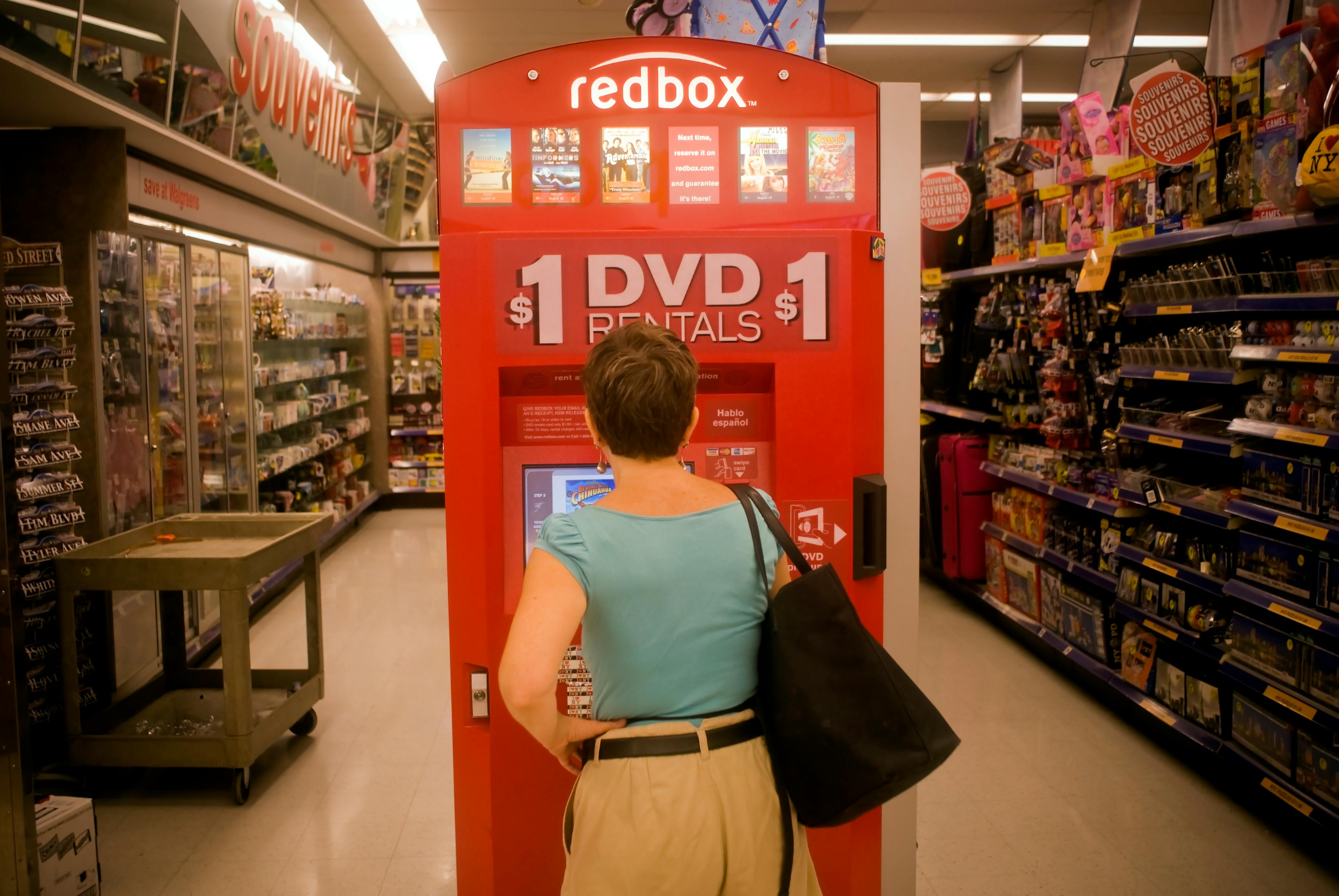
Ever wanted to own 46 copies of Orlando Bloom’s latest movie? What about a dozen empty Redbox DVD cases? Or maybe an entire Redbox kiosk, free with local pickup?
It’s all up for grabs, thanks to Redbox’s recent demise.
The chain of DVD-rental kiosks filed for bankruptcy in June after racking up close to a billion dollars in debt. The bankruptcy case was quickly converted to Chapter 7, legal speak for the end of the road for a corporation that has no options left to restructure or recover. “There is no means to continue to pay employees, pay any bills, or otherwise finance this case,” bankruptcy Judge Thomas Horan said, calling Redbox and its corporate parent “hopelessly insolvent.”
In a typical Chapter 7 bankruptcy case, a company’s assets get sold off to the highest bidders, and the resulting money gets divided among creditors. But after a dizzying company collapse with legal disputes swirling, Redbox’s afterlife is anything but ordinary. Grocery chains are hauling its once ubiquitous red kiosks to the dump, workers who never got their last paychecks are hawking DVDs on eBay, and customers are trading tips online on how to trick any remaining rental machines into spitting out movies without having to pay for them.
It’s a free-for-all, albeit with some significant risks: not only could customers get dinged for any unpaid late charges, but improperly disposed of kiosks could put the personal data of countless consumers at risk.
Cheaper by the dozen
Two months after Redbox went out of business, its DVDs are all over eBay. Twenty bucks gets you 10 Redbox movies, and 30 discs are going for about $45. “This Redbox lot is a must-have addition to any movie collection,” one of the sellers wrote, while another promised, “From action-packed blockbusters to heartwarming family favorites, this collection has something for everyone.”
None of the listings exactly spell out how the seller got their hands on the movies, but people I talked to for this story had a pretty good guess. Redbox and its corporate parent, Chicken Soup for the Soul Entertainment, skipped a couple of paychecks before going out of business. They also stopped paying health insurance for their workers in May, leaving many people with sky-high medical debt.
“I guess people are trying to get back anything that may be owed to them,” one former Redbox employee said, who spoke on condition of anonymity.
The most likely source for those eBay auctions are Redbox’s former merchandisers: employees who were tasked with putting new DVDs into kiosks every Monday and collecting those that were being taken out of rotation or redistributed to other kiosks. Up until earlier this year, many Redbox merchandisers would use local distribution hubs to pick up and drop off DVDs. Then the company ran into cash-flow issues, closed its warehouses, and required merchandisers to store DVDs and other supplies in their homes.
One former merchandiser said in an interview that she would get about 700 DVDs a week when business was good. She tried to send back old discs as quickly as she could because she didn’t have enough space in her garage. Apparently not everyone was that eager to return those DVDs. “A lot of people sat on their crap," she said.
Now some of it is showing up on eBay. One seller even auctioned off sealed “mystery boxes” of 40-some Redbox DVDs. Those boxes were previously presorted to be loaded into individual kiosks, but with Redbox low on cash in its final months, the quality of the movies it stocked suffered as well. “Anyone need a copy of Red Right Hand? I now have 46 lol,” a buyer joked on Reddit after acquiring one of those boxes. The Orlando Bloom-helmed direct-to-DVD flick (FYI: rated 50% on Rotten Tomatoes) was one of the few movies Redbox could still get its hands on after most major Hollywood studios stopped doing business with the company over unpaid bills.
The number of Redbox DVDs still out there is unknown. The company used to rent out millions of DVDs every week, and in 2019, its physical-rental revenue was $809 million. When Redbox went bankrupt, it was still operating about 27,000 kiosks. Each of these could hold up to 630 discs, which means there could be millions of DVDs sitting in kiosks to this day — kiosks that former employees theoretically still have access to. The merchandiser I talked to said the company folded so quickly that no one ever bothered to ask her to return her keys.
Bankruptcies happen all the time, just not like this
Companies fail all the time. Over 10,000 US businesses filed for Chapter 7 bankruptcy last year, and 45% of companies are estimated to close up shop within their first five years. In fact, two of my former employers closed down with little notice (welcome to the media business!). In each of those cases, I was asked to return my laptop, key card, and any other company property. Each time, offices were emptied out and corporate assets were sold off.
In Redbox’s case, none of that happened. The corporate parent of the DVD-rental company was already in a chaotic downward spiral during its final months. It had been sued over unpaid bills by its landlords and retail partners, Hollywood studios, tax collectors and investment banks. It defaulted on hundreds of millions of dollars of debt. Redbox’s CEO went rogue, used his powers as a majority shareholder, and singlehandedly fired the company’s board.
All of that led to a collapse in record speed — and a bankruptcy case that’s been marred by legal battles. Former employees have filed a class-action lawsuit. There have been serious financial-misconduct allegations made against Chicken Soup for the Soul Entertainment’s former CEO and majority owner Bill Rouhana, who in turn has alleged that the company was set up to fail by its biggest lender.
As a result, Redbox’s assets remain in limbo.
From treasure to trash to security risk
That’s especially true for the company’s rental kiosks. Redbox stopped paying many of its retail partners long before going bankrupt, leading to lawsuits and demands that the company remove its kiosks. It never did, and nor did the trustee put in place as part of the bankruptcy case, to the growing frustration of many major retailers.

Grocery chain Albertsons said in a recent court filing that it and its employees were subjected to “customer frustration” and “negative goodwill” over kiosks that weren’t being serviced anymore. CVS complained that plans to remodel some of its stores “have been thwarted by the presence of these large unwanted machines.”
Walgreens said it was paying $184,000 in electricity fees per month just to power the kiosks, adding that they were increasingly becoming a safety risk. “For example, a car crashed into a Kiosk at one of Walgreens’ retail locations,” the drug store chain wrote in a legal filing.
One retailer after another is pushing for the right to throw out the machines themselves, and the judge in charge of Redbox’s bankruptcy case has been granting their requests. That’s shortsighted, cautioned Automated Kiosk Advisors, a company that’s assisted with similar liquidations in the past. In a court filing, the company suggested that Redbox stands could be used by retailers to sell other things, while also warning of the risks associated with simply hauling them to the dump.
The problem, it said in the filing, is that Redbox kiosks have internal hard drives that store transaction data. “Kiosk hard drives must be secured and properly reformatted as these may contain sensitive and personal identifying information,” including “credit/debit card data, email addresses, zip codes, customer names and associated movie rental history,” the company wrote.
CVS, Albertsons, and Walgreens didn’t immediately respond to questions about their disposal of Redbox’s kiosks.
Free discs, if you dare
One of the reasons Redbox kiosks were storing transaction data locally was to keep them operational at all times. If, for instance, a kiosk lost its connection to the internet during a storm, it would simply log rentals and returns locally and then transmit that data once connectivity was restored.
After Redbox shut down, some of that online functionality appeared to shut off as well, leading folks to discover a trick: some of the kiosks remaining in stores still allow rentals and sales, but won’t charge credit cards. “The transactions never went through and it just spit the movies out,” one Reddit user wrote. “I have ‘Rented’ about 8 Redbox DVDs for about a month, I have not been charged,” another confirmed.
Even when Redbox was in business, it apparently didn’t take late fees seriously. The company wrote off over $100 million of accounts receivable from rental customers over the past few years, Automated Kiosk Advisors reported. In its court filing, the company suggested it could help recoup a good chunk of that with the help of “a proprietary algorithmic piece of software that can strategically reprocess millions of Redbox credit card transactions.”
In theory, there is a small chance someone could swoop in, buy Redbox’s assets, and try to recoup those late fees. More likely, kiosks will simply get hauled off to the dump with hard drives full of transaction data ripe for the taking.
In other words, plunder the corpse at your own risk.