Logistics changed the world. Now corporate America is desperate for supply-chain wizards and willing to pay up
Delivery trucks line the streets. Uber Eats is ringing your doorbell. Drones are coming. To meet roaring demand, universities are changing their approaches to pump out skilled logistics workers.
When the University of South Carolina started its supply-chain program in 2007, there were 30 business-school students in it. Today, the program has grown to over 800.
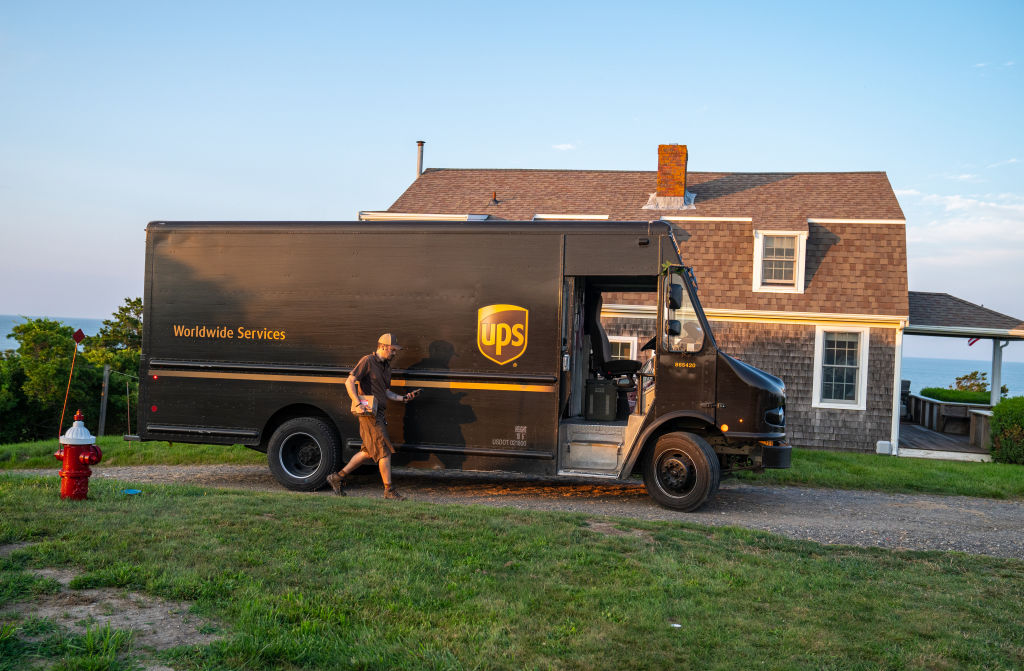
That’s a function of how logistics has changed the world, especially since the pandemic. Package-delivery trucks constantly weave through neighborhood streets. Porches and mailrooms are crowded with deliveries from Amazon, Target, and Walmart — but also Temu and Shein. DoorDash and Uber Eats drivers ferry burritos, pizza, and sushi, hurriedly parking with their flashers on to make a handoff before heading to the next delivery. Uber and Lyft have largely displaced yellow taxis in giant cities and are more visible than ever at airports. Instacart does your grocery shopping for you.
That explosive growth is likely to continue, as logistics is expected to be one of the fastest-growing sectors over the next decade. Data from Precedence Research shows an estimated market size of $21.91 trillion by 2033 — nearly triple what it was last year.
There’s already a shortage of highly qualified talent in the industry, and colleges and universities have been bulking up their programs to ensure there’s a steady supply of workers. A 2023 survey by Descartes, a cloud-based logistics-analysis company, found that 37% of 1,000 supply-chain decision-makers across North America and Europe said they were experiencing workforce shortages. More than half of respondents said positions for knowledge workers and managers have been “hard or extremely hard” to fill, topping the survey. Transportation and warehouse operations have been most affected by the workforce shortage.
The jobs are also lucrative: pay has increased along with demand, with about 58% of logistics professionals sharing that they make more this year than last. Supply-chain and logistics roles in manufacturing often have the highest salaries, averaging over $120,000 annually.
Shokoufeh Mirzaei, a professor and chair at Cal Poly Pomona who teaches courses including systems engineering and operations research, credits the surge in logistics to COVID-19 disruptions, along with the CHIPS and Science Act, which brought a $50 billion investment to the industrial and manufacturing sectors.
“The pandemic exposed vulnerabilities in global supply chains, leading to a growing demand for professionals who can manage the complexities of logistics, inventory, and distribution systems,” she said.
Students flow into supply-chain and operations-research degrees
Encoura, a research-based consulting firm on higher-education enrollment, reported that the number of supply-chain-management degrees awarded has grown by more than 75% from 2012 to 2020. The Bureau of Labor Statistics forecasts a 23% growth in operations research analysts from 2021 to 2031.
The boom is in full effect at schools like Rice University in Houston, said Illya Hicks, a professor and chair in its computational applied mathematics department. He said former students of his now work at companies including Amazon, FedEx, SAS, American Airlines, Lockheed Martin, and SAP. Undergraduate enrollment in logistics and supply-chain management has increased yearly, and he also anticipates enrollment to rise in its new operations research major, a field that uses quantitative data to make practical business decisions.
“OR, as a discipline, has matured to the point where there is sophisticated commercial software,” Hicks said. “Most OR practitioners without Ph.D.s are not asked to extend these software tools, but instead apply them in novel settings. So Rice’s new BA in OR is focused on the practical applications of OR techniques to equip the next wave of OR practitioners.”
Sanjay Ahire, a professor of operations and supply-chain management at the University of South Carolina, said that in the past, companies were used to hiring and then training for a competitive landscape. Now, they want hires to be ready from the first day. He said South Carolina’s program combines logistics and distribution with purchasing and sourcing. “We want people who are going to come out with cutting-edge competencies in both operations and supply chains,” he said.
It’s hard to excel in a field you’ve never worked in before. Ahire said his capstone program aims not just to place students with leading companies, but to ensure they succeed in those positions from the start. By giving them support rather than leaving them to figure it out, Ahire said students are more successful and have a higher chance of staying on long-term. He said he even keeps many students’ numbers in his phone so he can check in and mentor when possible as they get their careers going.
To be ready on day one of a career in operations, students have to be experts on the tools companies already, said Roland Dzogan, CEO of YDISTRI, an AI-optimized retail inventory-management system in Europe and North America.
“Universities are starting to catch up, but there’s still a gap,” he said. “We believe more focus should be placed on combining traditional logistics knowledge with technology skills to better prepare students for today’s dynamic retail environment.”
AI is also at the forefront of top candidates’ resumes. “We’ve seen that many retailers need professionals who understand both logistics and advanced technologies like AI and data analytics. These skills allow them to predict inventory needs more accurately and respond to market demands faster,” Dzogan said.

New industries and new methods
Some graduates are filing into operations and supply-chain roles at companies you wouldn’t necessarily think were logistics-heavy. Ahire mentioned the healthcare industry in particular.
“Increasingly, because of cost pressures and because of the quality pressures and so on, healthcare has turned around and adopted many of the practices,” Ahire said. “There are supplies and instruments used in patients’ treatments — and getting them in the right amount, at the right price, at the right time, and flowing them from the central distribution centers of these hospitals to the central storerooms in the hospital building, to supply rooms in on each of the floors of the hospital, and into the exam rooms, into the cabinet and into the operating rooms on the operating table.”
Another surprising example is the entertainment industry, said Albert Brenner, co-owner of Altraco, a contract manufacturing company in Newport Beach, California. “Companies managing large events or film productions rely heavily on logistics to coordinate equipment, personnel, and schedules. Efficient operations are critical to ensure everything runs smoothly and on time,” he said.
New technology adds new challenges, too: Drone deliveries, though not yet mainstream, are happening in some areas, with varying degrees of success, adding another futuristic layer to the logistics presence that is only poised to expand further. Rolling robots are delivering food in LA.
Mirzaei said the curriculum at her university is “significantly” changing to incorporate smart factories, AI, data analytics, project management, and supply-chain management.
“These updates reflect the shift toward technology-driven logistics solutions, with a focus on sustainability, risk management, and real-time data processing,” Mirzaei said. “We are also investing $800,000 to bring state-of-the-art technologies to our automation and robotics labs, preparing students for the future of the manufacturing and logistics industries.”
She predicted an increase soon in the industrial and manufacturing engineering program, which for now isn’t “widely known” to students. As students catch on to the opportunity, she anticipates having to be more selective, implementing stricter criteria to get accepted into the program.
Still, it’s not all about technology. Sarib Rehman, CEO of Flipcost, a cleaning, janitorial, and office-supply company in Sacramento, said his company recently retrained its staff to be more efficient. He said workers need to be able to not just handle tech, but also customer relationships. For example, Rehman said the team works closely with suppliers on the common goal of streamlining processes to make things run more efficiently.
“Human connection remains key. The future is experiences, not just efficiency.”
Alexandra Frost is a Cincinnati-based journalist who has worked with the New York Times, Washington Post, Forbes, Consumer Reports and others. You can follow her work at www.alexandra-frost.com.