Business
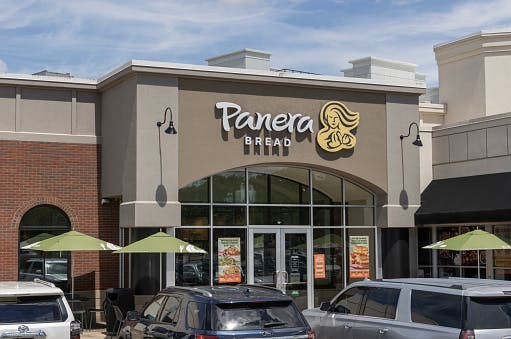
Panera Bread bakery cafe. Panera is a chain of fast casual restaurants offering Free WiFi.
A Panera Bread bakery cafe in West Lafayette, Indiana (Getty Images)
romaine empire

Panera’s million-dollar turnaround starts with fixing its salads — as Americans drift away from iceberg lettuce

The fast-casual chain is undoing years of cutbacks with a new strategy dubbed “Panera RISE.”

Hyunsoo Rim

After years of penny-pinching that left sandwiches smaller, salads blander, and cafes understaffed, Panera is trying to win back customers with a sweeping, strategic reboot. On Tuesday, the chain unveiled a multiyear turnaround plan, layering in a refreshed menu and nicer stores, as its revenue slipped from its 2023 peak.

Lettuce get this bread

The salad-soup-bread giant saw its sales fall more than 5% to $6.1 billion last year, per Technomic — a slump that predates the broader “slop-blow recession” that’s started hitting chains like Chipotle, Sweetgreen, and Cava.

According to QSR’s Top 50 fast-food rankings, Panera still pulled in the highest sales per unit among major sandwich chains in 2024 — but its annual store growth came in at just 1.6%, trailing rivals in the same category as well as adjacent players like Taco Bell, Qdoba, Chipotle, and Cava.

Traffic has been eroding for years amid growing complaints about Panera cutting corners on ingredients and labor to offset inflation. Customers found themselves wrestling with unsliced cherry tomatoes and cutting their own avocados, per CNBC, while portions slimmed down. The company even switched from full romaine to a half-iceberg blend last summer, a move Panera Brands CEO Paul Carbone acknowledged “saved a significant amount of money across the chain.”

Indeed, romaine lettuce is roughly twice as expensive as iceberg, per Bureau of Labor Statistics data. And, while lettuce may not sound like a big deal, Panera has been sailing toward cheap icebergs at a time when American tastes have gone more premium — if the decades-long shift in consumption is any indication.

Panera Lettuce
Sherwood News

According to USDA data, the nation’s per-capita availability of head lettuce (made up overwhelmingly of iceberg) has fallen to roughly a third of its 1989 peak as of 2022, while romaine has surged more than 3.5x over the same period, overtaking its crispier counterpart.

Though iceberg remains more common than greens like spinach and kale, consumers might be increasingly associating romaine’s darker, greener leaves with better freshness and quality, which Carbone seems well aware of: “No one likes iceberg lettuce. No one looks at that salad and says, ‘That’s appetizing,’” he told Nation’s Restaurant News.

With the overhaul plan, Panera is now bringing back full-romaine salads, boosting ingredient counts from five to eight, and restoring portion sizes — along with more human staff and a cafe makeover — as it aims to reach over $7 billion in annual sales by 2028.

More Business

See all Business
business

The Trump administration is reportedly planning a 50% made-in-America requirement for USMCA tariff relief

Qualifying for USMCA-related lower tariffs may soon require more US-made vehicle components, according to reporting by The Wall Street Journal.

The Trump administration is reportedly planning to introduce a 50% US content requirement for vehicles covered by the trade pact to receive lower tariffs. The content would be measured by cost, according to the WSJ.

There currently isn’t any US-specific requirement for those lower tariff rates, but in order to receive preferential tariffs, vehicles are must contain at least 75% regional content (components made in North America). Per Reuters reporting, the Trump admin is seeking to raise the regional requirement to 82%.

These reported plans are subject to change as the US negotiates USMCA terms with Mexico over the next few months.

Overall, Tesla will likely have the easiest time qualifying for any stricter requirements. The automaker’s vehicles contained the highest amount of US/Canadian content in 2025, according to American University research. Ford, GM, and Stellantis all scored lower.

Notably: the underlying government data that many domestic content measurements rely on intentionally combines US and Canadian components, so it’s difficult to know exactly how much of any given vehicle is specifically US-made.

There currently isn’t any US-specific requirement for those lower tariff rates, but in order to receive preferential tariffs, vehicles are must contain at least 75% regional content (components made in North America). Per Reuters reporting, the Trump admin is seeking to raise the regional requirement to 82%.

These reported plans are subject to change as the US negotiates USMCA terms with Mexico over the next few months.

Overall, Tesla will likely have the easiest time qualifying for any stricter requirements. The automaker’s vehicles contained the highest amount of US/Canadian content in 2025, according to American University research. Ford, GM, and Stellantis all scored lower.

Notably: the underlying government data that many domestic content measurements rely on intentionally combines US and Canadian components, so it’s difficult to know exactly how much of any given vehicle is specifically US-made.

business

The $640,000 Luce makes the average Ferrari look like a bargain

Put aside the shape; put aside the smoothing out of Ferrari’s iconic sharp edges; put aside, even, the calls from former Chairman and President Luca Cordero di Montezemolo to “take the Prancing Horse off.” On the grounds of price alone, Luce detractors might have a point.

By now, many of us will have read the criticisms of Ferrari’s first fully electric vehicle, as the Luce — which was unveiled to the world earlier this week and promptly saw the company’s shares crash out in New York and Milan — gets subtly shaded by competitors online and not-so-subtly shaded by basically everyone else.

What makes all of this worse for Ferrari is that, even by the luxury car maker’s notoriously high standards, they’ve slapped a pretty hefty price tag on the Luce, and the company’s CEO, Benedetto Vigna, has already been forced to defend the €550,000 ($640,000) price point, saying yesterday that it’s “fair to pay for innovation,” per Reuters.

While Ferrari’s cars have been getting more expensive of late, as recently as 2022, Ferrari’s average revenue per car sold was around $340,000. At nearly twice that price, this new electric model is obviously proving a little much (visually, conceptually, and financially) for many loyal and long-standing fans of the Prancing Horse to stomach.

Ferrari Luce cost chart
Sherwood News

By now, many of us will have read the criticisms of Ferrari’s first fully electric vehicle, as the Luce — which was unveiled to the world earlier this week and promptly saw the company’s shares crash out in New York and Milan — gets subtly shaded by competitors online and not-so-subtly shaded by basically everyone else.

What makes all of this worse for Ferrari is that, even by the luxury car maker’s notoriously high standards, they’ve slapped a pretty hefty price tag on the Luce, and the company’s CEO, Benedetto Vigna, has already been forced to defend the €550,000 ($640,000) price point, saying yesterday that it’s “fair to pay for innovation,” per Reuters.

While Ferrari’s cars have been getting more expensive of late, as recently as 2022, Ferrari’s average revenue per car sold was around $340,000. At nearly twice that price, this new electric model is obviously proving a little much (visually, conceptually, and financially) for many loyal and long-standing fans of the Prancing Horse to stomach.

Ferrari Luce cost chart
Sherwood News

Latest Stories

Sherwood Media, LLC and Chartr Limited produce fresh and unique perspectives on topical financial news and are fully owned subsidiaries of Robinhood Markets, Inc., and any views expressed here do not necessarily reflect the views of any other Robinhood affiliate, including Robinhood Markets, Inc., Robinhood Financial LLC, Robinhood Securities, LLC, Robinhood Crypto, LLC, Robinhood Money, LLC, Robinhood U.K. Ltd, Robinhood Derivatives, LLC, Robinhood Gold, LLC, Robinhood Asset Management, LLC, Robinhood Credit, Inc., Robinhood Ventures DE, LLC and, where applicable, its managed investment vehicles.