Java Juice
CAFFEINE UPGRADE
“Last year refreshers exploded.”
The next big thing in coffee ain’t coffee
Cold, fruity drinks keep customers coming back — and attract new ones.
With three-quarters of Americans drinking coffee daily, it’s clear that the public still loves their cup of joe. But what’s really been taking off in coffee isn’t coffee at all: it’s “refreshers.”
From heavy hitters like Starbucks to independent shops, experts said everyone should be adding non-coffee drinks to their menus, and many have already started.
Gen Z and millennials are drinking less coffee than Gen X and baby boomers, according to Statista, though more than 40% of both generations still report drinking it every day. So offering non-coffee options keeps even those who don’t indulge coming through the doors.
While shops and brands are offering refreshers to cater to those who don't want a traditional morning brew, they’re also offering them because they have to in order to survive.
“Last year refreshers exploded,” said Ryan Divis, experiences coordinator at the gourmet-syrup company Monin, at this year’s Coffee Fest New York in March.
Starbucks introduced its version of a refresher in 2012, and Divis credits the industry giant with the trend that’s still growing over a decade later.
Its first refreshers were the now iconic Very Berry Hibiscus drink, which featured freeze-dried berries, and the Cool Lime drink (now discontinued). Both used green coffee extract for a caffeinated boost. Following those, Starbs innovated with shaken iced teas, the 2019 Dragon Drink with mango, dragon fruit, coconut milk, and freeze-dried dragon fruit, and the 2020 Star Drink featuring kiwi and starfruit.
Divis said that when it comes to refreshers, there really aren’t any rules around what the drink has to be — and that’s the best part.
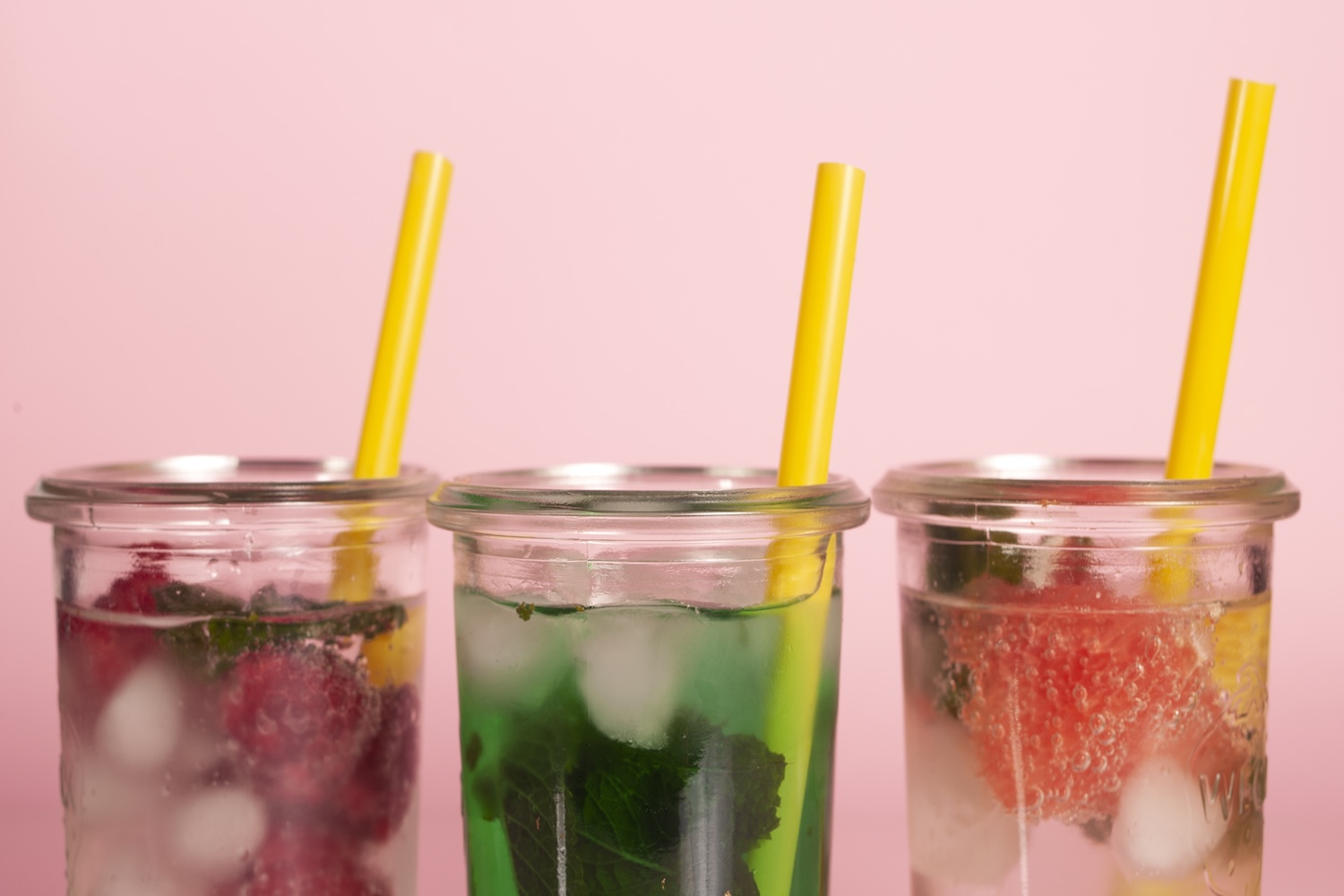
If “refresher” sounds a bit vague, it’s a big reason why it’s such a huge piece of the coffee-shop market right now. Businesses can build a non-coffee beverage using any base ranging from green tea to lemonade, coconut milk, or even fruit juice. Then they can add a number of things to create a drink that’s exciting, feels special, and offers something for non-coffee drinkers.
While some refreshers can be rich, milky, and sweet, others can be lighter in taste, offering more citric-forward flavors, bright colors, and carbonation.
Regardless of the ingredients — apple-cider vinegar or dragon-fruit syrup or something more reminiscent of strawberries and cream — a refresher is meant to be, well, refreshing.
A misconception around these drinks is they all have some sort of energy source to them, like Panera’s controversial Charged Lemonade or the caffeinated refreshers from Dunkin’. But, Divis said, that’s not always the case.
In its most simple form, a refresher is a cold flavored drink. Monin reported that many consumers were interested in adding some sort of functionality to their drinks, which can be adding a boost of energy, protein, or collagen, sometimes for an extra fee. It can also mean mixing in a sleep aid, a shot of vitamins, or something to aid in immunity. Some customers are even looking for recovery boosts like potassium or Liquid I.V., Divis said.
From a business perspective, these alt drinks are meant to keep customers coming into the shop even when they’re not in the mood for a coffee.
“Every coffee shop has that slump in the afternoon,” Juan Hernandez, director of food service at coconut-water brand Vita Coco, told Sherwood.
Jim Starcev and Mark Calhoun of PerfectCube said their data suggested there’s an increase in customer loyalty, and part of that has to do with creating a space where those consumers want to gather throughout the day.
Alex Dintruff, sales manager at Tiki Breeze beverage-mix company, told Sherwood that with the way coffee culture has moved in the past 40 years, most Americans now live within 30 minutes of a coffee shop.
“Everyone can get an espresso-based drink within a short drive from their home,” Dintruff said. “The next step is to bring everyone else in.”
Monin’s data suggests more Gen Z and millennial consumers are leaving bars and returning to coffee houses for social times like happy hour. As many pull away from alcohol consumption, they’re looking to get together in other spaces, Divis said.
“They want that atmosphere,” she said. “They want a place for friends and family to gather again.”
But while they may want the ambiance that comes with a coffee house, many might not want a coffee late in the day — or even at all.
“Not everybody drinks coffee or is as obsessed with coffee as us early comers,” Dintruff said. “But we definitely want to bring our friends along.”
Building up an alternate program around refreshers seems to be a good way for businesses to keep customers at tables, and hopefully get them to order a second and third rounds of drinks.
“They want something that’s cool,” she added. “Not just a vanilla latte.”
Hernandez said most coffee shops already have things on hand to make refreshers. And if they want to punch up their recipes a bit, additional ingredients or tools are likely to be a small investment.
In addition to folks craving drinks that aren’t coffee, experts at Coffee Fest seemed to agree that iced drinks like refreshers are worth leaning into.
“Cold drinks are king,” Starcev told a room full of business operators. “Do cold drinks.”
Monin’s research showed that more people are ordering their drinks iced than hot — and that 75% of the drinks Starbucks sells are cold. The demand is so great, Divis said, that lots of shops are operating with iced drinks as the default.
What consumers can expect now are more colors, more boosting options, and more flavors — plus a return to the dried-fruit mix-ins of our youth.
Davis said, “Customers cannot resist the fun.”
Rachel Askinasi is a freelance reporter.