

Eyeballs
Attention Please
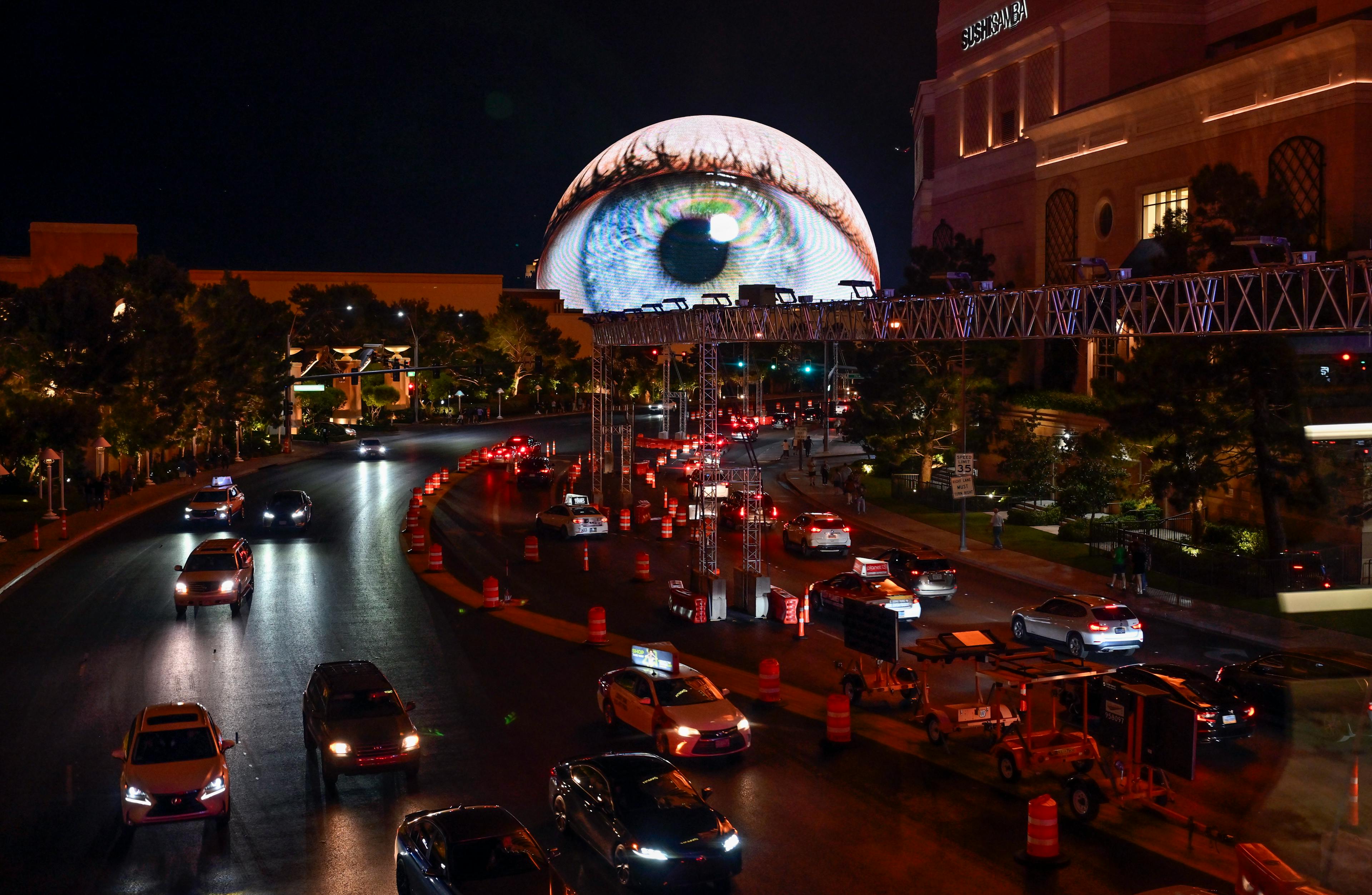
The Sphere is only the beginning. Your screen time is going way up.
Prepare for a stare-down in stadiums, stores, and even streets: high-end digital screens are begging for your attention
If attention is today’s greatest commodity, then the screens that capture our curiosity are prime real estate. And increasingly that real estate isn’t just in our smartphones. A combination of high-tech spectacle, lower-cost, higher-end LED screens, and advertising-industry shifts has seen a proliferation of digital displays gain momentum.
“Screens used to be a stagnant thing,” said Mark Williams, global director at HKS, the architecture firm behind cutting-edge stadiums like SoFi in Los Angeles. “Now 3,000 monitors in a building can have the same sponsor on it.”
There’s long been a movement within sports and entertainment to encourage second-screen viewing and create venues that rival the creature comforts of high-tech home viewing. With the advent of the Sphere in Las Vegas, a $2 billion orb with a 580,000-square-foot domed screen, that growth will only accelerate. A decade ago, sites like the Dallas Cowboys’ colossal AT&T Stadium became iconic by having enormous screens — in that case, 600-ton, 11,393-square-foot scoreboards hanging over half field — in the venue. Now, as the Sphere suggests, a venue can become the screen itself, with advanced technology that allows screens to bend and stretch.
Williams said screens have come to the forefront of design decisions and can dictate the shape and scale of projects. And the Sphere, which can charge up to $2 million a day for exterior advertisements on its Exosphere during big events like F1 races and the Super Bowl, is inspiring competition and copycats. Cosm, a company owned by IMAX that’s behind the curved theater displays found inside many planetariums and science centers, opened a venue in LA last month featuring a three-story dome with 12K-plus LED displays to broadcast live sporting events and concerts. After another venue opens in Dallas, the firm plans dozens more.
But these new ultrasharp mega screens aren’t just for stadiums and entertainment venues. Businesses across industries are using screens as wayfinding tools, promotional vehicles, and even real-time displays to alter prices on the fly. Tom Bingham, the director of Vertical Market Sales at LG, said he’s seeing “high-double-digit growth” in screen sales to a variety of industries, including banking, finance and insurance, transportation, robotics, and even EV chargers. Bingham says a new generation of screens and programming is in the works to incorporate more and more digital real estate into the architecture of buildings. Oceanwide Plaza, the infamous downtown LA development that stalled and was bombed by local graffiti artists, was initially going to feature the largest LED sign on the West Coast (the half-finished husk is now seeking a buyer for redevelopment).
“Capital budgets aren’t flowing as freely as they have been in previous years, but certain segments of our business, especially sports and entertainment, are growing aggressively,” Bingham said.
The modern stadium experience — with signs over entryways, dynamic wayfinding, broadcasts of other games, and cashless concession purchases — all require screens of numerous sizes and form factors, with up-to-date back-end software to coordinate messaging and advertising. Most are bespoke, so prices vary widely. Bingham said that the demand for screens has made them commoditized; the larger vision for LG and its competitors is to become a service company that provides screens, consulting, and the programs to better use and monetize these screens.
The advertising industry certainly sees benefits in this growth. According to Steve Nicklin, the SVP of marketing and analytics for the Out of Home Advertising Association of America, digital out-of-home advertising grew 10% last year and 10% in the first three months of this year. It’s expected to grow at least 10% every year through 2028. Technologies like augmented reality and QR codes have become embedded in screens and large-scale campaigns, such as an AR campaign in New York celebrating the anniversary of the “Space Invaders” game. Nicklin said a Harris Poll that his association commissioned showed this kind of advertising was more effective and engaging than other media formats.
The screen glut won’t be limited to game time. In-store networks, which use company-collected data to better target their shoppers both on their phones and on a growing number of physical screens in the store, are the nation’s fastest growing ad channel, bringing in more than $90 billion last year. Walmart acquired TV and ad company Vizio in February for $2.3 billion with this idea in mind, joining grocers like Hy-Vee, Giant Eagle, and Kroger, which installed 500 digital screens in its stores last year. Stores have been adding screens to building exteriors, the end-caps of aisles, and even the deli and prepared food counters. Much like Amazon has grown its own on-site advertising network into one of the biggest online — why not tap into the ability to message to customers on its own site? — Walmart is taking that idea into its aisles. Instead of just giving shoppers more images of the store they’re in, monetize their attention, the theory goes.
Food retail has also been a key growth area. Labor shortages and rising costs have led many franchises and chains to experiment with ordering kiosks. Bingham’s also seeing more pump-top video displays in gas stations and screens in convenience stores. There’s also more and more kiosks and touchscreens sprouting up in malls, on sidewalks, and on city streets. San Diego just signed a deal last year to install 50 digital kiosks downtown to help with directions.
There are limits to what seems like a “Blade Runner 2049” future of life-size, lifelike responsive billboards. Most municipalities have banned video-screen billboards. Any steps taken to get around the bans tends to bring about immediate pushback, A campaign to challenge anti-billboard laws in Hawaii failed, and the recent approval of dozens of digital billboards on transit-authority property in LA in December elicited anxiety around the potential for increased distraction and accidents. But Wow Media, an ad agency outside LA that runs full video ads at roughly a dozen billboard sites near the 405 Freeway, took advantage of a municipal budget crunch to persuade the city to allow the videos, according to the company’s CEO, Scott Krantz. He says high-profile clients like Apple and Netflix love the impact and “keep coming back.”
“At the end of the day, they’re creating scenic blight,” said Max Duchaine, communications director of Scenic America, a nonprofit focused on scenic conservation that opposed the expansion in LA. “A lot of governments will say, under the guise of technology, that digital billboards, digital kiosks, and wayfinding kiosks are bringing ways of connecting people to the community, when they're actually bringing a lot of blight. They're bringing distracting elements to public rights of way.”
But despite resistance to digital billboards, screens have plenty of other places to grow. The only thing standing in their way may simply be a fear of oversaturation. Bingham says the industry always looks out for overkill and overwhelming the audience. There’s a fear that overuse can “desensitize” the consumer, he said.
“It goes from being effective to annoying, and people push against it, kind of like the rebellion against online cookies,” he said. “The biggest trend right now in advertising is doing it right and doing it well, and not becoming ‘Minority Report’-ish, where you feel like you’re getting bombarded every day.”
Patrick Sisson is a reporter covering cities, technology, and business.



