Why Sonos is struggling
The failed promise of smart speakers, and some internal fumbles, led to the audio giant’s decline. Can headphones save it?
Speaker-maker Sonos has had a rough several months. Following a botched app revamp this spring, the company has faced a massive consumer backlash that tanked its stock price, forced it to delay the introduction of multiple new products, and contributed to a $200 million revenue shortfall and layoffs.
“It’s so painful to let customers down the way we have with our new app,” Sonos CEO Patrick Spence said during the company’s most recent earnings call in August.
That pain is being shared by the company’s customers. When Sonos released its new app in May, people couldn’t set alarms anymore, had trouble adding new products, and couldn’t even change their song queue.
So why did the company release it anyway?
It’s easy to blame the app snafu on technical debt or shortsighted management decisions, but in reality, the company’s struggles are as much related to the way music listening is changing and the failed promise of smart speakers. These devices were supposed to change our lives, and instead they became the annoying thing in our kitchen that can barely function as a timer.
The downturn at Sonos has come slowly over the course of a few years. Its stock peaked above $40 in early 2021 and it’s been a choppy ride downward since. The company is set to report full-year earnings on Wednesday, and analysts expect it to report a net loss for the year amid falling sales, according to FactSet.
So what happened to undermine Sonos as an audio powerhouse?
Smart-speaker growth has stalled
Amazon kick-started the smart-speaker era with the release of the first Amazon Echo a decade ago. The cylinder-shaped speaker quickly became a hit with consumers. Being able to request any song that comes to mind with simple voice commands was exciting, and Alexa’s ability to access news and weather forecasts, manage shopping lists, and tell you the occasional dad joke was new, different, and fun. Initially, all of this caught Sonos off guard, but the company eventually recovered by adding microphones and voice assistants to its own products as well.
It also didn’t hurt that Sonos had some brand advantage; tech companies were great at building cheap hardware optimized for voice control, but had a hard time expanding into premium audio. Google discontinued its Home Max speaker in 2020, Samsung never even released its Galaxy Home speaker, and Amazon hasn’t come out with a new high-end smart speaker since 2019.
“People don’t look to those brands for audio,” Techsponential founder Avi Greengart said. “Sonos plays in a different market segment.”
Still, Sonos hasn’t been immune to shifts in the market. Ten years after the first Echo came out, consumers have become a lot less excited about having long-winded conversations with their audio equipment. About half of US households owned a smart speaker in 2021, according to Parks Associates data, but ownership hasn’t really increased since.
Edison Research even observed a small decline in the number of people owning a smart speaker this year. “Smart speakers have stalled,” Greengart agreed.
One reason is that these speakers didn’t turn out to be all that smart or really meet consumer needs. In a 2022 survey, British media regulator Ofcom found that eight years after the first Amazon Echo was released, most people still used their smart speakers only for mundane tasks like listening to music, setting timers, or asking for weather reports. Only one in three respondents controlled smart-home devices with their speaker, and just one in five used it to communicate with others.
As the magic of voice control has faded, so has the allure of smart speakers: in 2022, 62% of people who didn’t own a smart speaker told Edison Research that they had no interest in buying such a device. Five years earlier, the number of naysayers was at only 46%.
Futuresource market analyst Kavish Patel has seen similar trends play out in surveys undertaken by his company. “Without more innovation, the segment is expected to fall in appeal, as many of the features that consumers use these devices for such as music, weather, and setting alarms can also be done on the phone,” Patel said.
Sonos wants us to keep buying
There is some good news for Sonos and other speaker-makers in recent survey data. “Smart speaker ownership appears to have plateaued, but the number of smart speakers per owner continues to rise,” Edison Research wrote in this year’s Infinite Dial report. 43% of smart-speaker owners reported owning three or more such devices.
That’s a phenomenon that Sonos is very familiar with. 60% of all Sonos households own more than one of the company’s products, with the average Sonos household owning 3.05 of its products last year. Among households with more than one product, that average was 4.41 devices, a recent investor presentation showed.
Sonos has made this so-called “Sonos flywheel” a key part of its growth strategy. “First, our households add more products to their home over time; and, second, the members of these households become advocates who help us acquire additional new customers,” Spence explained in 2022.
Full disclosure: my home is one of those flywheel households, with four of the company’s speakers scattered across multiple rooms. I also own a Google smart display, and my daughter is using a Google speaker to make everyone in the house listen to her Spotify playlists. I even have an Amazon Echo and a Nest Mini speaker stowed away somewhere, and am frankly running out of reasons to justify adding any more smart speakers to our home.
So what’s a company like Sonos got to do for a guy like me? Easy: branch out.
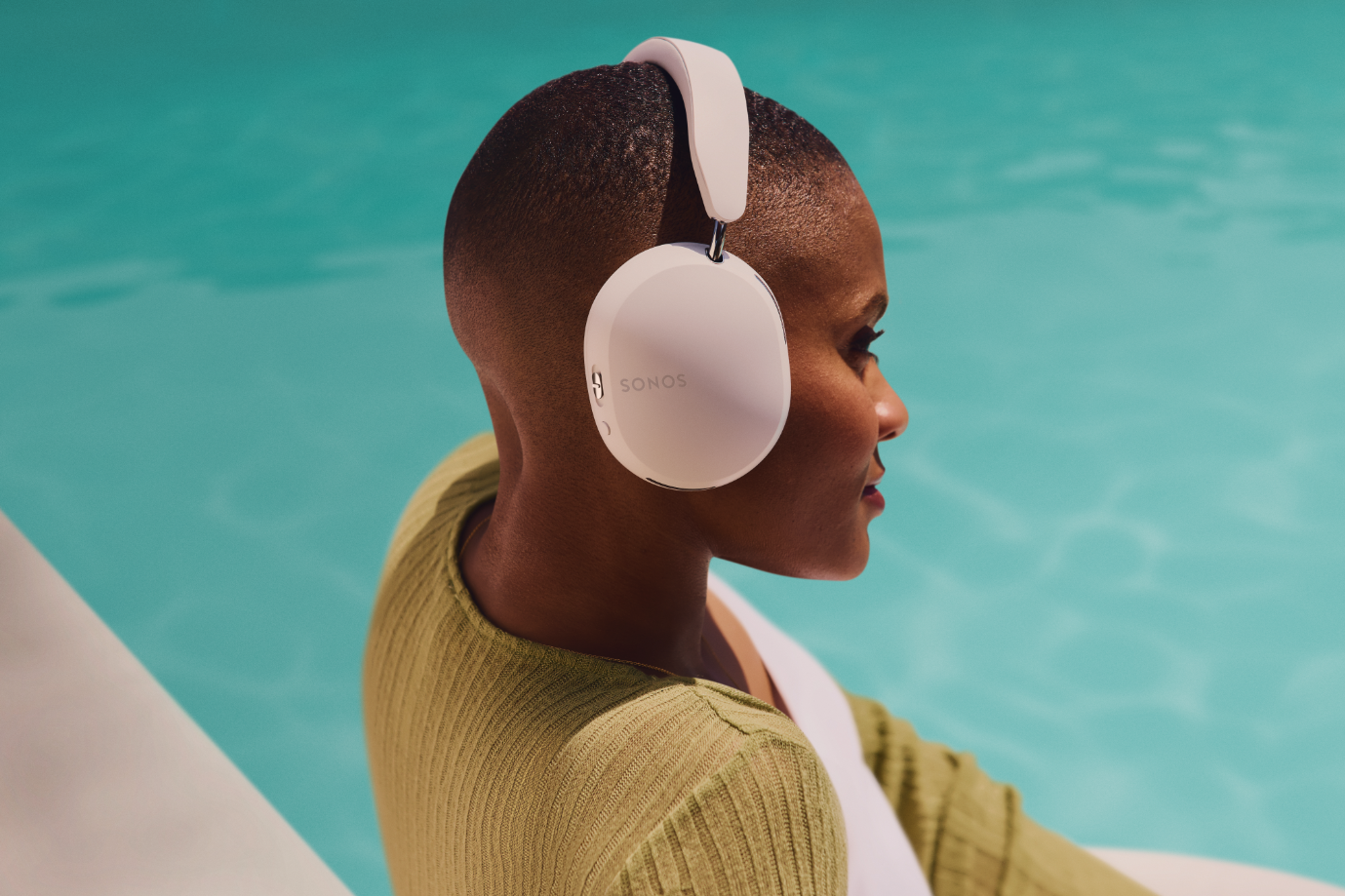
Sonos first expanded into TV soundbars in 2013. By the end of the decade, home-theater products accounted for nearly 40% of the company’s revenue (it stopped breaking out soundbars as a category in its financial disclosures in 2020). Sonos has since released Bluetooth-enabled portable speakers, partnered with BMW on in-car audio, and released its first-ever pair of headphones, the $449 Sonos Ace, earlier this year.
Listening is shifting to headphones and earbuds
Sound quality long helped Sonos keep the competition at bay, but that advantage is starting to erode as music-listening habits are changing.
“Consumer interest in audio products is shifting more towards wireless headphones and earbuds while interest in smart speakers and smart displays is leveling off,” Parks Associates research analyst Sarah Lee said.
That trend was supercharged by Covid. “The pandemic in 2020 further accelerated headphone ownership,” said Futuresource senior market analyst Saranraj Mathivanan. “More people began to use these earbuds for purposes beyond music, including communication, video consumption, and gaming.”
Interest in headphones and earbuds hasn’t let up since. US consumers are expected to buy 94.5 million wireless earbuds this year, the Consumer Technology Association found, up from an estimated 70 million in annual shipments at the beginning of the pandemic.
37% of surveyed consumers told the trade group last year that they were in the market for new wireless earbuds or headphones, with CTA’s business-intelligence director Rick Kowalski recently calling wireless earbuds in particular “one of the most popular consumer-tech devices overall, second only to smartphones.”
Those two device categories arguably go hand in hand, with Apple dominating the wireless-audio market, thanks to the tight integration of AirPods and Beats headphones into the iPhone ecosystem. “The smartphone is the center of people’s lives,” Greengart said. And with Gen Z Americans spending a quarter of their waking hours on screens every day, it’s easy to see why wireless earbuds and headphones would be the audio solution of their choice, as well.
Sonos didn’t really have a choice
Over-ear headphones like the pair Sonos released this year are in theory a good entry point into that market. Consumers are “increasingly gravitating towards premium over-ear models priced above $200,” Mathivanan said. “These over-ear models offer better comfort and are able to combat in-ear fatigue for longer listening sessions.”
Recent Bloomberg reports suggest that the company’s first foray into headphones has nonetheless been rocky. Sonos reportedly had plans to build 1 million Sonos Ace headphones per year, but sold only 200,000 devices over four months. Spence said in August that the app woes “overshadowed” the release of the device.
The irony is that Sonos rushed the app out of the door to launch the headphones, which is why some customers blame the move into wearable audio for all of the company’s problems.
“Torching their entire ecosystem to accommodate Just Another Pair Of Headphones is insane,” one Reddit user wrote recently, with another adding, “Seems they were trying to answer a question that most weren’t asking.”
For Sonos, wireless headphones and earbuds aren’t just an opportunity to rekindle growth; they’re also a necessity to stay relevant as smart speakers fall out of favor and listening habits shift to headphones and earbuds. Simply put, people don’t need to spend thousands of dollars to put a speaker in every room of their house when a pair of headphones allows them to listen to anything, anywhere, without that hefty price tag.
“There is a limit to the number of people who have a need [for] multi-room audio,” Greengart said. And with headphones getting better and more powerful, that number is unlikely to grow.
Sonos is in trouble because it rushed the introduction of its headphones — but it could’ve been in even more trouble if it had waited too long, or ignored the changes in consumer behavior altogether.
Janko Roettgers is a Bay Area-based reporter covering the intersection of technology and entertainment, and author of the weekly Lowpass newsletter.