
Business
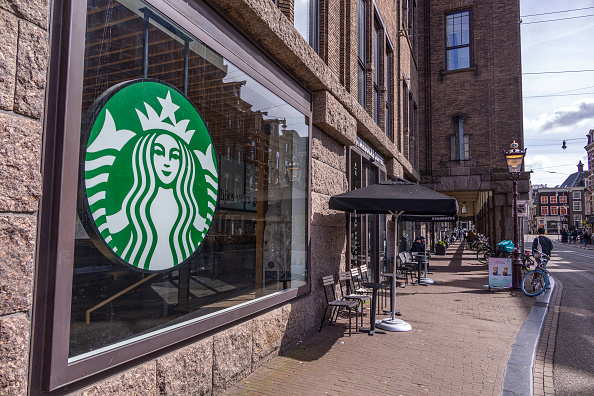
Starbucks American Coffee Chain Cafe In Amsterdam
(Nicolas Economou/Getty Images)
Opinion

Starbucks could use a CIO

Customers give Starbucks billions of dollars in prepaid credits each year. Should the coffee chain be investing it?

Jack Raines

Every six months someone resurfaces the internet’s favorite business coffee story: Is Starbucks really a bank? (My favorite edition of this question is Trung Phan’s X thread from 2022.) The TL;DR is that Starbucks runs a first-class rewards program that incentivizes customers to preload their Starbucks accounts with cash in exchange for stars that can be redeemed for free food, drinks, and merch. Customers earn 2 Stars per $1 spent with loaded funds on their app, versus 1 Star per dollar spent with cash, credit, or debit cards through their app.

This money stored in customers’ accounts appears as a liability on Starbucks’ balance sheet as “stored value cards and loyalty program” within deferred revenue.

Starbucks 10Q

Stored value capital is essentially an interest-free loan from the customer to the business that can only be exchanged for coffee (and other Starbucks products), and it can’t be redeemed for cash.

This program has been a hit, and, according to Starbucks’ most recent 10-Q, they currently have $2.2 billion (!!) in stored value cash on their balance sheet. As if this weren’t a good enough deal for Starbucks, a portion of this stored value goes unspent each year, which Starbucks recognizes as “breakage revenue.”

The success of Starbucks’ Rewards program poses an interesting question: why doesn’t the coffee chain launch an investing arm to manage these funds?

This model of investing excess capital has existed for years in the insurance industry. Insurance companies invest their float, which is the difference between premiums paid by customers and claims paid to customers, across different assets to increase their returns. Most insurers invest in low-risk bonds with durations that match their liabilities (auto insurers invest in shorter duration bonds, life insurers invest in longer duration bonds), but insurers don’t have to limit their investments to the bond market.

Take Berkshire Hathaway: in Berkshire’s 2009 annual shareholder letter, Warren Buffett noted that their float had grown from $16 million in 1967 to $62 billion in 2009, giving them billions of interest-free money to invest, which Berkshire has actively deployed in public markets.

Starbucks’ reward system has created a “float” with a guaranteed profit in the form of “breakage revenue.” Unlike insurers, who need to account for the risk that claims could outpace premiums collected in a given year, Starbucks’ Rewards outflows will never cost more than their inflows because money stored in their rewards program can only be redeemed for Starbucks’ products. Put simply, the coffee chain will never owe more than it has received from customers. Even better, Starbucks accurately forecasts how much money won’t be redeemed through its breakage revenue, meaning that the company knows how much of its stored value is pure profit.

So why not invest that $2 billion, or at least its estimated breakage revenue each year, and compound it over time?

More Business

See all Business
business
Tom Jones

Demis Hassabis, Google DeepMind’s CEO and founder, was also an early Anthropic investor

A chess prodigy and an actual a knight of the realm in the UK, it’s perhaps no surprise that Demis Hassabis has made some strategic moves about his exposure to AI upside. According to people familiar with the matter, the influential AI architect became an angel investor in Anthropic, currently behind many of the leading AI models, per Arena AI leaderboards.

The Nobel Prize winner’s position in the Claude creator was previously undisclosed and, per the Financial Times, highlights Hassabis’ “growing influence across the AI industry.”

Google, which bought DeepMind, the company that Hassabis cofounded and heads to this day, for a reported ~$400 million in 2014, is also a key Anthropic investor. The tech giant reportedly plans to invest up to $40 billion in the AI company as part of the mutually beneficial relationship the pair have forged, with reports that Anthropic has committed to spending $200 billion in the other direction on Google’s cloud services over the next five years.

Im playing all sides, so I always come out on top

In addition to his financial support for Anthropic, Hassabis has also invested in a range of AI startups launched by colleagues, such as Inflection AI, a company set up by DeepMind cofounder Mustafa Suleyman (who is now CEO of Microsoft AI), as well as efforts from other collaborators, like David Silver’s Ineffable Intelligence.

Hassabis also emerged as a recurring figure on the fringes of the recent Elon Musk v. Sam Altman trial, cropping up repeatedly in testimonies and court documents and appearing to live, as The Verge put it, “rent-free” in Musk’s head.

Founded in 2021, Anthropic has recently raised funding at a reported $900 billion valuation, sending it soaring ahead of competitor OpenAI.

The Nobel Prize winner’s position in the Claude creator was previously undisclosed and, per the Financial Times, highlights Hassabis’ “growing influence across the AI industry.”

Google, which bought DeepMind, the company that Hassabis cofounded and heads to this day, for a reported ~$400 million in 2014, is also a key Anthropic investor. The tech giant reportedly plans to invest up to $40 billion in the AI company as part of the mutually beneficial relationship the pair have forged, with reports that Anthropic has committed to spending $200 billion in the other direction on Google’s cloud services over the next five years.

Im playing all sides, so I always come out on top

In addition to his financial support for Anthropic, Hassabis has also invested in a range of AI startups launched by colleagues, such as Inflection AI, a company set up by DeepMind cofounder Mustafa Suleyman (who is now CEO of Microsoft AI), as well as efforts from other collaborators, like David Silver’s Ineffable Intelligence.

Hassabis also emerged as a recurring figure on the fringes of the recent Elon Musk v. Sam Altman trial, cropping up repeatedly in testimonies and court documents and appearing to live, as The Verge put it, “rent-free” in Musk’s head.

Founded in 2021, Anthropic has recently raised funding at a reported $900 billion valuation, sending it soaring ahead of competitor OpenAI.

Latest Stories

Sherwood Media, LLC and Chartr Limited produce fresh and unique perspectives on topical financial news and are fully owned subsidiaries of Robinhood Markets, Inc., and any views expressed here do not necessarily reflect the views of any other Robinhood affiliate, including Robinhood Markets, Inc., Robinhood Financial LLC, Robinhood Securities, LLC, Robinhood Crypto, LLC, Robinhood Money, LLC, Robinhood U.K. Ltd, Robinhood Derivatives, LLC, Robinhood Gold, LLC, Robinhood Asset Management, LLC, Robinhood Credit, Inc., Robinhood Ventures DE, LLC and, where applicable, its managed investment vehicles.
