Price hike!
BILLING ME SOFTLY

Steadily rising streaming subscription prices are boiling consumers like frogs
Streaming services — from Netflix to Apple TV+ to Peacock to Spotify — slowly and steadily raise their prices, digging deeper into their users’ bank accounts.
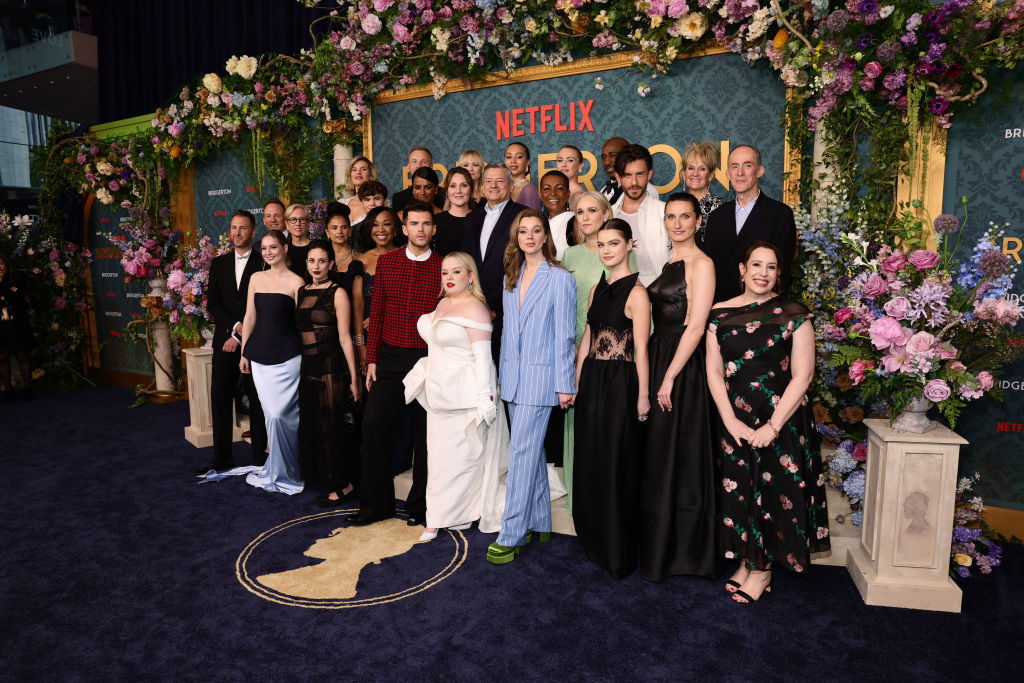
Keeping up with the latest on “Bridgerton” just keeps getting more and more expensive.
When the first episode of the Regency-era drama came out on Netflix, in December 2020, subscribers to the basic plan paid $8.99 a month for access. Today, getting your “Bridgerton” fix is a third more expensive, thanks to two price hikes in three years.
And it could get worse: UBS analysts think Netflix subscribers could face another price rise sometime this year.
“The subscription prices are always increasing a dollar per year,” Tony Gunnarsson, an analyst who covers major streaming video platforms at Omdia, said. “That seems to be the long-view experience based on Netflix, basically.”
This blow to consumers is just the latest in a long line of price hikes that streaming fans have had to swallow. Netflix, often seen as the figurehead of streamers, has increased the cost of its premium subscription by nearly 92% between April 2013 and October 2023. That’s nearly three times the 36% increase that the much-maligned Big Mac has seen in about the same period of time.
McDonald’s price hike is roughly in line with inflation: a dollar in 2013 would be worth about $1.35 today. Netflix’s increase is far greater.
The same is true of other platforms, even in a shorter time frame. A standard ad-free Hulu plan would’ve set you back $12.99 in October 2021. It’s $17.99, or 38% higher, today — double the standard inflationary rise over the same time. Apple TV cost you $5 a month at its launch in November 2019 and is twice that today, despite a dollar in 2019 being worth $1.23 today.
So why is this happening? “Streaming through Netflix, going back many, many years, was subsidized,” Gunnarsson said. He said that the owners of those platforms told their investors, “This is the future.”
“They asked investors to give them loads of money, we’ll get all the users in, and eventually we’ll start making money,” he said.
Think of it like the Uber business model: drastically underprice your service to muscle out competition until you’re the dominant player in the game, and then raise prices to eventually start raking in profits.
For streaming, one problem is that competition has increased, meaning prices had to be held comparatively low. About 850 million households worldwide have an online video subscription, according to Omdia, which should be plenty to make a viable business from.
Yet when you’re facing thousands of competitors — Omdia tracks around 5,600 streaming services, including free, ad-powered, pay-per-view, subscription, and pay-TV multiscreen services — the slices from that capturable-audience pie start getting thinner.
The number of services competing for consumers’ eyeballs is about 50% higher than it was in 2012, Gunnarsson said. And while the current crop of streamers isn’t as large as it once was — numbers peaked at just under 6,000 in 2022, before consolidation across providers happened — it’s still large.
Of course, many of those are tiny, niche services. Suburban Atlanta grandmothers are unlikely to pay the $7.99 a month for anime subscription service Crunchyroll’s lowest-priced tier. (Or at least most of them are unlikely to.) But there are still between 10 and 15 major services like Netflix competing to be on customers’ credit-card bills in a mature streaming market.
The excuse that streaming services give for price hikes is that we as consumers are getting more bang for our buck. “It's certainly true that it costs a lot of money to make content,” Michael D. Smith, professor of information technology and public policy at Carnegie Mellon University, said. “It's certainly true that it costs a lot of money to license content.”
Yet it’s not necessarily true that it costs as much more to license content as we’ve seen fees rise. The number of original series produced and released by eight major streamers analyzed by Variety has fallen 19% in the past year, with only Max and Peacock maintaining the number of original shows year over year.
Seeing the quantity — and, some would argue, quality — of their services decline while they’re asked to cough up more for them has led to record-breaking levels of streaming cancellations, as Sherwood reported last month.
But even those record-breaking levels of digital cord-cutting are rounding errors when it comes to total user numbers. That helps streamers feel emboldened to keep raising prices and treating consumers like boiling frogs, Smith said.
“Consumers are lazy,” he said.
Smith said he’ll often ask his students — who are taking a course covering streaming platforms’ economics — how much Netflix costs them and will be met with blank stares. “It’s stunning how few of us know how much Netflix is,” he said. “It just magically shows up on our credit-card bill that we pay.”
Streaming-video platforms are perhaps the most obvious example of the idea that we’re locked into a vicious cycle of price hikes that shows no signs of stopping. Amazon has blamed a number of factors, including increased shipping costs, for a hike in the minimum order value non-Prime customers need to get free shipping on the e-commerce giant. In the UK and elsewhere, the free-delivery minimum order value rose from £25 ($32) to £35 ($45) in June, after a similar rise in some US regions in August 2023.
Of course you can avoid that problem and get free shipping on any order by paying for a Prime subscription, except that now costs $139 a year, up from $119 in 2022 and 75% higher than its 2005 launch price of $79 a year.
Consumers can feel like they’re being squeezed every which way, from their Spotify sub increasing a buck a month as it did in June, to fewer discount codes being doled out by DoorDash and Uber Eats, to what used to be basic amenities like the ability to book tables at restaurants going behind paid-subscription credit-card walls.
Inflation accounts for only part of it. It’s also that venture-capital funding, which often pays for the loss-leading prices and offers that attract customers to subscription services, has reached worrying new lows. The global VC market is set for its worst performance in a decade, according to PitchBook, with analysts forecasting that fundraising may not recover until the end of the decade.
Those numbers factor in that VCs are still in the throes of the AI boom, suggesting that the situation is even more dire. It appears to be a tech-focused problem; food-delivery and streaming-video or -audio apps aren’t the only services we pay for through subs.
Planet Fitness, the US’s largest gym chain, still keeps its $10 monthly fee sacrosanct. Even if you include the quasi hidden charges, the $14 or so you’ll likely end up paying is still a lower price increase than the tech-supported services.
It's pretty clear we’re unhappy about facing ever-increasing prices for ever-decreasing service. Some 36% of Americans surveyed by Deloitte don’t think their streaming-video service is worth the money they pay for it. Yet it’s hard for so many of us to cancel. Why?
Beyond the effort of navigating the myriad dark patterns designed to prevent us finding the unsubscribe button — which the Federal Trade Commission continues to investigate, publishing its most recent findings on July 10 — we’re also worried that we’d be trading in for an even worse deal.
“The real value of Netflix to me is that they know me as an individual and they can show me content that I'm likely to like,” Smith said. “A platform that doesn't know me as an individual I don’t think is going to give us good recommendations. Part of my loyalty is that Netflix knows me, and Netflix has a bunch of data on me.”