

I shipped my pants!
BUYING HABIT

We’re so thirsty for cheap Chinese stuff that there might not be enough planes to ship it
With Amazon trying to elbow in on Temu, competition will be fierce. Air cargo rates from China to the US are already rising.
From pizza peels to the latest fashion or fragrance dupe, cheap Chinese items are filling up our homes. Like, really filling them up.
More than 600,000 parcels from Temu and fast-fashion retailer Shein arrive in the United States every day. And every 24 hours, more than 100 Boeing 777 planes full of items are flying out of China with cargo from companies like Temu, Shein, TikTok Shop, and Alibaba.
Every. Single. Day.
That doesn’t happen by accident. “We have an insatiable appetite,” Miya Knights, a retail expert who cowrote a book about Amazon, said. She highlights the cost-of-living crisis hitting Western economies as the reason for these businesses’ success. Chinese-based e-commerce companies are more than happy to meet our demand.
In a survey by e-commerce marketing platform Omnisend, nearly two-thirds of participants reported shopping at Temu (owned by Chinese conglomerate PDD Holdings), Shein (privately held and reportedly eyeing an IPO), or another Chinese marketplace in the past year. One in five Americans bought gadgets and gizmos at least once a week, the study found.
There isn’t a lot of faith in Temu yet: Only 6.4% of those surveyed said they trust Temu over Amazon, and 17.5% thought the Chinese retailer would overtake Amazon, according to the study.
Andy Jassy, Amazon’s CEO, may be less certain. Faced with growing competition from Temu, his company has decided to try to beat Temu at its own game. Amazon is reportedly planning to launch a marketplace this fall that will ship directly from China to customers’ homes.
Whether or not you see the push for cheap direct-from-China goods as a mortal threat to homegrown retailers, shoppers are buying from them in droves, drawn by the low prices.
Except that costs are going up. Temu could well become a victim of its own success, with its ultralow prices pressurized by increasing costs to ship its items via plane.
Buying space on planes taking off from Southeast Asia destined for the US in the week ending July 14 cost $5.51 per kilogram of cargo, according to analytics platform Xeneta. That is up 30% from the end of 2023, and one of the highest rates since January 2023.
“The e-commerce boom out of China has transformed the air-freight market in an incredibly short period of time,” Niall van de Wouw, chief air-freight officer at Xeneta, said. That boom is almost solely driven by Temu and Shein. “You cannot have a conversation about air freight right now without mentioning Temu or Shein because the huge volumes they are shipping out of Asia to Europe and the US is disrupting the market,” he said. “On some airlines they are commanding as much as 50% of available air-freight capacity.”
The two titans of cheap e-commerce are snapping up space at an unprecedented rate. In July, van de Wouw told an industry publication that air routes from Asia over the Christmas period were practically inaccessible at anything close to affordable this year.
Van de Wouw said there’s about a 95% certainty that when you buy products from fast-fashion platforms like Shein, your goods will be flown to their destination rather than shipped. Even though consumers may balk at the lengthy shipping times compared to Amazon Prime, products are still arriving at homes speedily.
“There is simply no other way to get it from a factory in Asia to a consumer’s home in Europe or the US in such a short amount of time,” van de Wouw said.
Such stark price rises obviously have an effect on those businesses’ bottom lines. “We’ve seen what happens when air freight becomes expensive, most recently as a fallout of the early stages of the COVID pandemic,” said e-commerce expert Dan Barker, who’s spent nearly three decades as a consultant and executive in the industry. Xeneta’s data shows that during the pandemic, China-US cargo-plane space cost far more — up to $8 per kilogram of cargo in July 2022. “Product margin gets squeezed for some retailers. Some put their prices up to account for that,” Barker said, or “lead times go up as some switch to other methods.”
The lead-times conundrum — caused by a paucity of low-cost places on planes to fly goods over from China— is a particularly challenging one for the likes of Temu, which rely on capturing the zeitgeist. That’s why Temu and their competitors prefer to ship by air: it allows more flexibility on what you sell.
“Slower methods mean you have to plan further in advance, shipping in larger chunks,” Barker said. “That inevitably means missing some trends and getting some trends wrong.”
It can also result in wild swings between under- and overstocking specific items, meaning you either miss a major trend or bank big on it thinking it’ll become huge, which is never guaranteed. For example, the Hawk Tuah woman’s time in the limelight was fleeting — so pity anyone who loaded up a shipping container with branded merch currently chugging its way around the Horn of Africa.
While customers are willing to wait a week or so for their cut-price items from Temu, any longer and they get antsy. “As part of that value equation of price, promotions, and proximity,” Knights said, consumers have been trained to expect speed as an element of convenience. “The question on people’s minds is, ‘How quickly can you get it to me?’”
The question for Temu is how cheaply it can get items to customers — and here it can take advantage of rules that help skirt import charges. The US operates import regulations that include a de minimis rule. Essentially, if a package worth less than $800 arrives in the country from abroad, it’s exempted from customs duties.
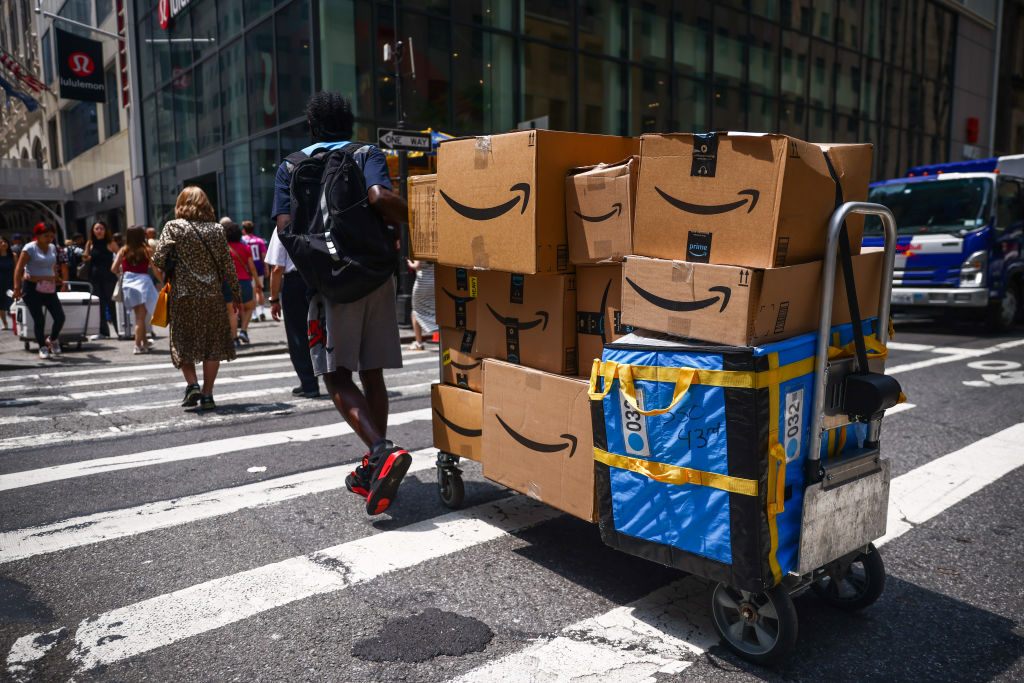
If Temu were shipping stock at scale into the US to then store in local warehouses, it would incur import charges. Instead it ships them directly to consumers, and most aren’t crazy enough to buy $800 worth of items from Temu at one time. Temu’s average order value worldwide is between $26 and $28, according to Tech Buzz China, though the average order in the US is about $40, up from $30 at the start of 2023. Tech Buzz China reports the company is aiming for an average order value of $50 from US customers, which would put it on par with Shein.
Xeneta’s van de Wouw doesn’t think Temu has built its business by taking advantage of de minimis exceptions. “The primary aim of an e-commerce business model is not avoidance of import duties,” he said. “It is to directly connect consumers in the West with cheap manufacturing in the Far East.” But he also doesn’t think it’s harmed the company’s success. After all, one-third of all de minimis shipments that arrived in the country last year came from Shein or Temu.
Politicians have sat up and noticed. Congress is debating a bill that would remove the de minimis exception for parcels of Chinese origin. That means Temu and Shein packages would come underthe Section 301 tariff rules that Donald Trump introduced during his presidency, which were designed to claw back China’s supposedly uncompetitive advantage over homegrown goods. Another alternative would be reducing the $800 threshold down to something like $200 — the level it was before Barack Obama raised it during his time in the White House — bringing the US closer in line with other countries.
That could push up prices for consumers, but wouldn’t kill Temu’s business model, van de Wouw said. “A change to the de minimis threshold by itself is unlikely to have a dramatic effect,” he said. “The threshold is much lower in the EU than the US, but there are huge e-commerce volumes being flown into both regions,” he added.
Nor does everyone think the era of cheap Chinese clutter filling up our homes is at an end. “I think that's a step too far,” Knights said. “It will die, and it will die a slow death. But all of these things have a really, really long tail.”
And as Knights points out, PDD Holdings isn’t exactly short of cash to keep Temu’s business running, even with squeezed margins. Itreported its estimate-beating first-quarter earnings in May, where it announced it was generating $133 million in revenue each day.
Chris Stokel-Walker is a UK-based journalist. His latest book is How AI Ate the World.



