Lights Out
CURRENT AFFAIRS
“It’s going to get a lot worse before it gets better.”
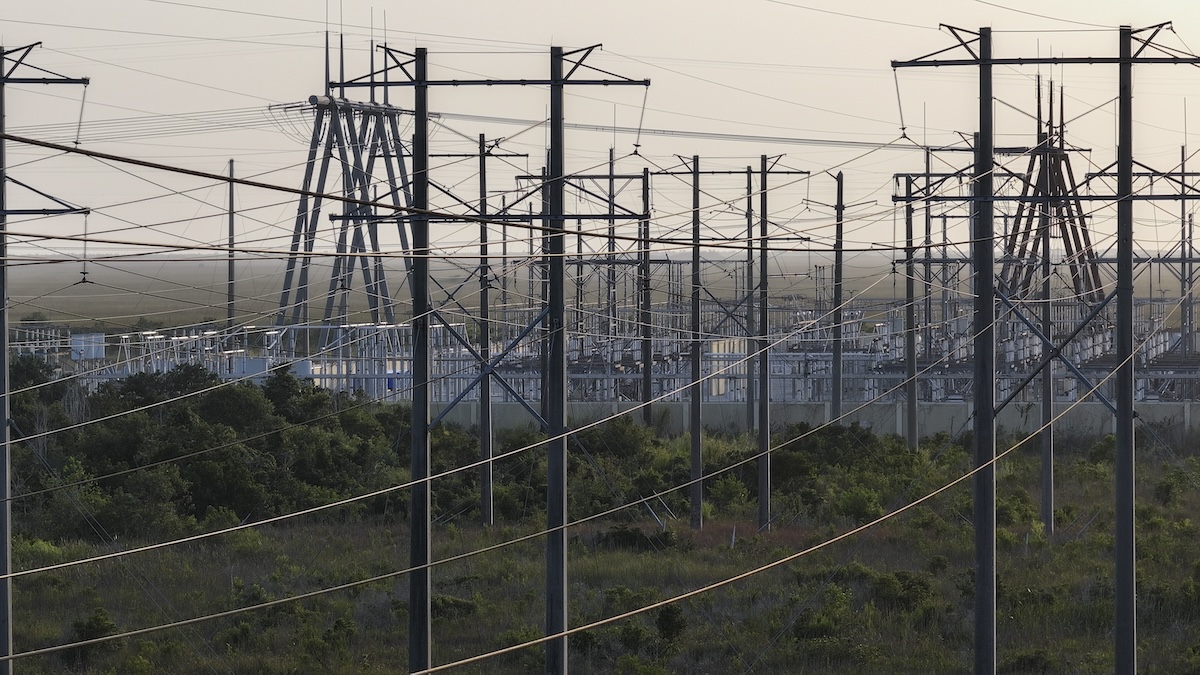
Shortages of a 193-year-old piece of tech have put the US electrical grid on the brink
Skyrocketing demand for new transformers is overstripping supply, and the shortfall is wreaking havoc on vital industries across the economy.
You may’ve never noticed one of those grayish metal boxes on street corners or hanging on electrical lines. These everyday parts of modern electrical infrastructure, called transformers, often stick out only when they get painted and become street art.
There are over 60 million transformers in the US, and they’re essential to everyday life. New housing developments and subdivisions, desperately needed across the country, require them to open. The proliferation of energy-hungry data centers powering our digital lives depend on them. And the global transition toward renewable power, EVs, and a greener grid will slow down without a more robust stockpile.
But the skyrocketing demand for transformers is outstripping supply — and the shortfall is wreaking havoc on vital industries across the economy.
“They're critical to pretty much every component of the electrical transmission and distribution infrastructure across the globe,” said Benjamin Boucher, a senior analyst at Wood Mackenzie, an energy-research firm. “The shortage is going to be one of the biggest talking points as it pertains to the energy transition and electricity markets for the foreseeable future. There’s no real end in sight, and it’s going to get a lot worse before it gets better.”
America’s energy grid is anything but monolithic. Built in fits and starts over more than a century — using myriad technologies, standards, and materials — it’s a wildly eclectic collection of infrastructure. To accommodate the variety, and the constantly growing types of energy users who plug into the grid, utilities need many different kinds of transformers. Roughly 80,000 varieties exist, according to the American Public Power Association (APPA), so many that there’s an effort with the Department of Energy to standardize.
Transformers perform a key role in the grid: they allow power to more efficiently transmit across power lines. Some transformers — typically gigantic ones costing millions of dollars that reside next to generating stations — “step up” the voltage and current from power originating at a generation source, such as solar panels, to send it over the grid. Other smaller devices, like those on utility poles and street corners, “step down” power from transmission lines so that it can be distributed to users such as factories or a subdivision of homes.
The current imbalance in supply and demand — a pandemic-era supply-chain shortage disrupted production just as skyrocketing investment in renewables and EVs required more transformers — has experts concerned on the cusp of what’s expected to be an extremely active hurricane season. Extensive damage to power lines and electrical infrastructure across the Southeast would severely strain already depleted utility transformer reserves. During Hurricanes Katrina and Rita, in 2005, Louisiana utility Entergy lost 12,600 transformers.
Further, the shortage has had a detrimental effect on the housing industry. Developments and new multifamily projects need transformers to open, so much-needed new supply amid a national housing shortage gets delayed by lack of transformers. Roughly 80% of homebuilders and apartment developers have reported shortages, the National Association of Home Builders said.
Making things more difficult is that transformers truly depend on the highly skilled people who work on them. In many ways, each transformer can be a bit bespoke, said Peter Ferrell, director of government relations for the National Electrical Manufacturers Association. The cores of these devices typically consist of grain-oriented electrical steel, a rare variant that requires a highly technical extrusion to make it more conductive. A copper coil then gets wired around the core by hand, a process that can take workers years to master.
“It's kind of ironic,” Ferrell said, “that as America is rushing to employ AI, you need to go the old-fashioned way and have some guy hand-wire a coil that makes it all possible.”
The recent sharp growth in renewables and manufacturing demand surprised the transformer industry, Boucher added. With electricity demand in the US growing for the first time in two decades because of the data-center boom, the new constellation of manufacturing plants, electric-vehicle and battery factories, and a general push toward electrification, it’s put all manner of gear central to the grid in short supply. Circuit breakers, switch gears, and even copper face their own shortages. And this shortfall will directly affect the global shift to carbon-free energy; Wood Mackenzie estimates “as much as 25% of global renewable projects could be at risk of project delays due to high transformer lead times.”
All these issues have ballooned the queue for transformers. The wait time for one, which used to be a few weeks in 2021, is now between 100 and 120 weeks, said Adrienne Lotto, a senior vice president at APPA, and prices have shot up between 60 and 80%. Demand is only forecast to grow, with the National Renewable Energy Laboratory predicting anywhere from 160 to 260% more transformers needed in the US by 2050.
“A lot of transformers are coming up to the end of their lifespan, so they’re getting to the point where they need to be replaced,” Boucher said. “And with the influx of extreme weather we’ve seen over the past few years, we’ll have to replace a lot more damaged infrastructure as well.”
There have been peaks and valleys of demand for transformers in the past, Ferrell said, but the situation today is “unprecedented.” Some utility operators, strained and seeking a temporary Band-Aid for low transformer capacity, have actually completed inventories of their operating transformers and rearranged them like puzzle pieces, trying to match up those with larger capacity in areas with growing power demand. Others have sought out gently used or damaged transformers for refurbishment and redeployment.
Just a handful of US firms still play a role in the transformer supply chain, a critical gap that, to Boucher, means the effects of this shortage will be felt more acutely here than elsewhere. A significant number of the transformers used in the US — about 80% — come from overseas, notably Japan, China, Germany, and South Korea. Ohio’s Cleveland-Cliffs is the only US domestic steelmaker that produces the special steel needed for these devices, while ERMCO, in Dyersburg, Tennessee, is one of a handful of places that still manufacture transformers themselves. The shortage of skilled labor and high cost of starting up a manufacturing facility has dissuaded new firms from joining the fray. Foreign companies like Hitachi and Siemens have plans to invest in the US, but Boucher isn’t certain they’ll expand enough to meet the constant demand.
A $1.2 billion package of incentive aimed at alleviating the shortage — training and growing the workforce and expanding production lines — has been making the rounds in Washington, DC, with backers in the housing, manufacturing, and tech industries. But as APPA’s Lotto said, a polarized Congress in an election year seems unlikely to act. But $1.2 billion would be a small price to pay to keep the lights on, a task that may continue to get more challenging.
Patrick Sisson is a reporter covering cities, technology, and business.