Business

FAR CRY FROM SUCCESSFUL

TAKING DAMAGE

Ubisoft Assassin’s Creed Shadows imagery
An Assassin's Creed Shadows banner at a conference in London last month. (Photo by John Keeble/Getty Images)

For Ubisoft, it’s been a wild ride — mostly downhill

The maker of “Prince of Persia” and “Assassin’s Creed” has fallen off a cliff. Now its founding family is talking to Tencent about a takeover.

Jared Russo

September might go down as the worst month in history for video game publisher Ubisoft. The French stalwart had a slew of miserable announcements, game delays, investigations, and devastating financial blows. In fact, the company best known for developing the acclaimed series “Prince of Persia” and “Assassin’s Creed” lost 41% of its value in September, as its stock plumbed a new 10-year low. Oh mon Dieu!

That’s just the latest leg down for Ubisoft, which has fallen from a prepandemic high of $23 a share to a paltry $2.21, an 86% decline since September 2019. On Friday, investors got a pop when Bloomberg reported that Ubisoft’s founding family is in talks with big investor Tencent to potentially sell the company. The stock shot up 33%, but that move didn’t even get it back to where it was as recently as September 9.

Even if the company gets taken private at levels it hasn’t consistently traded at since 2014, things aren’t going to get better instantly. Ubisoft’s bad news has snowballed into an avalanche weighing down the global brand. 

First, the company canceled its appearance at the Tokyo Game Show near the end of September out of nowhere, abruptly postponing all press previews of the upcoming holiday release “Assassin’s Creed Shadows.” Then gamers found out Ubisoft’s end-of-year blockbuster was being delayed to Valentine's Day 2025. After that, CEO Yves Guillemot shared that the recently released “Star Wars: Outlaws” failed to hit internal goals. All of that happened within the span of 48 hours.

Disappointing sales are one thing, but anyone who’s been following the output of Ubisoft recently knows the company hinges on each “Assassin’s Creed” title coming out to big numbers, and a delay into a crowded first quarter isn’t ideal. If “Shadows” flops, it could spell even more disaster for Ubisoft.

All of that — summed up in this press release from September 25, explaining away the reasons for the bad press and recalculating fiscal targets — was bad enough. Then Ubisoft said an executive committee would launch a review of the company’s strategy. Still, making more high-quality games and selling a lot of them is the only real answer to the company’s woes. 

Ubisoft didn’t respond to a request for comment.

It’s not a great time to be a company that publishes video games or a worker at one of those companies. The industry has been gutted by layoffs, including at Microsoft, Sony, and Epic Games. The gaming industry is cutthroat, fewer games are being released, and costs are going up for the companies that make games and the players who buy them.

Today, making games costs more than ever, takes longer than ever, and is riskier than ever — and fewer opportunities mean increased pressure for each release to be a smash hit. And lately, the way Ubisoft’s major releases have been reviewed critically… Let’s just say it’s not on a hot streak.

As if the company’s business challenges weren’t bad enough, Ubisoft has also been plagued by sexual-harassment scandals and toxic workplace allegations for years, and some of its former top brass are on trial in France. Former executives from an “Assassin’s Creed” studio face harrowing charges, as the company (and Guillemot) were named in a complaint plaintiffs lodged in 2021. Five former execs were arrested earlier this year, though Guillemot wasn’t among them. 

The company also battled with online trolls harassing developers of “Assassin’s Creed Shadows” after they learned the company cast historical figure Yasuke, a Black man, as one of its two protagonists. Guillemot had some harsh words for fans and industry rubberneckers: “One thing I am concerned about right now is the malicious and personal online attacks that have been directed at some of our team members and partners. I want to make it clear that we at Ubisoft condemn these hateful acts in the strongest possible terms, and I encourage the rest of the industry and players to denounce them, too.”

Unfortunately, Guillemot doesn’t have too much else to say about the internal politics and workplace culture when faced with the dire financial situation. Mostly what you’ll hear from Ubisoft directly isn’t about working conditions, or the harassment trial, but generic corporate responses like this, from a press release: “Ubisoft has both high-quality game IP and talented developers; despite that, the last six years have been an almost non-stop parade of game delays, followed by game launches that are still undercooked, as well as misallocation of capital to games that probably never should have been green-lit in the first place.” 

There are only a handful of third-party, big-budget gaming publishers like Ubisoft around to support first-party giants Nintendo, Sony, and Microsoft. Since the industry was formed in the late ’70s, more than 65% of the 902 gaming publishers that have existed in that time are now defunct. Of the remaining 248 still active, only a few are major players in the industry, and the single biggest (Activision Blizzard) was just gobbled up by Microsoft for a cool $69 billion last October. The FTC failed to win its antitrust case, essentially leaving just Take Two, EA, and Ubisoft. 
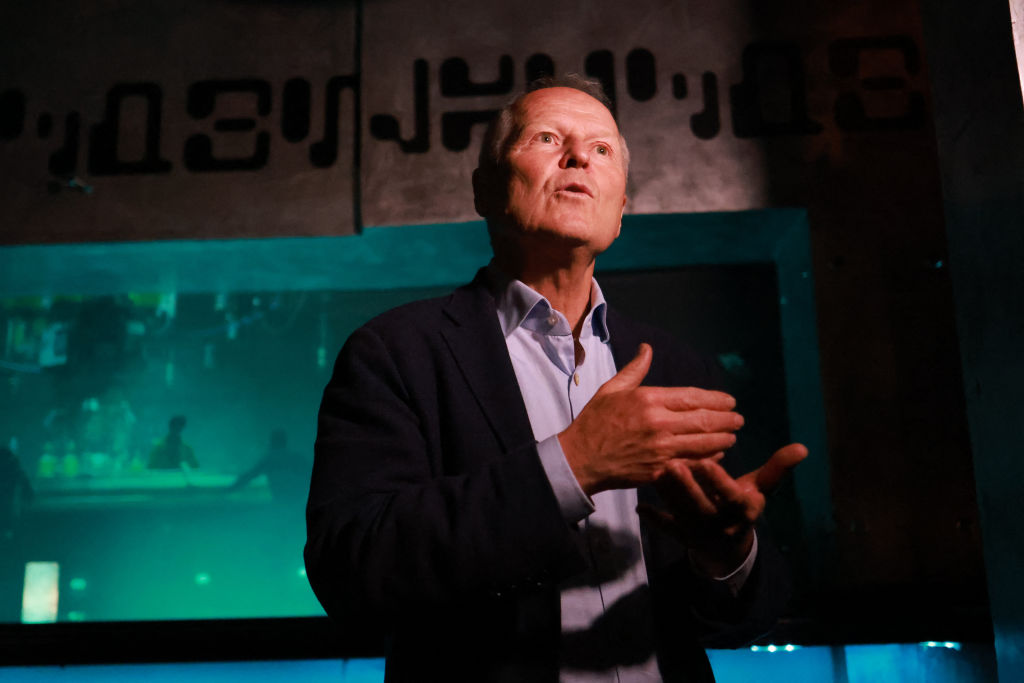
Ubisoft’s Yves Guillemot
Ubisoft’s Yves Guillemot at a company conference in LA on June 9. (Photo by David Swanson / AFP via Getty Images)

Ubisoft is run by the Guillemot family. They own 15% of the company, followed by Chinese gaming juggernaut Tencent, which owns almost 10%. After a scare from rival Vivendi, which attempted a hostile takeover back in 2018, Ubisoft made a strategic partnership deal with Tencent to save the company and keep control in the hands of the Guillemots. Now the two parties are in talks to take the company private.

The conversations about going private, selling off assets, or just outright finding somebody bigger to consolidate into are all becoming louder. Who knows if or when the Guillemot family buckles? And if another giant in video games collapses or gets purchased, will the lack of big publishers stifle creativity and bottleneck the gaming industry into another crash like we saw in the early 1980s? 

“In the light of recent challenges, we acknowledge the need for greater efficiency while delighting players,” the company said in the September 25 press release. “As a result, beyond the first important short-term actions undertaken, the Executive Committee, under the supervision of the Board of Directors, is launching a review aimed at further improving our execution, notably in this player-centric approach, and accelerating our strategic path towards a higher performing model to the benefit of our stakeholders and shareholders.” 

With half the board of directors being Guillemot family members, it’s hard to believe much will change. But if enough investors get spooked by the share price going into freefall, maybe massive changes will finally come. Let’s hope they come to their senses and start with that “Splinter Cell” reboot I’ve been telling Ubisoft to finish for years now.

Jared Russo is a writer from New York who spends his days online covering the tech industry, ranting about sports, and playing video games.

More Business

See all Business
business
Tom Jones

Prime Day is here again and Amazon’s subscription service has never been more popular

Well, it’s that time of year again: many have made their wish lists, people are scraping together the money they’ve saved to pick out a perfect gift, some are presumably leaving out refreshments for the weary delivery drivers and, more and more, drones.

It’s Amazon Prime Day — meaning that it’s the second day of the four-day promotional event that Amazon still calls Prime Day — of course, and it’s even come early this year, with the company bringing the period into late June from July, when it’s been traditionally held for the last five years.

The Prime Age

Alongside the eyes and endless clicks that the arbitrary stream of listicles on “The Best Prime Day Deals” that almost every media outlet pours into, Amazon will also be cheering the fact that there’s now more Prime users than ever before to devour the retailer and its sellers’ sometimes-contested “discounts.” Indeed, according to the latest annual estimates from Consumer Intelligence Research Partners (CIRP), there were just over 200 million American shoppers using Amazon’s massive subscription service at the end of 2025.

business

Electronic Arts launches a platform to put more ads in its games

Video game publishing giant EA launched a new platform on Monday designed to make the process of selling immersive ad space in its popular games easier.

The company says the platform, called EA Advertising, allows brands to “integrate directly into gameplay through dynamic, real-time placements, from stadium signage to custom in-game content.”

More so than other studios, EA has incorporated advertising into its most popular titles. As Kotaku points out, the company’s ad efforts stretch as far back as 2006. Several of its sports franchises already feature partnerships with brands like Visa, Lowe’s, Red Bull, and PepsiCo.

In-game advertising hasn’t exactly been embraced by fans, but industry experts expect it to ramp up as companies seek more revenue to offset higher games budgets and surging memory costs. EA rival Take-Two has taken a different approach, with CEO Strauss Zelnick recently saying the company was “not at risk of doing brand partnerships” in the forthcoming “Grand Theft Auto VI,” and that ads in full-price games seems “unfair.”

The $55 billion deal to take EA private, led by Saudi Arabia’s Public Investment Fund, is set to close at the end of this month. Being the largest leveraged buyout in history, EA will likely look for more ways to boost revenue to cover interest payments.

More so than other studios, EA has incorporated advertising into its most popular titles. As Kotaku points out, the company’s ad efforts stretch as far back as 2006. Several of its sports franchises already feature partnerships with brands like Visa, Lowe’s, Red Bull, and PepsiCo.

In-game advertising hasn’t exactly been embraced by fans, but industry experts expect it to ramp up as companies seek more revenue to offset higher games budgets and surging memory costs. EA rival Take-Two has taken a different approach, with CEO Strauss Zelnick recently saying the company was “not at risk of doing brand partnerships” in the forthcoming “Grand Theft Auto VI,” and that ads in full-price games seems “unfair.”

The $55 billion deal to take EA private, led by Saudi Arabia’s Public Investment Fund, is set to close at the end of this month. Being the largest leveraged buyout in history, EA will likely look for more ways to boost revenue to cover interest payments.

business

JM Smucker says it sold $1 billion worth of Uncrustables in FY2026

After years of booming sandwich sales, JM Smucker has finally earned a billion-dollar crust.

On Tuesday, the company reported results for fiscal year 2026, highlighting better-than-expected profits driven by higher prices for coffee and sweet baked goods. However, at another point on the earnings call, CEO Mark Smucker pointed to one particularly jammy figure: in line with previous forecasts, the company sold $1 billion worth of its (almost always) crustless sandwiches, Uncrustables, in the last year alone.

business

Paramount reportedly offers concessions to resolve multistate antitrust investigation

Paramount has reportedly offered up some concessions in an effort to prevent an antitrust lawsuit by California and about 10 other states, according to Bloomberg reporting on Monday.

Reuters first reported on the potential suit from a group of unnamed states last week, which could throw a wrench in Paramount’s plans to buy rival Warner Bros. Discovery in a Hollywood megamerger.

The list of concessions is unknown, though Bloomberg previously reported that Paramount is open to divesting some of its kids TV assets to appease EU regulators.

Late last month, reports said US regulators appeared likely to approve the $110 billion merger, following a meeting between Paramount CEO David Ellison and DOJ antitrust staffers.

The list of concessions is unknown, though Bloomberg previously reported that Paramount is open to divesting some of its kids TV assets to appease EU regulators.

Late last month, reports said US regulators appeared likely to approve the $110 billion merger, following a meeting between Paramount CEO David Ellison and DOJ antitrust staffers.

$98B ⛽

The IATA released its latest financial outlook for the airline industry over the weekend, forecasting a $98 billion jump in the sector’s collective fuel bill. The world’s largest trade group representing airlines expects the oil spike to halve profits by 49% from last year to $23 billion.

The group also expects profit margins to halve year over year, falling from 2025’s 4.2% to 2%. Still, revenue is expected to climb to $1.17 trillion from $1.07 trillion.

A surge in the cost of jet fuel has rocked US and global airlines this year, leading Delta Air Lines, United Airlines, American Airlines, Southwest Airlines, JetBlue, and others to raise fares and ancillary charges like bag fees. Low-cost carriers, which operate on smaller margins, have been squeezed the hardest, resulting in Spirit’s shutdown.

“It’s a tough year for all airlines, especially those whose balance sheets had not yet recovered from COVID. And, of course, for those operating in the Gulf,” said IATA Director General Willie Walsh, who added that demand is holding up and about half of passengers expect to spend more on travel this year. “That bodes well for a strong northern summer peak season. The big unknown is how long travelers and shippers can tolerate the higher costs of connectivity.”

Latest Stories

Sherwood Media, LLC and Chartr Limited produce fresh and unique perspectives on topical financial news and are fully owned subsidiaries of Robinhood Markets, Inc., and any views expressed here do not necessarily reflect the views of any other Robinhood affiliate, including Robinhood Markets, Inc., Robinhood Financial LLC, Robinhood Securities, LLC, Robinhood Crypto, LLC, Robinhood Money, LLC, Robinhood U.K. Ltd, Robinhood Derivatives, LLC, Robinhood Gold, LLC, Robinhood Asset Management, LLC, Robinhood Credit, Inc., Robinhood Ventures DE, LLC and, where applicable, its managed investment vehicles.