Business
Seeing
Getty Images

What “we’re seeing”

The two magic words that offer a window into corporate executives’ deepest thoughts

Nobody really wants to listen to corporate executives talk for very long.

Sure, every once in a while, they say something interesting. But it’s rate, especially on the conference calls that typically follow quarterly earnings reports.

And even when they have something to say, it’s easy to miss. Because those bits of actual information are usually buried under thick blankets of business school jargon, slippery phrasing, and self-promotional spin.

Lucky for you, dear reader, I’m about to share a secret that I stumbled across during my roughly 15 years of of eavesdropping and eye-skimming the transcripts of these calls.

Simply search for the phrase “we’re seeing ...”

I don’t know why, but those magic words are often followed by a relatively concrete and succinct bit of information, a jewel of clarity amidst an otherwise mealy mouthed morass.

To prove it, I took a quick tour through some of the transcripts that were produced throughout the last few weeks of Q1 earnings season.

So here’s some of what “we’re seeing” — as explained by executives over the last six weeks of earnings reports — arranged thematically for your enjoyment.
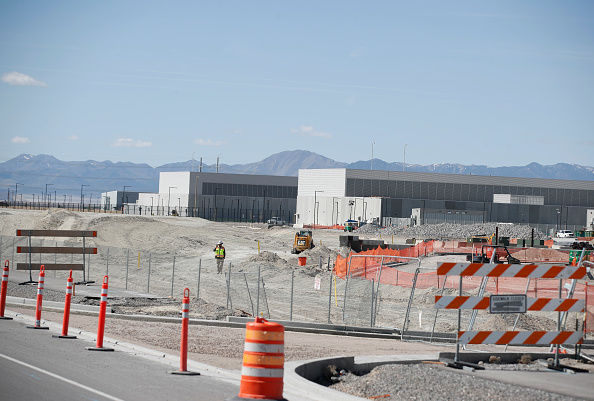
The AI boom and its beneficiaries
Facebook Data Center Utah
Getty Images

“The news right now about the ubiquitous world of chip manufacturing and how AI is driving, not just chip manufacturing, but also data centers. We're seeing that. The CHIPS Act money has now been delivered to the market.”

-Robert Pragada, CEO of engineering firm Jacobs Solutions

We're seeing very significant momentum and people trying to figure out how to run their generative AI on top of AWS. I mentioned we have a multibillion dollar revenue run rate that we see in AI already. And it's still relatively early days.”

-Andrew Jassy, CEO of Amazon.com


“We're seeing this outsized growth in projects announced, in our negotiations, data centers is obviously one of the big contributors.”

-Craig Arnold, CEO of electrical products firm Eaton Corp.

Where we are seeing some green shoots, and I think this is important, is in AI and in data centers. So, for example, I mentioned Google is building a new facility in Kansas City. It's going to take about 800,000 tons. But it's not just there. I mean, we're seeing it across the Midwest. We're seeing it in Omaha. We're seeing it in Des Moines. And we're going to be a disproportionate beneficiary of that.

-C. Howard Nye, CEO of gravel, asphalt and cement maker Martin Marietta Materials

“We're seeing interest in developing projects that are on a size and scale that presently don't exist, but will be needed for training systems and other things to kind of build out and support the need for all of these foundational models.”

-Joseph Dominguez, CEO of Constellation Energy
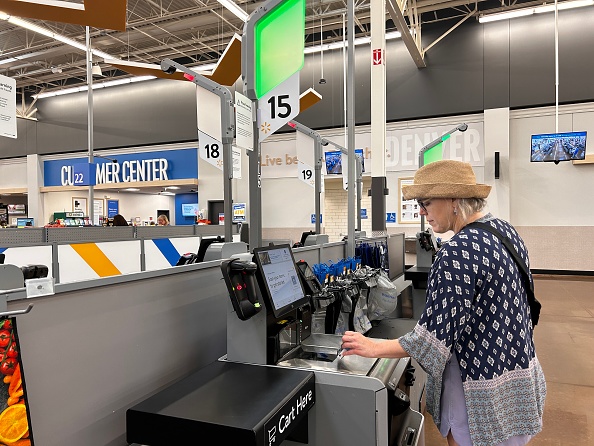
Consumers under pressure
Consumers
Getty Images

We’re seeing pressure across all consumer groups ...  we’re seeing that behavior quite broadly and we call it value-seeking. People are buying larger sizes. They’re buying smaller sizes, and they’re thinking about the trips they take.”

-Linda Rendle, CEO of Clorox

“In North America, we're seeing increased promotional intensity combined with a significant shift in sales to ... club stores, dollar stores and emerging e-commerce platforms. Lower-income consumers feel pressured.”

-Dirk Van de Put, CEO of snack food giant Mondelez

“As far as the international consumer goes, it's probably more of an emphasis on value than there has been in past quarters. We're seeing the same thing in the US.”

-David Gibbs, CEO of KFC parent Yum! Brands

“Middle-to-lower-income households look like they're becoming more stretched based on all the economic data we're seeing.”

-Michael Hsu, CEO of Kleenex maker Kimberly-Clark

We're seeing higher engagement across income cohorts with upper-income households continuing to account for the majority of the share gains.”
-John D. Rainey, CFO of Walmart

The state of real estate
US real estate
Getty Images

We are seeing really great activity across all of the buildings in our D.C. and Northern Virginia portfolio.”

-Jake Stroman, an executive at Boston Properties, an office REIT.

“The rent-versus-own economics that we're seeing today are really unique, not something that we've seen... you're approaching where it's—in some of our markets—two times more expensive to own versus rent.”
-Ben Schall, CEO of AvalonBay Communities, an apartment REIT

We're seeing record rental rates in some of the bigger markets in the higher quality assets; New York, as an example. We're seeing financial institutions and business services companies, in particular, taking more space. Tech is way down.”

-Robert Sulentic, CEO of commercial real estate brokerage CBRE
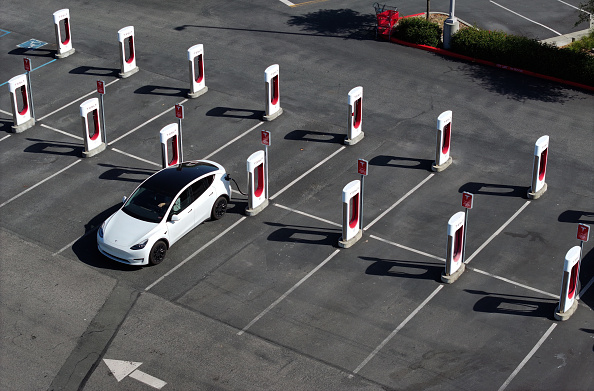
EV uncertainty
EV uncertainty
Getty Images

“When the EV craze started, right, it looked like demand was going to be well [above] supply. But that was with the early adopters, and they were willing to pay a higher price. What we're finding with being in the marketplace is that EV prices are normalizing, and our early majority customers are not willing to pay a premium. And that's what we're seeing.

-John Lawler, CFO of Ford

“What seems to be happening is that – unless I'm missing something – the orders for batteries from other auto makers have declined dramatically. So, we're seeing much more competitive prices for cells from our suppliers—dramatically more competitive—than in the past. It is clear that a lot of our suppliers have excess capacity.”

-Elon Musk, CEO of Tesla

We're seeing some push out on EV, but we are not seeing cancellations of those projects, and it doesn't mean that they've all gone away.”

-Blake Moret, CEO of assembly line company Rockwell Automation

“We're obviously working through the high voltage headwind at the moment. We've seen those schedules come down. But as I talked about in my prepared remarks, we're seeing good hybrid growth. We're seeing the internal combustion volumes come back up.”

-Joseph Massaro, CFO of auto components supplier Aptiv

China trouble
China Consumer
Getty Images

We’re seeing more intense price competition than what we expected [in China.] None of that takes away from the long term, but it’s clear that what we had this quarter was tough.”

Laxman Narasimhan, CEO of Starbucks

“Chinese consumers are being very cautious and we're seeing the savings rate really going very high in China."

Ramon Laguarta, CEO of PepsiCo

“Related to the consumer in China, like many others, we're seeing macro headwinds.”

-Joanne Crevoiserat, CEO of luxury handbag maker Tapestry

You see, it works!

More Business

See all Business
business
Tom Jones

Prime Day is here again and Amazon’s subscription service has never been more popular

Well, it’s that time of year again: many have made their wish lists, people are scraping together the money they’ve saved to pick out a perfect gift, some are presumably leaving out refreshments for the weary delivery drivers and, more and more, drones.

It’s Amazon Prime Day — meaning that it’s the second day of the four-day promotional event that Amazon still calls Prime Day — of course, and it’s even come early this year, with the company bringing the period into late June from July, when it’s been traditionally held for the last five years.

The Prime Age

Alongside the eyes and endless clicks that the arbitrary stream of listicles on “The Best Prime Day Deals” that almost every media outlet pours into, Amazon will also be cheering the fact that there’s now more Prime users than ever before to devour the retailer and its sellers’ sometimes-contested “discounts.” Indeed, according to the latest annual estimates from Consumer Intelligence Research Partners (CIRP), there were just over 200 million American shoppers using Amazon’s massive subscription service at the end of 2025.

business

Electronic Arts launches a platform to put more ads in its games

Video game publishing giant EA launched a new platform on Monday designed to make the process of selling immersive ad space in its popular games easier.

The company says the platform, called EA Advertising, allows brands to “integrate directly into gameplay through dynamic, real-time placements, from stadium signage to custom in-game content.”

More so than other studios, EA has incorporated advertising into its most popular titles. As Kotaku points out, the company’s ad efforts stretch as far back as 2006. Several of its sports franchises already feature partnerships with brands like Visa, Lowe’s, Red Bull, and PepsiCo.

In-game advertising hasn’t exactly been embraced by fans, but industry experts expect it to ramp up as companies seek more revenue to offset higher games budgets and surging memory costs. EA rival Take-Two has taken a different approach, with CEO Strauss Zelnick recently saying the company was “not at risk of doing brand partnerships” in the forthcoming “Grand Theft Auto VI,” and that ads in full-price games seems “unfair.”

The $55 billion deal to take EA private, led by Saudi Arabia’s Public Investment Fund, is set to close at the end of this month. Being the largest leveraged buyout in history, EA will likely look for more ways to boost revenue to cover interest payments.

More so than other studios, EA has incorporated advertising into its most popular titles. As Kotaku points out, the company’s ad efforts stretch as far back as 2006. Several of its sports franchises already feature partnerships with brands like Visa, Lowe’s, Red Bull, and PepsiCo.

In-game advertising hasn’t exactly been embraced by fans, but industry experts expect it to ramp up as companies seek more revenue to offset higher games budgets and surging memory costs. EA rival Take-Two has taken a different approach, with CEO Strauss Zelnick recently saying the company was “not at risk of doing brand partnerships” in the forthcoming “Grand Theft Auto VI,” and that ads in full-price games seems “unfair.”

The $55 billion deal to take EA private, led by Saudi Arabia’s Public Investment Fund, is set to close at the end of this month. Being the largest leveraged buyout in history, EA will likely look for more ways to boost revenue to cover interest payments.

business

JM Smucker says it sold $1 billion worth of Uncrustables in FY2026

After years of booming sandwich sales, JM Smucker has finally earned a billion-dollar crust.

On Tuesday, the company reported results for fiscal year 2026, highlighting better-than-expected profits driven by higher prices for coffee and sweet baked goods. However, at another point on the earnings call, CEO Mark Smucker pointed to one particularly jammy figure: in line with previous forecasts, the company sold $1 billion worth of its (almost always) crustless sandwiches, Uncrustables, in the last year alone.

business

Paramount reportedly offers concessions to resolve multistate antitrust investigation

Paramount has reportedly offered up some concessions in an effort to prevent an antitrust lawsuit by California and about 10 other states, according to Bloomberg reporting on Monday.

Reuters first reported on the potential suit from a group of unnamed states last week, which could throw a wrench in Paramount’s plans to buy rival Warner Bros. Discovery in a Hollywood megamerger.

The list of concessions is unknown, though Bloomberg previously reported that Paramount is open to divesting some of its kids TV assets to appease EU regulators.

Late last month, reports said US regulators appeared likely to approve the $110 billion merger, following a meeting between Paramount CEO David Ellison and DOJ antitrust staffers.

The list of concessions is unknown, though Bloomberg previously reported that Paramount is open to divesting some of its kids TV assets to appease EU regulators.

Late last month, reports said US regulators appeared likely to approve the $110 billion merger, following a meeting between Paramount CEO David Ellison and DOJ antitrust staffers.

$98B ⛽

The IATA released its latest financial outlook for the airline industry over the weekend, forecasting a $98 billion jump in the sector’s collective fuel bill. The world’s largest trade group representing airlines expects the oil spike to halve profits by 49% from last year to $23 billion.

The group also expects profit margins to halve year over year, falling from 2025’s 4.2% to 2%. Still, revenue is expected to climb to $1.17 trillion from $1.07 trillion.

A surge in the cost of jet fuel has rocked US and global airlines this year, leading Delta Air Lines, United Airlines, American Airlines, Southwest Airlines, JetBlue, and others to raise fares and ancillary charges like bag fees. Low-cost carriers, which operate on smaller margins, have been squeezed the hardest, resulting in Spirit’s shutdown.

“It’s a tough year for all airlines, especially those whose balance sheets had not yet recovered from COVID. And, of course, for those operating in the Gulf,” said IATA Director General Willie Walsh, who added that demand is holding up and about half of passengers expect to spend more on travel this year. “That bodes well for a strong northern summer peak season. The big unknown is how long travelers and shippers can tolerate the higher costs of connectivity.”

Latest Stories

Sherwood Media, LLC and Chartr Limited produce fresh and unique perspectives on topical financial news and are fully owned subsidiaries of Robinhood Markets, Inc., and any views expressed here do not necessarily reflect the views of any other Robinhood affiliate, including Robinhood Markets, Inc., Robinhood Financial LLC, Robinhood Securities, LLC, Robinhood Crypto, LLC, Robinhood Money, LLC, Robinhood U.K. Ltd, Robinhood Derivatives, LLC, Robinhood Gold, LLC, Robinhood Asset Management, LLC, Robinhood Credit, Inc., Robinhood Ventures DE, LLC and, where applicable, its managed investment vehicles.