Homework club
The pandemic turned the world upside down. People stockpiled toilet paper, did yoga over Zoom, baked banana bread, bought Pelotons, went crazy for online shopping, and anyone who was even thinking about buying a pool went and got one. Pretty much all of those trends have since returned to normal, but a major one has remained: working from home.
According to new data published in the Bureau of Labor Statistics’ Time Use Survey for 2023, ~35% of all employed persons in the US spent the average working day doing at least some of their work from home — up from the previous year, which saw a slight downturn after peaking at ~38% in 2021, and 16% more than two decades ago.

Universal remote
While employees initially had to create home office setups by necessity, factors like work-life balance, reduced time spent commuting, and generally becoming accustomed to the comforts of their own desks (and/or couches) left many with a taste for the hybrid 9-5 model that still lingers today… despite mounting pressure from businesses trying to clamp down on remote working.
Indeed, the desire to WFH remains strong: research cited by The Economist indicates that the typical worker worldwide wants 2 days at home — an entire day more than the actual average — and a LinkedIn survey in January found that now only 39% of US employees want a fully in-person job.
With WFH looking increasingly established, one sector in particular is struggling to adjust to the new normal: commercial real estate. In fact, although US office vacancy rates are already at record highs, according to a report from Moody’s published yesterday, they are set to continue rising up to 24% by early 2026, driven by the expiration of leases and an influx of new office buildings onto the market.
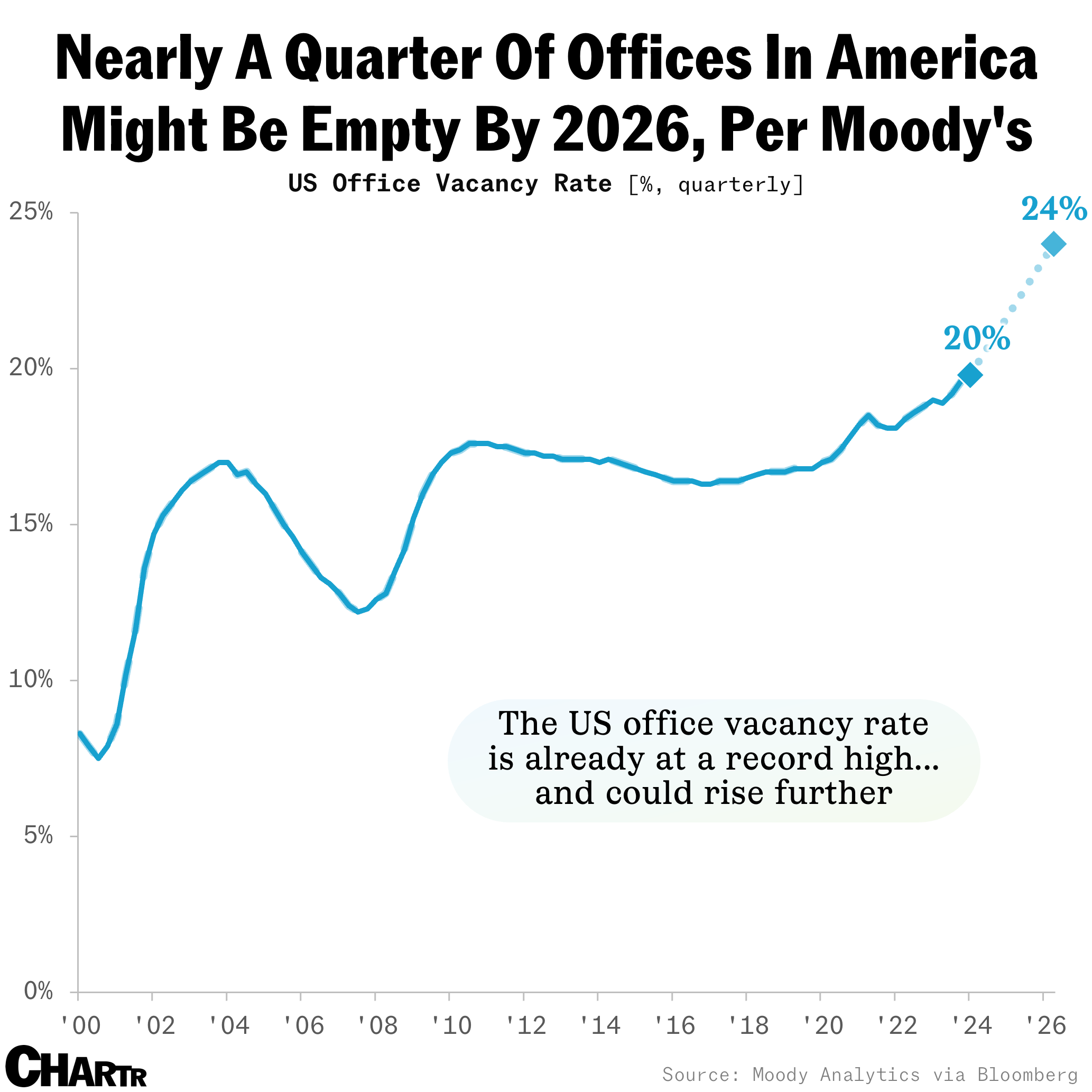
As we noted earlier this week, the pressures on the commercial real estate sector are weighing heavily on REITs and other real estate-exposed stocks… but, while there might be short-term pain, the outlook is not entirely bleak. Moody's foresees vacancy rates eventually stabilizing as redundant offices are either demolished or repurposed into warehouses and residential properties.