
Culture
Two Oranges
Getty Images
PEELING BACK

Has OJ lost its mojo?

Customers are complaining about Tropicana’s new bottle design, after years of falling orange-juice consumption.

Millie Giles

Orange juice has been the vibrant, vitamin-rich cornerstone of breakfasts and brunches in America for more than five decades, after a glut of the fruit in states like Florida last century gave rise to innovations in extracting and concentrating its nectar.

However, in recent years, a series of poor harvests has seen production falter and the price of OJ soar. At the time of writing, the price of frozen concentrated OJ futures is ~$4.80 per pound, per MarketWatch — roughly 5x where it was trading in 2020. 

Club Tropicana, drinks aren’t free

The latest blow to pocket-squeezed fans, though, is not the juice itself, but from Tropicana, America’s leading brand of OJ. The company recently redesigned its containers, replacing the iconic 52-ounce “carafe” with a narrower 46-ounce bottle.
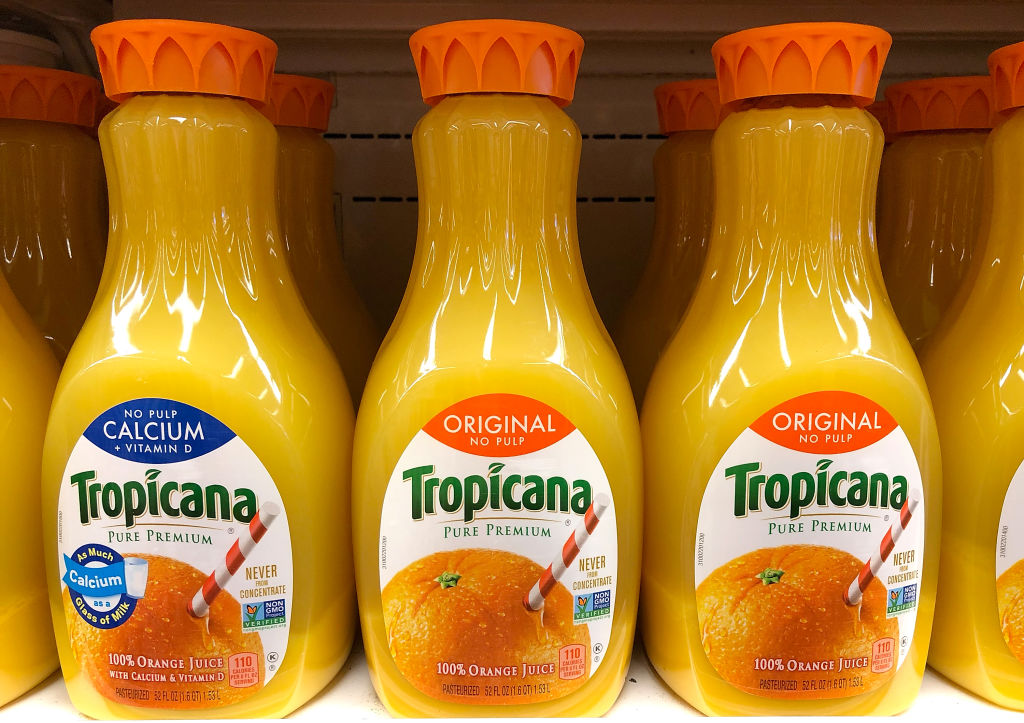
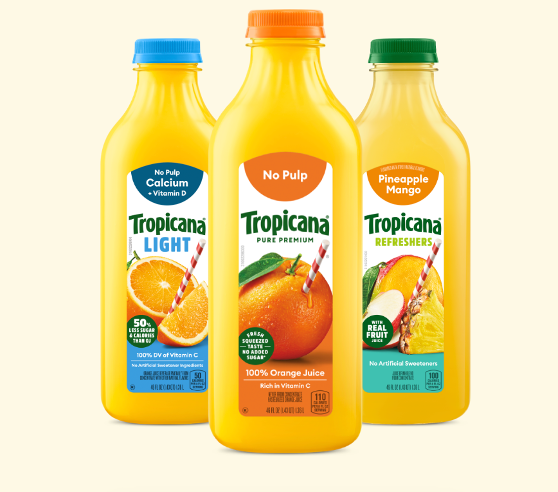
OLD Vs. NEW DESIGN:

Though Tropicana says that the price of the new bottle will be lowered to reflect its size, some customers are considering boycotting the brand on the basis of “shrinkflation,” or companies charging the same price for less product. Despite Tropicana’s explanation that retailers may not have updated prices yet, the damage to its brand may have already been done: a notorious redesign in 2009 was met with similar vitriol, costing the company an estimated $30 million over just two months.

But even without objections pertaining to packaging, consumers have lost some of their zest for the drink.
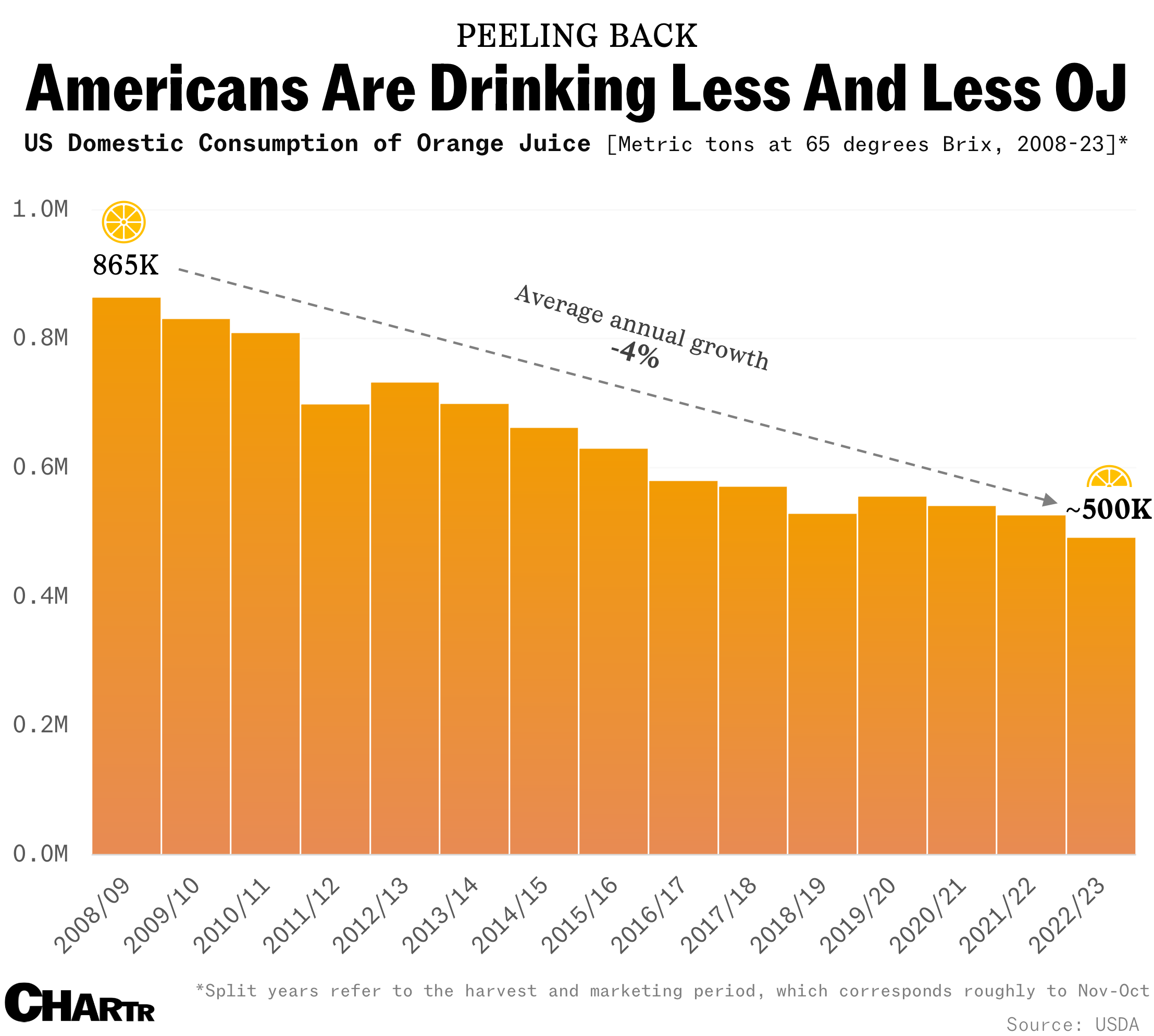
Orange juice consumption has fallen chart
Sherwood News

According to CNN, Tropicana’s sales had tumbled 19% year on year in October, and data from the USDA tells a similar story: consumption of OJ in the US has been dropping. So, why are Americans turning away from OJ?

Prices aside, one factor is that eating habits have shifted away from home cooking and toward convenience. Since OJ is typically drunk in the morning, there’s less room for leisurely sipping a glass in light of the grab-and-go approach of modern life (see also: the meteoric rise of ready-to-eat Uncrustables).

Beyond this, a big selling point of OJ has long been its nutritional value, particularly as a source of vitamin C. But now, concerns over its sugar content — The Food Institute reported that a single 12-ounce glass contains 9 teaspoons of sugar, about the same as a can of Coke — may be putting off health-conscious consumers.


More Culture

See all Culture
culture

OpenAI set to air a minute-long Super Bowl ad for a second consecutive year, per WSJ

OpenAI is expected to broadcast a lengthy commercial at Super Bowl LX, The Wall Street Journal reported Monday.

Having aired its first-ever paid ad at last year’s Big Game, the ChatGPT maker is set to take another 60-second ad slot during NBC’s broadcast on February 8, according to people familiar with the matter.

culture

Tamagotchis are making a comeback, 3 decades after first becoming a global toy craze

If you were a ’90s kid, you might remember the craze around little egg-shaped toys with an 8-bit digital screen, displaying an ambiguous pet-thing that demanded food and attention.

Now, on the brand’s 30th anniversary, the Tamagotchi the Japanese pocket-sized virtual pet that launched a thousand cute and needy tech companions, from Nintendogs to fluffy AI robots — is making a minor comeback.

Tamagotchi Google Search Trends
Sherwood News

Looking at Google Trends data, searches for “tamagotchi” spiked in December in the US, up around 80% from just six months prior, with the most search volume in almost two decades.

While the toys are popular Christmas gifts, with interest volumes often seen ticking up in December each year, the sudden interest might also have something to do with the birthday celebrations that creator and manufacturer Bandai Namco are putting on, including a Tokyo exhibition that opened on Wednesday.

Game, set, hatch

More broadly, modern consumers appear to have a growing obsession with collectibles (see: Labubu mania), as well as a taste for nostalgia (see: the iPod revival, among many other trends).

But, having finally hit 100 million sales in September last year, the brand itself is probably just glad to exist, giving a whole new generation the chance to experience the profound grief of an unexpected Tamagotchi death.

Latest Stories

Sherwood Media, LLC produces fresh and unique perspectives on topical financial news and is a fully owned subsidiary of Robinhood Markets, Inc., and any views expressed here do not necessarily reflect the views of any other Robinhood affiliate, including Robinhood Markets, Inc., Robinhood Financial LLC, Robinhood Securities, LLC, Robinhood Crypto, LLC, or Robinhood Money, LLC.