


Inside Sandisk’s transformation from thumb drive dinosaur to the hottest trade in AI
Soaring chip prices have fueled a nearly 1,000% run for Sandisk in a matter of months. Industry insiders, prolific hedge fund managers, and even the company itself seem to have been caught off guard. Analysts think the stock still has room to run.
Pretty much nobody saw it coming.
Five months and nearly a 1,000% return later, it’s one of the craziest comeback stories on Wall Street, with Sandisk, a stodgy old memory card company, vaulting to the top of the S&P 500 and squarely into the center of the AI trade.
Last August, memory chip analysts, vendors, researchers, and consultants gathered in Santa Clara, California, for their big annual conference. The vibe was far from frantic — 2025 had been a strong year, with prices steadily rising. But expectations were tempered.
Mark Webb was there. The consultant and 20-year veteran of Intel recalled how he and most of his counterparts had a similar outlook: as usual, things would likely slow down in the winter. Then there’d be a return to growth in 2026, but perhaps at a slightly slower pace.
“I don’t think there was any disagreement,” Webb recalled. “Then in September, everything started skyrocketing.”
The run on chips that launched just after that meeting put Sandisk — a company you might remember from the early 2000s as a maker of tech storage devices like USB thumb drives and memory cards for digital cameras — at the center of the hottest trade on Wall Street. Since that August industry meeting ended, Sandisk stock was up 976% as of Tuesday, when the stock closed at an all-time high.
Industry insiders didn’t expect it. One of the smartest hedge funds on Wall Street didn’t see it coming. Even the company itself seemed blindsided. In recent months, rising usage of AI by companies and consumers has generated so much data, it has prompted a rapid market reassessment of the amount of memory chips and storage devices needed to manage it.
The result: market momentum is now centering on makers of memory chips, such as Micron, and data storage products that use those chips, like Sandisk. Long considered something of a sleepy corner of the technology world, such items have now become the indispensable ingredients needed to deal with the bottlenecks that have become the chief technical challenge AI faces.

“I would say memory is the future of AI,” said Jeongdong Choe, a former engineer at Korean chip giants Samsung and Hynix and today, a specialist in memory chips for tech consulting firm TechInsights. “Because if there is no memory, there’s no AI.”
It’s a big claim, but Nvidia CEO Jensen Huang expressed similar thoughts at the annual Consumer Electronics Show in Las Vegas earlier this month. He stressed that, with the growing length of interactions between people and AI programs, AI systems must store and constantly refer to that data — known as “context” — in order to correctly interpret and respond to queries. Previously, the AI industry had used so-called high-bandwidth memory products, or HBMs, to store all that context.
“An HBM is no longer large enough,” Huang told listeners in Vegas, while standing under a presentation slide that said, “Context is the new bottleneck.”
That bottleneck demand allowed memory companies to jack up prices for key types of chips — known as DRAM and NAND — starting in September. Sandisk was a key beneficiary, becoming the top-performing stock in the S&P 500 and gaining more than $50 billion in market value.
It started with one-off reports of roughly 10% price hikes from Taiwanese contract chip giant TSMC. Sandisk soon followed with a similar hike. A few days later, Micron, a major maker of DRAM and NAND chips, took bigger steps, pulling down previous price quotes and informing customers of price increases of as much as 30%. And so it went for the rest of the year.
By the time the dust had started to clear, prices for these chips were at never-before-seen levels. Spot prices for NAND flash memory — chips that are used in everything from smartphones to computer servers and televisions — are up more than 300% since the end of September. The cost of DRAM, preferred for use in AI HBMs, is up about 280% compared to Q3, according to a Bernstein Research report released earlier this month. (The report relied on data from market research firm TrendForce.)
“It’s crazy,” Choe said of the current market conditions. “It’s kind of a supercycle.”
It’s unclear exactly why the market was caught so flat-footed. Some say memory chip makers have been operating with inventories that were simply too low, after having been left with too much in warehouses after the Covid-era boom and bust cycle for PCs, laptops, and other devices.
Sandisk didn’t respond to requests for comment.
Webb says industry contacts told him the price spike kicked off in September, as IT budgets for 2026 were finalized by hyperscalers and discussions on production for this year began. When chipmakers registered the level of demand they were being asked to supply, the imbalance was off the charts.
Whatever the reason, when these types of spikes hit prices for what are essentially commodity products, the implications are clear: massive profits.
“Opportunities to increase prices across the board”
Commodity producers have what business professors call “operating leverage.” That is, they don’t have to incur much additional cost — in hiring or investment in equipment — to satisfy additional demand. That boosts profits. And when prices rise, companies with operating leverage get to keep a large chunk of those additional sales dollars.
“It’s literally free money,” Webb said. “They’re not doing anything different. No new factories, no new shipping, no new nothing. All they do is just get twice as much money as they were getting a year ago.”
Free money sounds pretty good to investors. When the price spike hit, memory-related stocks worldwide reacted almost immediately. Micron, the largest US player in memory chips, rose over 40% in September alone. Korean memory company Nanya rose 56% in the month. In Japan, Kioxia rose more than 85%.
But even among them, Sandisk was an outlier, rising 113% that month, with gains continuing to snowball. Today, Sandisk’s performance continues to dwarf its competitors. It finished the year up over 570%, making it the top performer in the S&P 500 — to which it was added in November — for the year.
Back in June, Sandisk CEO David Goeckeler was talking a bit about AI data centers, but during a chat with analysts there was no indication a tsunami of demand was building on the horizon. He said he saw pricing and profitability improving, but because of better discipline in terms of adding supply, not because of a sudden surge of AI related orders.
“Demand is demand, right?” he said. “We try to estimate demand. We think demand is good. What we need to do is get supply matched to that.”
By August, things were starting to shift. Sandisk CFO Luis Lomelin said on the company’s post-earnings conference call, “We’re getting much tighter and to a point where sometimes our customers want products we don’t have.”
By September 10, the tone on demand was much clearer: “The market is tight, and we’ll continue to see opportunities to increase prices across the board,” Lomelin said.
Analysts say there are a couple reasons for Sandisk’s outperformance. One is that Sandisk has a growing business making so-called enterprise solid-state drives, storage devices that are in particularly high demand among AI hyperscalers at the moment.
Another reason is that Sandisk has a built-in cost advantage compared to competitors. That’s because it remains a partner in a 20-year-old joint venture with the Japanese memory chip maker now known as Kioxia. The deal essentially allows Sandisk to get ahold of NAND chips that are at the heart of its products for much less than its competitors can, providing it with a durable competitive advantage.
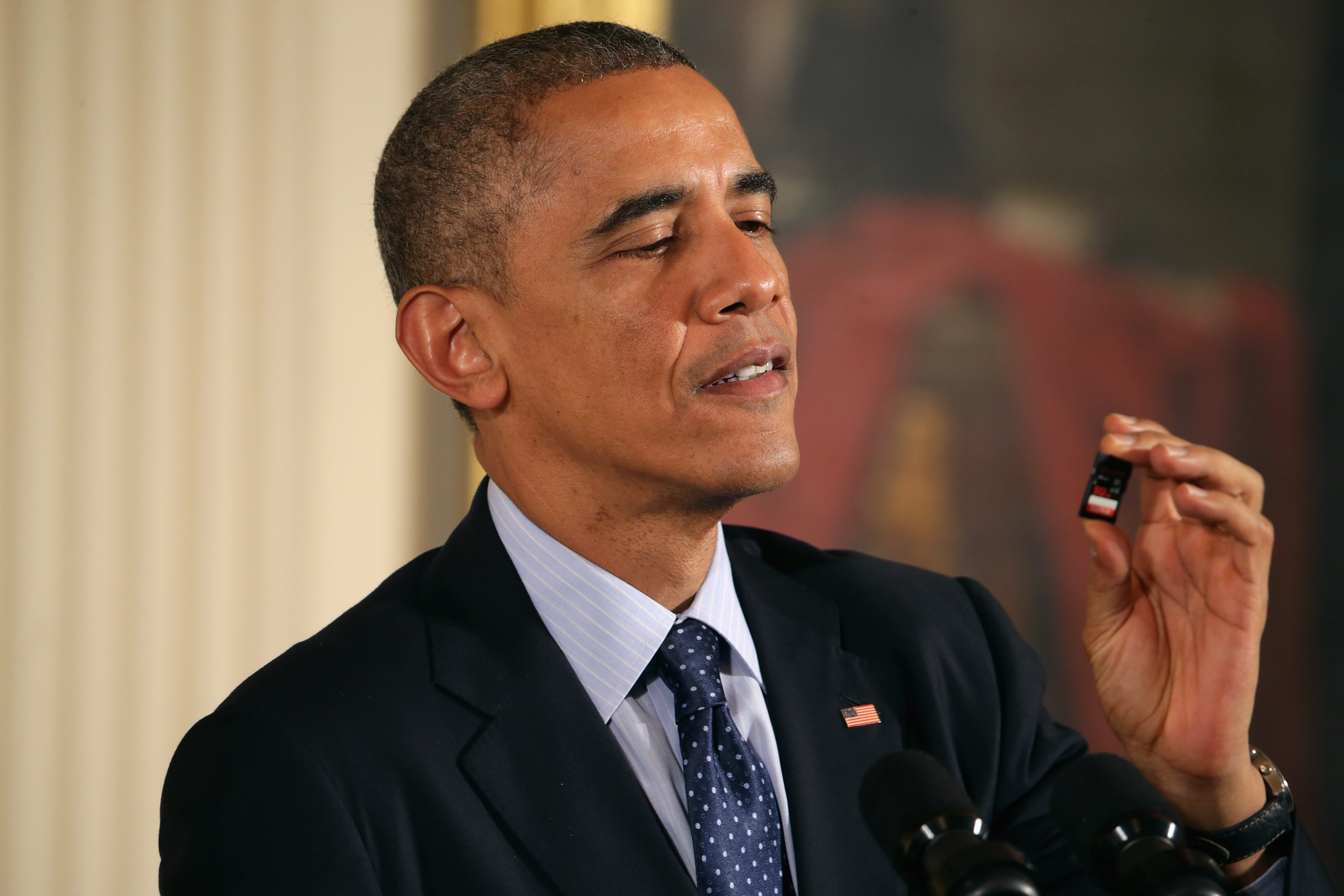
The smart money that got out too early
Sandisk has only been a stand-alone stock for less than a year, having been spun off from its previous parent company, Western Digital, in February. That spin-off was largely the result of a long campaign by famed activist hedge fund Elliott Management, which specializes in buying stakes in companies it believes to be mismanaged and then agitating for changes that will make the stock price go up.
Elliott argued that Western Digital’s share price was suffering in part because of its 2016 purchase of Sandisk for about $19 billion. That deal had been sold as an opportunity to boost sales and reduce costs. But Elliott argued that the benefits of the deal were disappointing, and as a result the market was valuing Western Digital far lower than it should.
“Western Digital’s valuation today reflects the market’s view that owning HDD and Flash together yields a dis-synergy in terms of operational and financial performance,” the hedge fund wrote in a public letter to the company’s board in 2022. “When a strategy has so clearly failed to meet its objectives, we believe it is time to consider other alternatives.”
In a presentation, Elliott said both Western Digital and its flash storage business — what is now Sandisk — were being undervalued as a result of their amalgamation. In a sense, the fund was right: the values of both companies have surged since they separated in February.
But in its analysis, Elliott had ballparked Sandisk’s enterprise value at up to $20 billion. Sandisk is currently worth roughly $65 billion.
When Sandisk became a stand-alone publicly traded company in February, Elliott Management ended up owning 750,000 Sandisk shares as part of the terms of the spin-off. The hedge fund held on to that stake — at a cost basis of $49.71 per share — for a few months, as its value fluctuated between $35 million and $40 million.
SEC disclosures show Elliott had exited the position by the end of September, though it’s unclear when exactly it sold or at what price. (The stake was worth about $84 million on the last day of September, just for comparison’s sake.) It’s possible that Elliott caught most of the big September rally in the stock. But even if it did, the hedge fund missed out on the vast majority of Sandisk’s romp. Today, that 750,000-share stake Elliott once owned would be worth about $340 million.
Perhaps you can’t fault Elliott for failing to see the memory chip price spike coming far in advance. But it is fair to say that the fund left a good chunk of money on the table.
That goes for its stake in Western Digital as well. Elliott was out of its position in the hard disk drive maker at the end of September, with the shares up something on the order of 250% since Elliott first disclosed its involvement in Q2 2022. Not bad! But that run-up would have been more than 500% if Elliott still owned it.
Elliott didn’t respond to a request for comment.
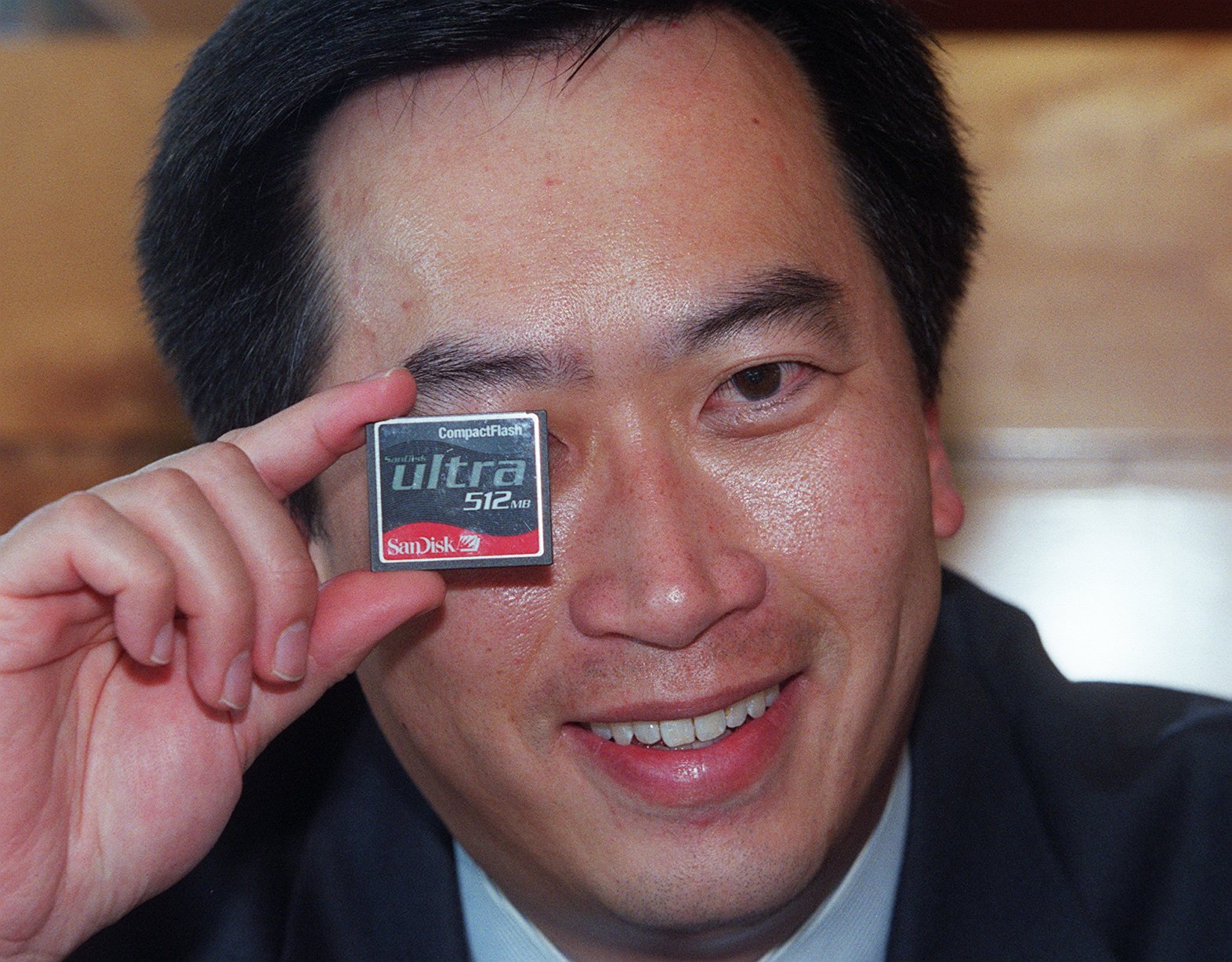
“The industry is positioned to be quite undersupplied in 2026”
Sandisk’s saga — and the market’s inability to foresee the tsunami of AI-related demand for memory products that drove it — highlights how, as it enters its fourth year, the AI boom continues to be unpredictable, catching even those with deep and specialized tech knowledge off guard and generating market swings.
From their initial focus on AI OGs like Nvidia, traders have hopped into hyperscalers like Microsoft, Meta, and Amazon, and more recently ridden a range of fragmented plays, from AI-adjacent power producers to makers of cooling equipment and HVAC systems for data centers.
Looking at the stock, a lot of this good news has been priced into the shares. That will make Sandisk’s January 29 earnings report a key event for those who have been trading the memory shortage. Analysts expect adjusted earnings per share will be up more than 170% compared to last year, with sales surging by about 40%.
But given the wildness in the market for memory, where the fight for access to inventory at seemingly any price continues, some also see potential for Sandisk to catch the market by surprise once again when its numbers are released.
Tech hardware analysts at Bernstein Research recently named Sandisk as a “top pick” for 2026 “on the back of unprecedented NAND shortages and price increases.” They see strong demand for Sandisk’s products stretching out over the next six quarters at least, and have an EPS estimate for the fiscal year ending in June 2026 that’s more than 40% higher than Wall Street’s consensus.
Goldman Sachs analysts, who started covering the stock with a “buy” rating in July, upped their price targets for the shares on January 9, writing that “the industry is positioned to be quite undersupplied in 2026, with investors expecting considerable pricing growth throughout the year.”




