Business
Death of the deal

Pricecheck!

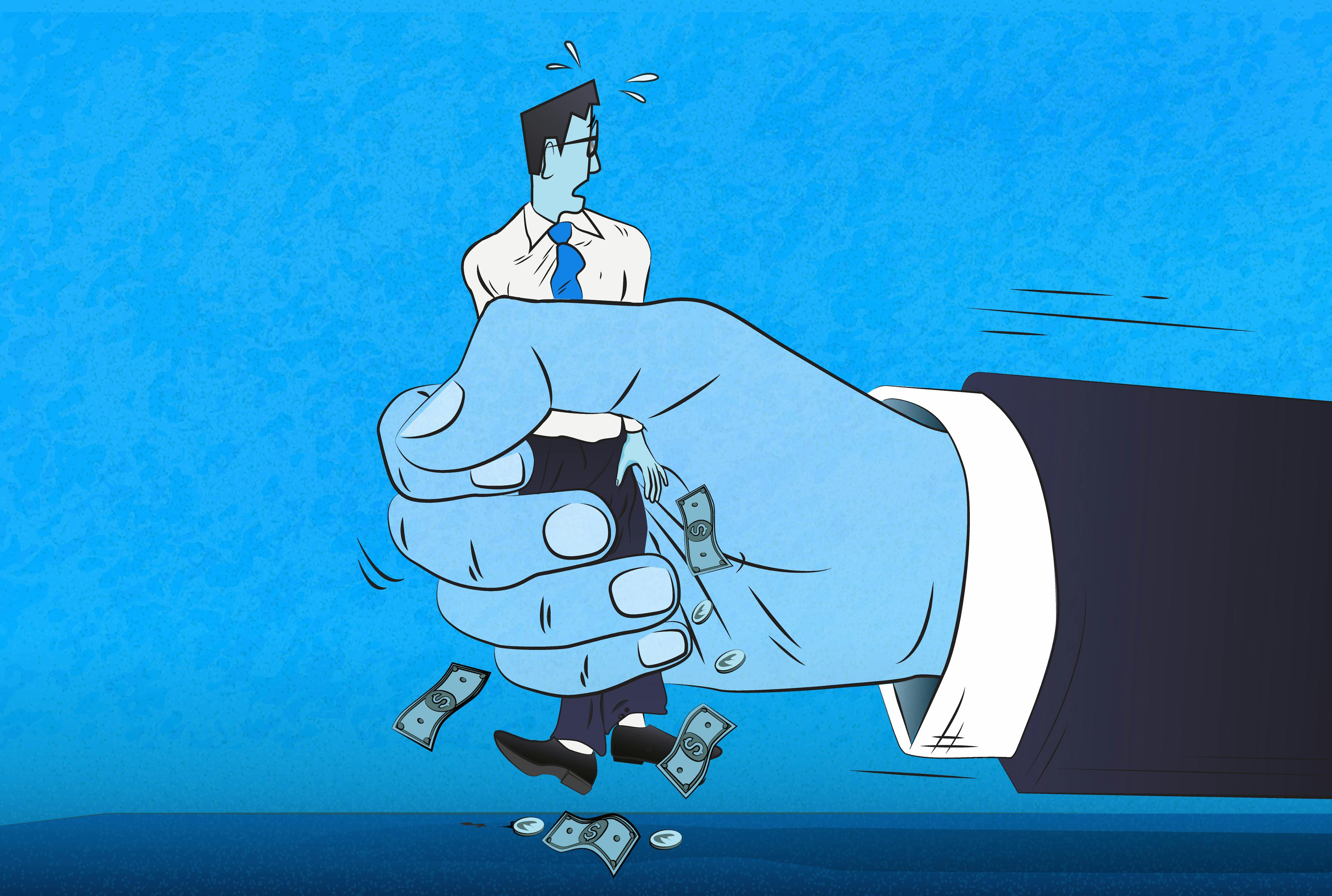
Man getting squeezed
(Getty Images)

You’re not imagining it — online discounts are getting stingier

Retailers are feeling squeezed, and one way to improve their margins is to cut back on markdowns.

Chris Stokel-Walker

Black Friday is just 66 days away. The retail extravaganza — which has mutated into an 11-day orgy of cash outlay and cardboard shipping boxes — kickstarts a season of spending, and retailers like Amazon make big bucks. 

Last year the world’s biggest online retailer sold more than a billion items, according to its Black Friday postmortem, with hundreds of millions more sold on specialized days in early October that Amazon calls Big Deal Days.

But before you click “Add to basket” at any retailer this shopping season, it’s worth looking twice at the price you’ll pay. The Fed may have finally reined in inflation, but there’s another way things are getting more expensive: Steep online discounts aren’t as sweet as they used to be.

The average discount offered by online retailers in the US is down to 36% so far this year, data from Centric Market Intelligence shows. That’s down two percentage points from last year, and down from an average of 42% in 2019 — a 14% drop in real terms.

Finding a bargain is getting tougher for a variety of reasons, according to retail experts who spoke with Sherwood. Sellers are having to pay more for raw materials, and they’re shelling out more in customer-acquisition costs to get you to order from them. Fulfilling online orders is also generally more expensive than selling items in person. All these add up to increased costs that make it harder to offer discounts. 

Redditors have recently lamented the capping of Shein discounts for certain items, while additional discounts for using preferred payment options have been discontinued. They’ve also mourned the shrinking size of McDonald’s coupon books (though the McDonald’s app continues to serve meal deals and discounts to customers as the company looks to dig itself out of a hole).

Those complaints don’t come from nowhere. Not only has the average discount on items gotten smaller, but the proportion of products on sale online has also dropped, Centric data shows. In 2019, 42% of all stock was discounted in some way. According to this year’s data through July, just 28% of items are discounted.

There is an important caveat to note: the biggest discounts come at the tail end of the year, enticing you into spending big around Thanksgiving and ahead of Christmas. Case in point: November through December 2023 saw nearly half of items stocked on retailers’ websites discounted in some form. That immediately dropped to 28% of items when January 1, 2024, rolled around. (What comparatively little remains on sale is still steeply discounted, though, by an average of 38% in December 2023 and 39% in January 2024.)

In part, consumers’ tendency to shop online, which was stoked by necessity during Covid, is to blame, said Miya Knights, an independent retail expert. American shoppers spent $291 billion online in the second quarter of this year, the Department of Commerce found, accounting for 16 cents in every dollar spent on retail. E-commerce’s share of total retail sales is up by an average of 8.6% in the past year. Prepandemic, online retail accounted for 11 cents in every dollar spent.
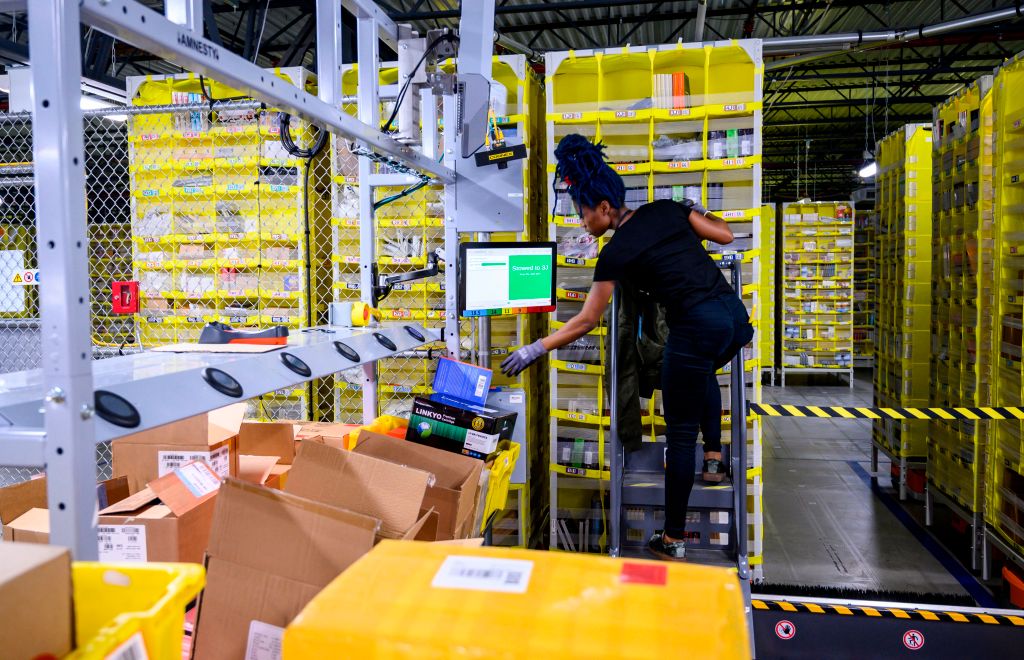
Worker inside an Amazon fulfillment center
A woman works at a distrubiton station at the 855,000-square-foot Amazon fulfillment center in Staten Island. (JOHANNES EISELE/AFP via Getty Images)

“What has happened in concert with our increased appetite for shopping online is that the costs of operating online have increased as well,” Knights said. It’s three to four times more expensive to service customers online than in-store, she said, because of the cost of individually fulfilling purchases from warehouses, as well as the financial burden of missed deliveries and processing returns of unwanted goods.

Customer-acquisition costs have also skyrocketed for online brands as a result of the pandemic-related shift to online shopping: more brands entered the online ad space, pushing up the price to appear at the top of search terms. 

“All these costs went up because they had a captive audience,” Knights said. “It’s like if you have the only billboard in town.” Knights said customer-acquisition costs went up 30% to 40% compared to prepandemic levels, and the closure of physical stores is increasing online competition.

“Retailers have been forced to look really, really hard at how they maintain margins online, and one of the best ways to do that is to reduce the amount that they’re giving away in terms of promotions,” she said.

That behavior is also feeding through to online marketplaces like Amazon, where competition for prime placement is also becoming more cutthroat. “It’s likely driven by the need to play with marketplace algorithms while keeping profit margins,” said Ben Graham, a commercial director at a third-party logistics provider for online retailers. “If you dip the price a little bit, then you can win badges and boost visibility without sacrificing too much profit.” 

Retailers are choosing to give prices fine haircuts to boost rankings while not sacrificing too much of their margin, Graham said. “Essentially, the discounts aren’t being used in the traditional way anymore — to incentivize consumers at the point of purchase — but to increase visibility and drive traffic.”

He added that many retailers, and their suppliers, are already being squeezed in an increasingly competitive world. “At the end of the day, a lot of the time it’s a crowded marketplace and prices are already pretty low, so they’re less likely to be able to do a huge discount,” he said.

That puts retailers in a tough position. Consumers have already indicated they’re unable to stomach ever-increasing price hikes. For example, potato chip prices are up 30.6% since the end of 2020, leading many to leave them out of their grocery baskets. 

Even discount retailers like Dollar Tree missed analysts’ sales estimates in the second quarter this year, prompting record-low share prices, while manufacturers are turning to shrinkflation — giving you less for the same price — in an attempt to keep rising costs under control in a way that doesn’t materially affect the end price for users. 

Some savvy shoppers are even noticing what Reddit has dubbed “saleflation”: the listing of items as being on sale when they’re in fact the same price the product was just a year or so ago.

And while retailers still want your business online, the perfect blend of business for them is what’s called “omnichannel retailing,” Knights said. “The ideal situation is to have a mix of digital and physical touch points,” she said. “The minute a customer shops with you both online and in-store, they are orders of magnitude more valuable.” The desire to prop up physical retail encourages retailers to focus on both channels to maintain profitability and customer loyalty— meaning steeper discounts may disappear online.

Nevertheless, what discounts do remain will be fast coming around the corner, first with Amazon’s Big Deal Days and then with the wider industry’s involvement in Black Friday and Cyber Monday. But Knights said shoppers need to be savvier in how they approach the retail bonanza. 

“What we’ve seen historically over the last two to three years, in terms of mitigating the increased costs of serving online, is that the promotion starts earlier and gets spread out longer, and so therefore doesn’t need to be as deep,” she said. “It puts the onus on customers to shop around and start looking earlier.”

More Business

See all Business
business
Tom Jones

Prime Day is here again and Amazon’s subscription service has never been more popular

Well, it’s that time of year again: many have made their wish lists, people are scraping together the money they’ve saved to pick out a perfect gift, some are presumably leaving out refreshments for the weary delivery drivers and, more and more, drones.

It’s Amazon Prime Day — meaning that it’s the second day of the four-day promotional event that Amazon still calls Prime Day — of course, and it’s even come early this year, with the company bringing the period into late June from July, when it’s been traditionally held for the last five years.

The Prime Age

Alongside the eyes and endless clicks that the arbitrary stream of listicles on “The Best Prime Day Deals” that almost every media outlet pours into, Amazon will also be cheering the fact that there’s now more Prime users than ever before to devour the retailer and its sellers’ sometimes-contested “discounts.” Indeed, according to the latest annual estimates from Consumer Intelligence Research Partners (CIRP), there were just over 200 million American shoppers using Amazon’s massive subscription service at the end of 2025.

business

Electronic Arts launches a platform to put more ads in its games

Video game publishing giant EA launched a new platform on Monday designed to make the process of selling immersive ad space in its popular games easier.

The company says the platform, called EA Advertising, allows brands to “integrate directly into gameplay through dynamic, real-time placements, from stadium signage to custom in-game content.”

More so than other studios, EA has incorporated advertising into its most popular titles. As Kotaku points out, the company’s ad efforts stretch as far back as 2006. Several of its sports franchises already feature partnerships with brands like Visa, Lowe’s, Red Bull, and PepsiCo.

In-game advertising hasn’t exactly been embraced by fans, but industry experts expect it to ramp up as companies seek more revenue to offset higher games budgets and surging memory costs. EA rival Take-Two has taken a different approach, with CEO Strauss Zelnick recently saying the company was “not at risk of doing brand partnerships” in the forthcoming “Grand Theft Auto VI,” and that ads in full-price games seems “unfair.”

The $55 billion deal to take EA private, led by Saudi Arabia’s Public Investment Fund, is set to close at the end of this month. Being the largest leveraged buyout in history, EA will likely look for more ways to boost revenue to cover interest payments.

More so than other studios, EA has incorporated advertising into its most popular titles. As Kotaku points out, the company’s ad efforts stretch as far back as 2006. Several of its sports franchises already feature partnerships with brands like Visa, Lowe’s, Red Bull, and PepsiCo.

In-game advertising hasn’t exactly been embraced by fans, but industry experts expect it to ramp up as companies seek more revenue to offset higher games budgets and surging memory costs. EA rival Take-Two has taken a different approach, with CEO Strauss Zelnick recently saying the company was “not at risk of doing brand partnerships” in the forthcoming “Grand Theft Auto VI,” and that ads in full-price games seems “unfair.”

The $55 billion deal to take EA private, led by Saudi Arabia’s Public Investment Fund, is set to close at the end of this month. Being the largest leveraged buyout in history, EA will likely look for more ways to boost revenue to cover interest payments.

business

JM Smucker says it sold $1 billion worth of Uncrustables in FY2026

After years of booming sandwich sales, JM Smucker has finally earned a billion-dollar crust.

On Tuesday, the company reported results for fiscal year 2026, highlighting better-than-expected profits driven by higher prices for coffee and sweet baked goods. However, at another point on the earnings call, CEO Mark Smucker pointed to one particularly jammy figure: in line with previous forecasts, the company sold $1 billion worth of its (almost always) crustless sandwiches, Uncrustables, in the last year alone.

business

Paramount reportedly offers concessions to resolve multistate antitrust investigation

Paramount has reportedly offered up some concessions in an effort to prevent an antitrust lawsuit by California and about 10 other states, according to Bloomberg reporting on Monday.

Reuters first reported on the potential suit from a group of unnamed states last week, which could throw a wrench in Paramount’s plans to buy rival Warner Bros. Discovery in a Hollywood megamerger.

The list of concessions is unknown, though Bloomberg previously reported that Paramount is open to divesting some of its kids TV assets to appease EU regulators.

Late last month, reports said US regulators appeared likely to approve the $110 billion merger, following a meeting between Paramount CEO David Ellison and DOJ antitrust staffers.

The list of concessions is unknown, though Bloomberg previously reported that Paramount is open to divesting some of its kids TV assets to appease EU regulators.

Late last month, reports said US regulators appeared likely to approve the $110 billion merger, following a meeting between Paramount CEO David Ellison and DOJ antitrust staffers.

$98B ⛽

The IATA released its latest financial outlook for the airline industry over the weekend, forecasting a $98 billion jump in the sector’s collective fuel bill. The world’s largest trade group representing airlines expects the oil spike to halve profits by 49% from last year to $23 billion.

The group also expects profit margins to halve year over year, falling from 2025’s 4.2% to 2%. Still, revenue is expected to climb to $1.17 trillion from $1.07 trillion.

A surge in the cost of jet fuel has rocked US and global airlines this year, leading Delta Air Lines, United Airlines, American Airlines, Southwest Airlines, JetBlue, and others to raise fares and ancillary charges like bag fees. Low-cost carriers, which operate on smaller margins, have been squeezed the hardest, resulting in Spirit’s shutdown.

“It’s a tough year for all airlines, especially those whose balance sheets had not yet recovered from COVID. And, of course, for those operating in the Gulf,” said IATA Director General Willie Walsh, who added that demand is holding up and about half of passengers expect to spend more on travel this year. “That bodes well for a strong northern summer peak season. The big unknown is how long travelers and shippers can tolerate the higher costs of connectivity.”

Latest Stories

Sherwood Media, LLC and Chartr Limited produce fresh and unique perspectives on topical financial news and are fully owned subsidiaries of Robinhood Markets, Inc., and any views expressed here do not necessarily reflect the views of any other Robinhood affiliate, including Robinhood Markets, Inc., Robinhood Financial LLC, Robinhood Securities, LLC, Robinhood Crypto, LLC, Robinhood Money, LLC, Robinhood U.K. Ltd, Robinhood Derivatives, LLC, Robinhood Gold, LLC, Robinhood Asset Management, LLC, Robinhood Credit, Inc., Robinhood Ventures DE, LLC and, where applicable, its managed investment vehicles.