Game over for arcade business
As tariffs rock the automotive, aviation, and tech industries, one writer asks: what about the little sticky hands you can win at Dave & Buster’s?
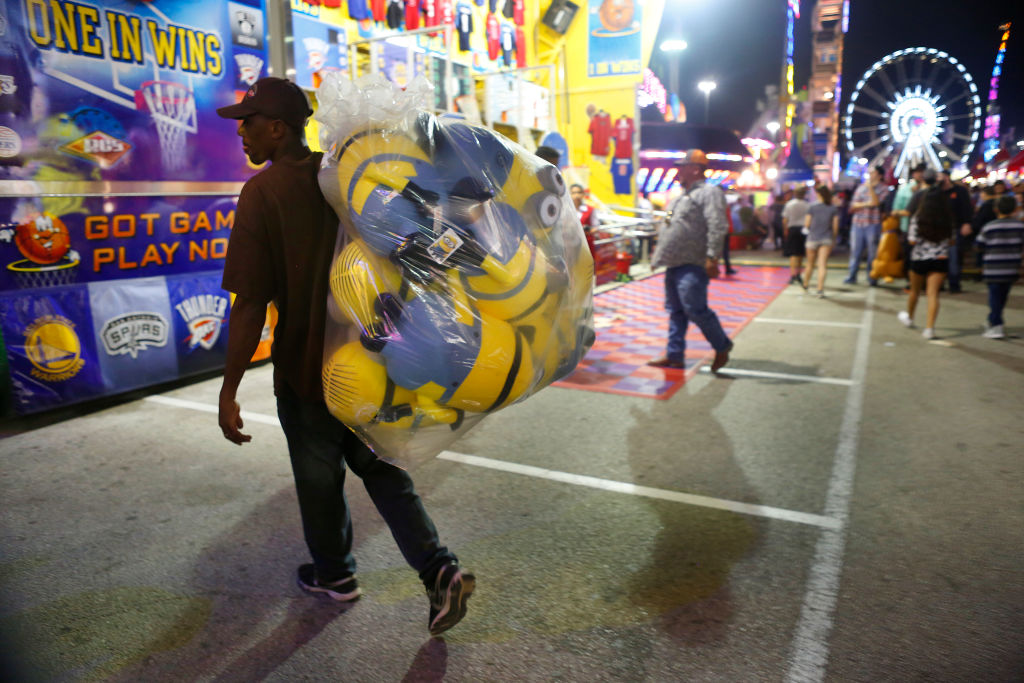
The Minion machines have run dry. Their fruit — stuffed Kevins, Bobs, Stuarts, and a sort of half-recognizable fourth one that doesn’t look quite “official” — sits withering on the vine.
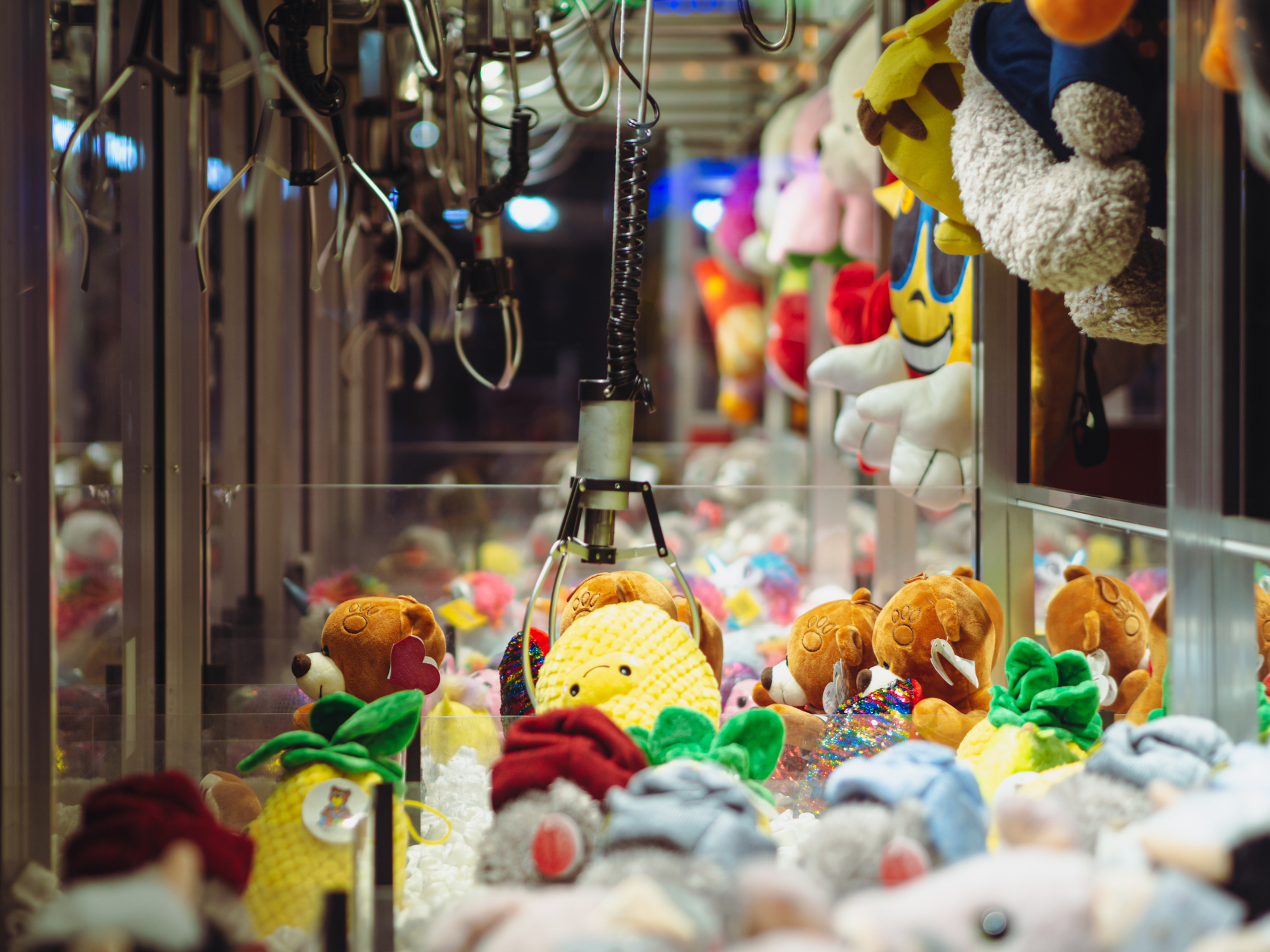
Nearby, even more plushies, too large to carry and impossible to store in a normal home, lie vacuum-sealed in bins. These toys may never have the chance to be won for the low price of $35 and three solid hours on the coin pusher machine.
As tariffs rock the US economy, the humble arcade prize — a sticky hand, a tie-dye bear, a foam basketball that stinks like rubber cement — has become collateral damage in a broader economic clash playing out far beyond the Dave & Buster’s ticket redemption room.
With signs pointing to a protracted trade war between America and China, the companies behind these prize toys and the players who win them are preparing for a devastating blow.
Coral Reynolds, president of Fiesta Toy, a California-based company specializing in plush toys and “anything you could possibly win” at an arcade or fair, said the levies are a nightmare for the industry.
“Overall, the impact that this could have on Fiesta, or any other plush company or toy company, is substantially detrimental,” Reynolds said.
Fiesta’s retail business services gift shops at zoos, aquariums, and museums, while its amusements business stocks prize racks at arcades, fairs, and “almost every amusement park there is.” Its clients include Six Flags and Disney parks, and arcade locations like Dave & Buster’s, Chuck E. Cheese, and Lucky Strike Entertainment.
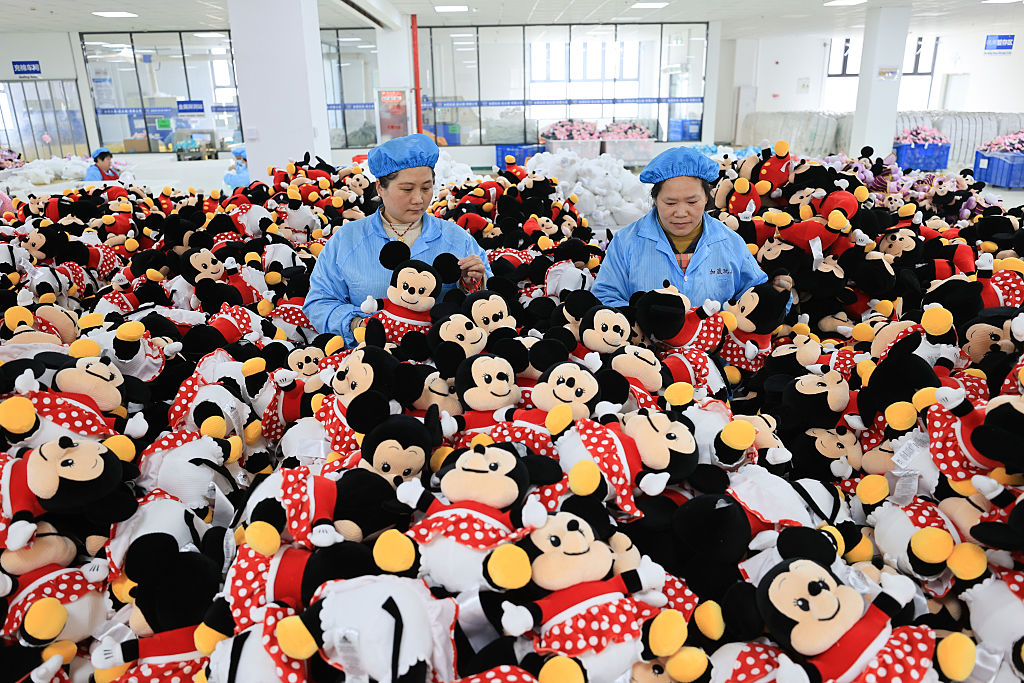
“I would say 99% of our items are all made in China,” Reynolds said. “No other country has the infrastructure set up for the production of stuffed animals and toys that we go through. And all the raw material still comes from China, so even when companies are producing outside, they’re still getting their materials, their fillings, from China.”
Chinese plush factories typically work off a margin between 15% and 20% for bulk orders, Reynolds says, and the industry standard margin isn’t much higher. With 145% tariffs, there’s no way companies like Fiesta, or their customers, can operate.
No other country has the infrastructure set up for the production of stuffed animals and toys that we go through.”Rhode Island Novelty, a leading designer importer and distributor of toys like stretchy dinosaurs, bouncy balls, and multiple robots that transform into large sea animals, added a 14% charge to tariff-affected products in April. “Unfortunately, the percentage of tariff-affected items will increase as we receive new shipments,” a statement on the company’s website says.
Fiesta raced to import as many plushies as it could when tariffs on goods imported from China were at just 20% earlier this year, also adding a tariff surcharge of 14% on those items. According to Reynolds, some of Fiesta’s partner factories in China provided a discount in the low single digits, though most weren’t able to help.
It’s worth noting that single-digit discounts can’t help with a tariff that more than doubles the cost of the product being imported. As tariffs on China have skyrocketed, Fiesta has paused orders. And it’s not alone.
“Every company that I’m aware of that sits in this industry has also paused all orders, along with production right now,” she said.
As tariff costs are passed from supplier to store, some arcades are reportedly raising redemption rates, effectively passing the levies on to the final consumer. Multiple Reddit posts by customers from late April say that ticket rates at their local Dave & Buster’s had increased by about 20%. Another post said that rates at the arcade chain Round1 have recently nearly doubled.
On Round1’s February earnings call, CEO Masahiko Sugino said it “may have to pay an extra 10% in tariffs on amusement prizes,” reflecting a tariff level that’s since increased more than 14x.
Dave & Buster’s, Lucky Strike Entertainment, and Round1 didn’t respond to repeated requests to comment. Chuck E. Cheese declined to comment.
Every company that... sits in this industry has also paused all orders.”Higher redemption rates would be unwelcome news for most customers, who might already have Dave & Buster’s visits on the chopping block as consumers cut back on discretionary spending.
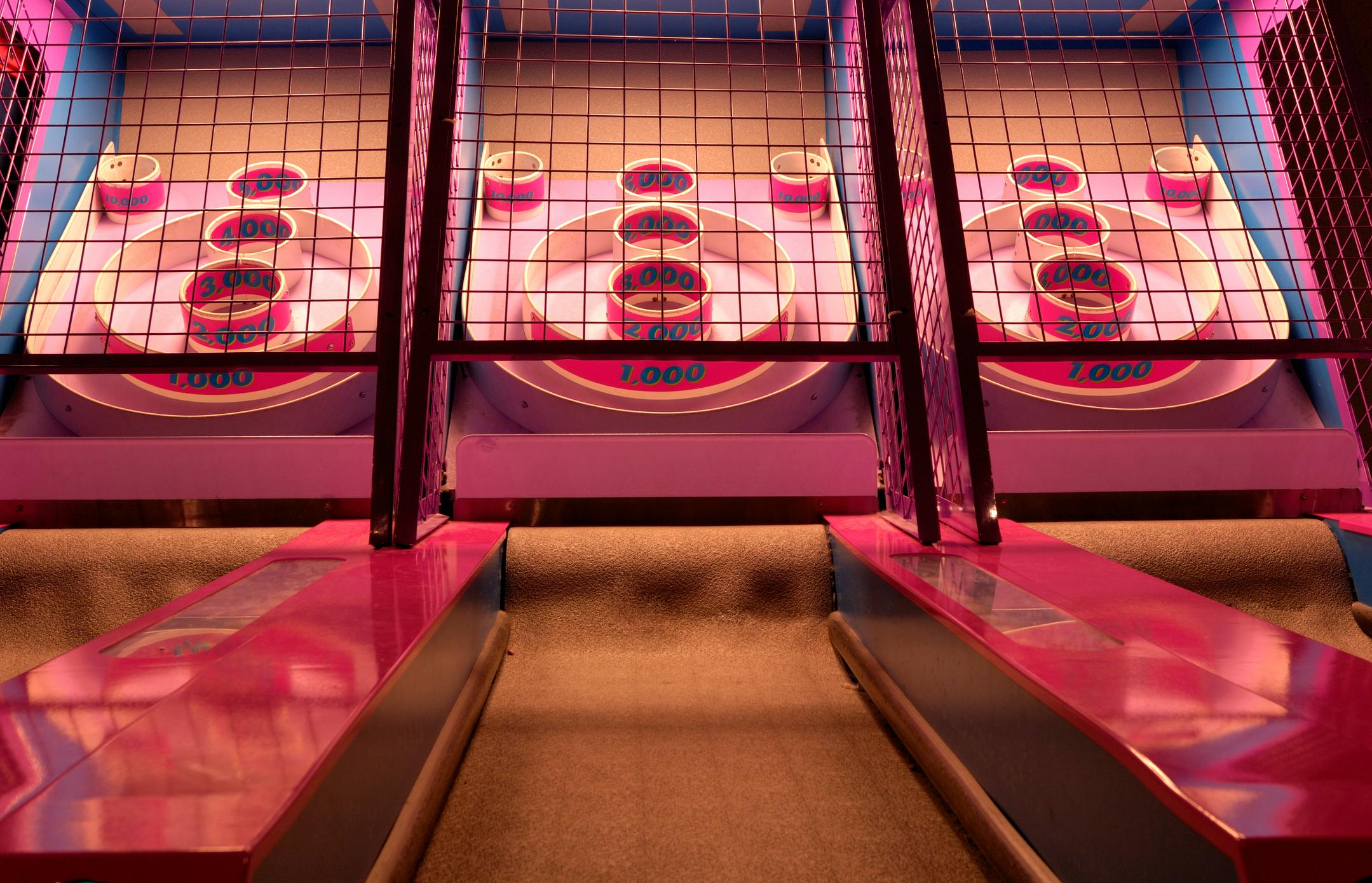
They’d be even more frustrating for a customer like Michael Lucas, who visits Dave & Buster’s locations around his home in the Pittsburgh area about four times a week. Lucas is an “advantage player” — essentially an arcade guru who masters games to maximize ticket earnings and resell prizes. Lucas says he’s been arcade-maxxing as a second income for more than 16 years.
Unlike those of us who spend $30 on a “Deal or No Deal” game to win enough tickets to redeem for a single piece of gum, Lucas earns about 5 million tickets a year and redeems “an average of a [video game] console a week, or the equivalent.” Basically, he knows what’s going on at arcades. The current situation with tariffs, Lucas says, are “going to be a bitch.”
“When I started doing this as a second income, tickets were worth roughly $5 per 1,000,” Lucas said. “Now it’s between $2 and $3 per 1,000, and you’re seeing like a 20% to 30% move [down]. But new values have not been finalized.”
Lucas says that tariffs are a major topic of discussion among Dave & Buster’s employees he’s spoken to, though on-the-ground staffers don’t seem to know corporate’s game plan.
According to Lucas, bottom-shelf items like wristbands and hacky sacks are sourced so cheaply compared to their ticket value that their redemption rates may not need to increase.
“Your stuffed animal that currently runs 2,500 tickets, you might see that move to 3,500 or 4,000 at the absolute worst,” Lucas said. Top-shelf items like game consoles, which have already started to see significant tariff price hikes in the US, might see far greater jumps. “For the casual guest, that’s absolutely going to suck, because they were struggling to get to 100,000 or 150,000 tickets as it is.”
Still, if tariffs persist, the makers of bottom-shelf items might not be able to weather the storm.
According to an April member survey by the Toy Association, a trade group representing the US toy industry, 80% of midsized toy companies are canceling orders amid tariffs. 87% are delaying orders in the hopes of relief. With China responsible for the production of 80% of US toys, roughly half of small and midsized toy businesses say they’ll go under in a matter of weeks if tariffs continue.
Big Toy is more protected, but still not immune: Mattel said this month it expects a $270 million tariff hit this year — about half of its 2024 profit total — while rival Hasbro anticipates a $180 million cost.
“With what we have right now, we have a solid six months of looking good,” Fiesta’s Reynolds said. “And then [we’ll start] to slowly evaluate: what’s going to have an impact if we bring it in at 145%?”
Despite industry fears and heightened lobbying, President Trump hasn’t budged, instead recently recommending children get “two dolls instead of 30 dolls.” Not addressed: whether the toy industry could handle that proposed 93% contraction, or what prizes Americans could expect to win at the fair this summer if every deformed Sonic the Hedgehog plush is stuck on a cargo ship in the Pacific Ocean.
There aren’t many industries that can survive a 145% (or 80%) tariff for long, and stuffed Ninja Turtles definitely aren’t one of them. When recently asked if the levy on goods from China could be lowered, the president implied it’s on the table, saying, “Right now, you can’t get any higher. It’s at 145%, so we know it’s coming down.”
Even if tariffs are relaxed, there’s no guarantee that arcades will deflate the higher redemption rates they may come to rely on.
“My big concern here is... that things are going to stay at a higher price or a lower rate of return, even after tariffs may eventually subside,” Lucas said.
From a business sense, Reynolds says, widespread tariffs are “absolutely” more chaotic than any time in recent memory.
“To get through [Covid], we set up a retail website. We managed a company with basically six people working, but were able to bring everybody back after that,” Reynolds said. “Right now, it’s just looking a little bit scarier.”