The controversial rise of Franken-pills: Telehealth companies push to mix meds in a single pill
Combination pills, like those that treat ED and hair loss at the same time, help companies like Hims & Hers and Ro with customer retention. But some of the combinations make doctors uneasy and go against warnings on FDA labeling.
When it comes to erectile dysfunction pills, telehealth companies are blurring the line between medicine and marketing.
In an effort to differentiate themselves and retain customers, companies like Hims & Hers, Ro, and BlueChew are increasingly offering altered versions of standard FDA-approved medications. The practice, known as compounding, might be most evident in the plethora of erectile dysfunction and hair-loss medications now available on the platforms.
They cram multiple drugs into the same pill, add supplements, and often make the meds taste like candy. That allows telehealth providers to sell their own unique branded pills, which are more profitable and better for customer retention than just flipping cheap generics that are available at any pharmacy.
But these combo pills — for example, one Hims “5-in-1” pill combines hair-loss and ED medications along with two different B vitamins and the amino acid L-theanine — haven’t been officially studied for safety or efficacy and aren’t reviewed or approved by the FDA. In some cases, they even pair medications that FDA labeling specifically warns against taking together. And some of the combinations make doctors who spoke with Sherwood News uneasy.
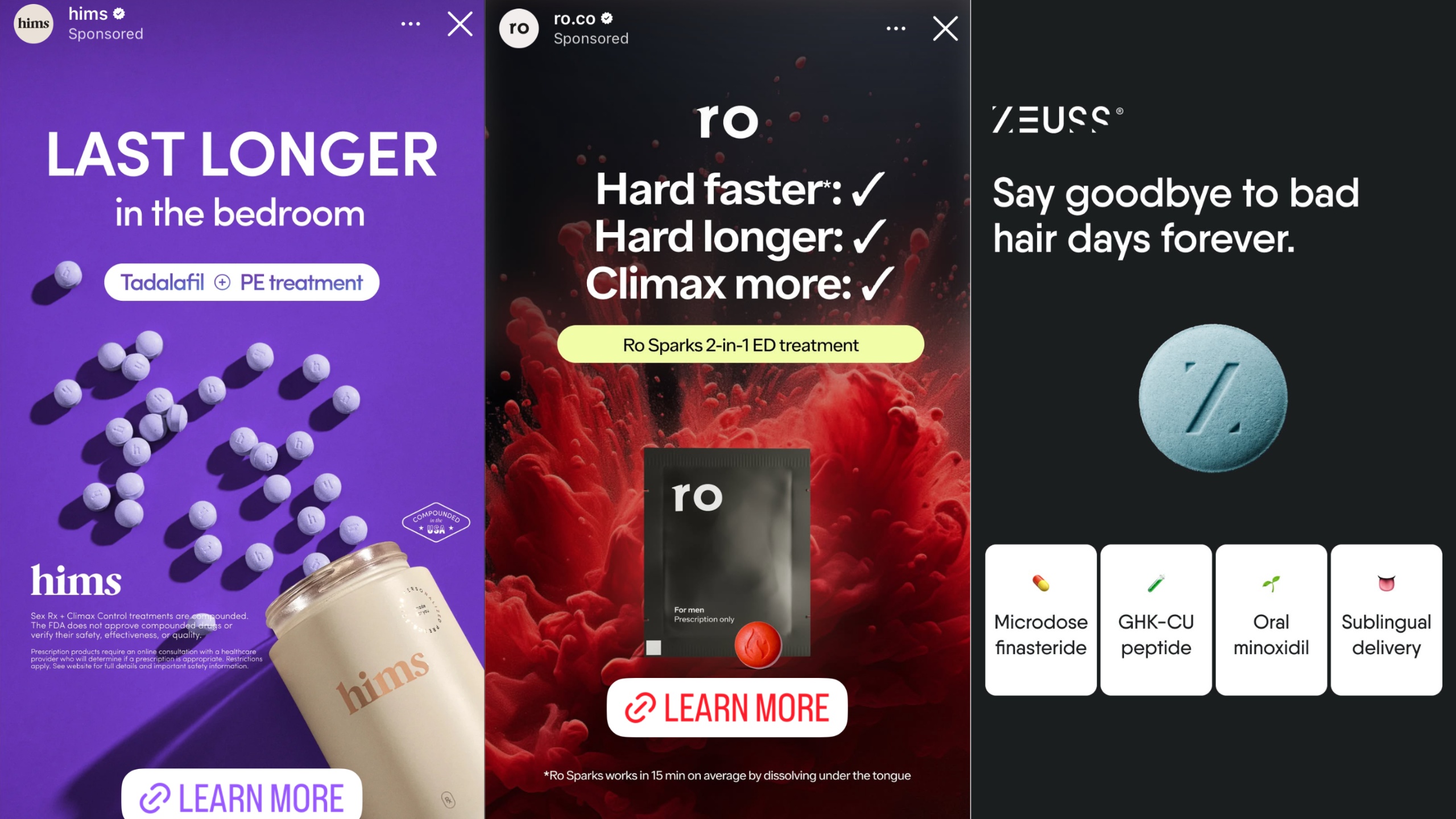
In a traditional healthcare setting, a person struggling with erectile dysfunction may be prescribed generic Cialis or Viagra made by a manufacturer like Teva Pharmaceuticals. If they’re on a telehealth platform, it’s increasingly common they might be lured in by a combination of the two ED treatments.
Hims, Ro, BlueChew, and many others have products that combine sildenafil, the active ingredient in Viagra, and tadalafil, the active ingredient in Cialis.
Taking full doses of sildenafil and tadalafil isn’t recommended, including on Hims’ and Ro’s own informational blogs. FDA labeling for tadalafil and sildenafil explicitly states that combining them with other ED treatments hasn’t been studied, and it says not to take them with other ED treatments. Some of the combination ED pills on the market have what’s considered to be a moderate or large dose of each drug in one pill.
Doctors working outside of a direct-to-consumer platform generally wouldn’t prescribe that kind of combination because it could cause more negative side effects, said Dr. Jessica Yih, a professor of urology at the University of California, Irvine. While it’s not recommended to combine the two, some patients do have prescriptions for generic Viagra and Cialis, but it would typically be prescribed as two generic pills at low dosages rather than a combined version, she said.
“There’s also risk of overprescribing without assessing for contraindications or potential side effects, especially in patients with complex medical histories,” Yih said.
More puzzling to some urologists are pills that combine hair-loss treatments with ED treatments, Yih said. Hims has offered that combination since last August, as do some smaller providers, too.
“These pills do very different things,” said Alan Shindel, a urologist at the University of California, San Francisco. “I understand the marketing of it, but it doesn’t make a lot of sense medically.”
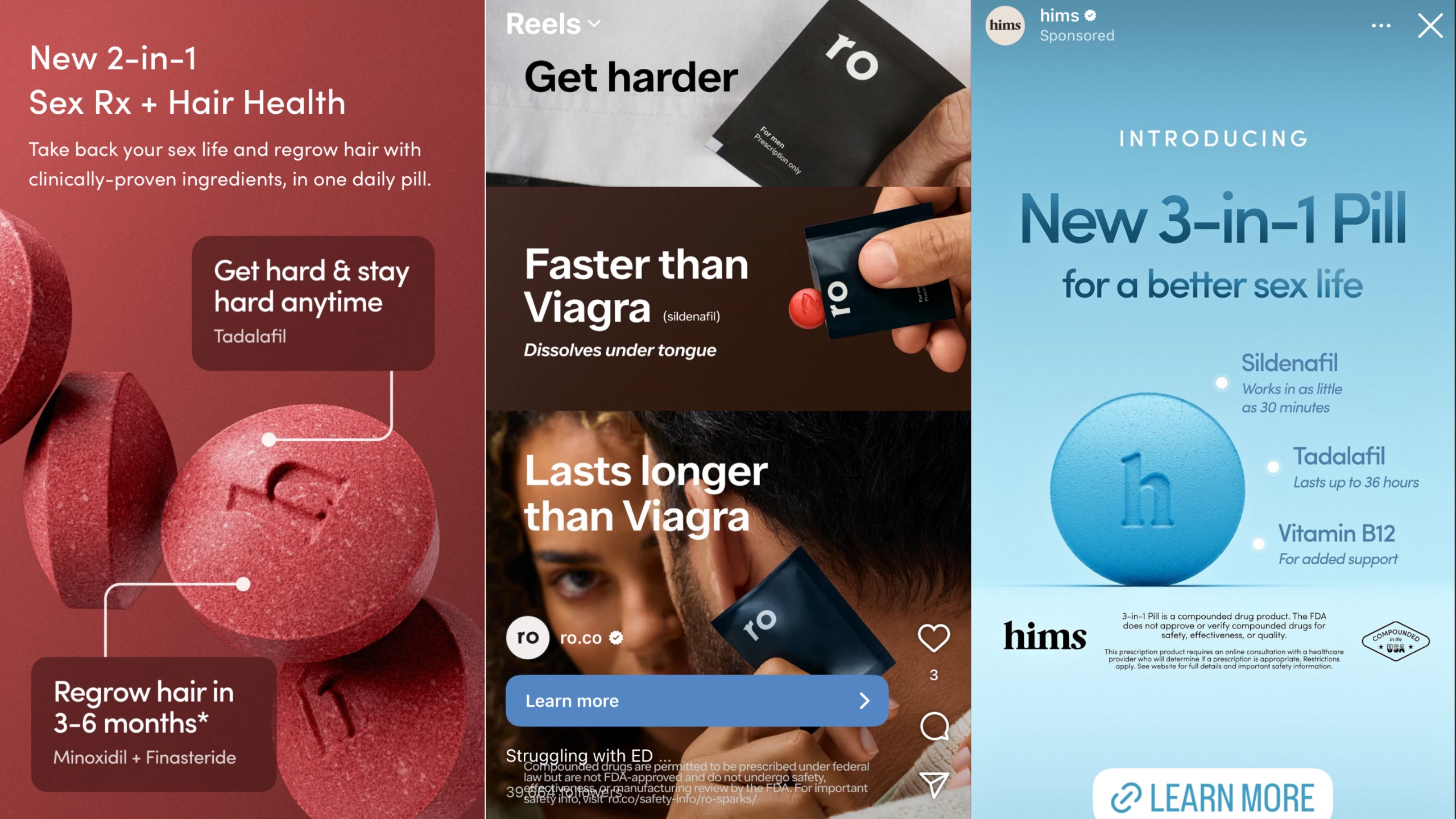
It’s unclear how often the companies are actually prescribing the combination pills they promote so aggressively.
A person familiar with Hims’ prescribing practices told Sherwood that combination tadalafil and sildenafil is generally reserved for patients who have failed on other medications or smaller doses, and that most physicians will push back if a patient demands them. Hims providers get AI-generated alerts that flag when a patient may not be a good candidate for a treatment, the person said.
Dr. Peter Stahl, Hims’ head of men’s sexual health and urology, said in a statement that many customers come to Hims seeking help for both ED and hair loss.
“Erectile dysfunction and hair loss commonly occur together, so this treatment, which uses doctor-trusted ingredients, can be a suitable option for men experiencing mild to moderate erectile dysfunction and male pattern hair loss,” he said. "A licensed provider reviews the unique needs of every individual patient and makes an independent clinical judgment before prescribing any kind of treatment. Providers on Hims & Hers consider the nature and severity of the patient’s symptoms and their comprehensive medical history to determine what treatment, if any, is appropriate."
BlueChew did not respond to a request for comment. A spokesperson for Ro said that patients “can message their Ro-affiliated clinician at any time with questions or concerns.”
“When a compounded medication is prescribed, patients receive written counseling that includes important safety information about the ingredients,” they added.
Dr. Irwin Goldstein, director of the San Diego Sexual Medicine clinic, said the fact that there haven’t been trials studying how these combinations interact with each other puts patients at risk. “This is a no-brainer,” he said.
The rise of Franken-pills
Telehealth’s favorite word these days is “personalization,” and Hims — the only company in its peer group that’s publicly traded — is doubling down on it.
Hims saw explosive growth in its weight-loss segment thanks to its temporary ability to sell exact copies of Wegovy. But now that the shortage of the medication has ended, Hims is limited in how much of the blockbuster drug it can sell to its customers.
So it’s shifted some focus back to its core business: ED treatment and hair loss. In its most recent shareholder letter, which mentions the word “personalization” 16 times, the company said it has been “laying the foundation” to convert more of its sexual health patient prescriptions from generics to compounded.
“We believe this transition with Sexual Health will allow us to bring our subscribers a unique value proposition, ultimately resulting in a higher customer lifetime value and stronger long-term growth,” Hims wrote in the letter.
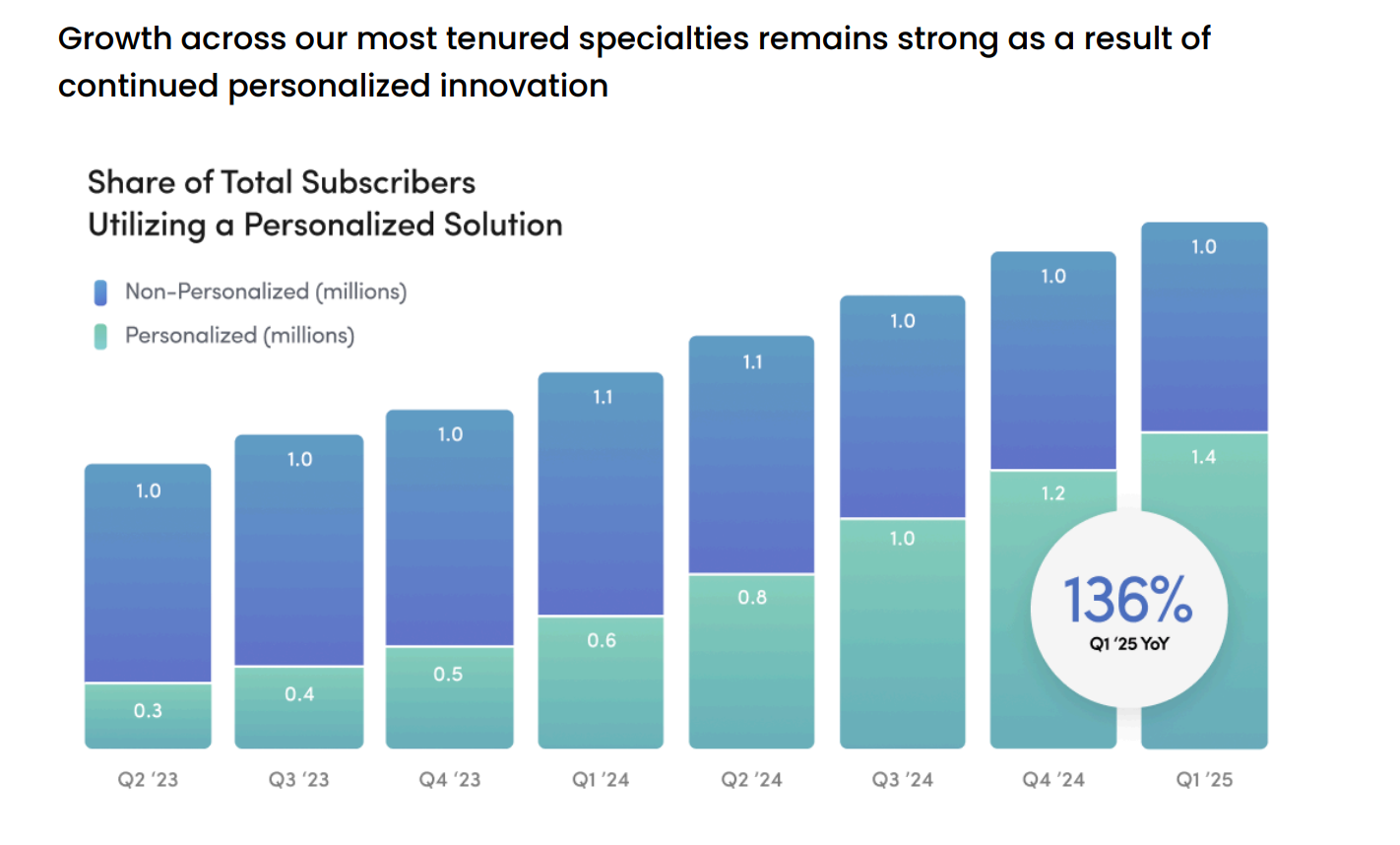
About 4% of men in the US on an ED prescription got it through Hims, a recent Healthline survey found. According to Hims, 40% of the subscribers in its sexual health category are on a personalized prescription, up from about 10% in 2023.
“Generally, people want to take less medication, not more,” Hims Chief Finance Officer Yemi Okupe said at the JPMorgan Global Technology, Media and Communications Conference in May. “The ability to treat multiple conditions in a single solution is something that we’ve seen a lot of success with across our sexual health business.”
Compounding pharmacies, which are either owned and run by companies like Hims and Ro or are independently owned and contract with smaller telehealth companies, take key ingredients in FDA-approved drugs and make custom treatments — often a dose that isn’t made by the manufacturer or one that avoids certain allergens or dyes.
The pharmacies are predominantly regulated by state boards, and the drugs they produce are not FDA-approved, a process that requires lengthy trials of a specific formulation and isn’t built for treatments that are ostensibly tailored for a specific patient.
Compounding pharmacies have received increased attention in the past couple of years as they filled supply gaps for popular weight-loss drugs made by Eli Lilly and Novo Nordisk. The active ingredients in those drugs were in a shortage from 2022 to early this year and during that period, the compounding pharmacies, often spurred by telehealth companies, were allowed by the government to sell discounted copies of the popular drugs.
The big drugmakers, worried that compounding pharmacies were eating away at their market share, responded with an attack campaign calling into question the safety and efficacy of compounded drugs, which companies like Hims and Ro market heavily. (There have been some instances of compounding pharmacies producing contaminated drugs or inaccurate potency.)
Personalized, customized, precise
The FDA has jurisdiction over the advertisements of pharmaceutical manufacturers, but not healthcare providers. It’s not entirely clear which bucket telehealth companies fall into, said Darshan Kulkarni, a regulatory and compliance attorney who represents FDA-regulated companies.
“The question becomes: at what point have you gone past a healthcare provider to becoming a manufacturer?” he said. “And that question is being debated as we speak.”
The FDA so far hasn’t regulated telehealth companies and their advertisements as stringently as it does drug manufacturers. This has resulted in telehealth companies getting more wiggle room in what they can say about their products, an enforcement gap some lawmakers are trying to close.
Hims sells two-in-one pills that it bills as an ED and “testosterone support” treatment, which is tadalafil with zinc and B vitamins. It also sells an ED and “climax control” pill that combines tadalafil with fluoxetine, the active ingredient in the antidepressant Prozac.
While fluoxetine has been shown to help with premature ejaculation, a drugmaker isn’t allowed to market a drug for a use it’s not explicitly approved by the FDA to treat.
If the telehealth companies sold only generic Cialis or Viagra, it would be difficult to squeeze in a margin when those medications are available for lower prices from brick-and-mortar pharmacies or online vendors like Amazon Pharmacy. Selling a unique product is also a useful tool to keep customers onboard.
Telehealth companies spend big on marketing to differentiate themselves from traditional pharmacies. Hims spent about $679 million on marketing last year, equivalent to about 40% of its revenue. Company executives have said personalization helps with adherence to a regimen — or, in other words, customer retention.
Having medicines that taste like candy doesn’t hurt, either. Hims’ drugs are compounded into Hard Mints, which are various ED treatments that come in what resembles an Altoids tin. Ro has two original ED products: Daily Rise, a fruit-flavored gummy, and Ro Sparks, a bright red tropical-fruit-flavored dissolvable with a flame sign imprinted on it. BlueChew’s dissolvable pills come in fruit punch or mint flavors.
“I have total respect for what Hims is doing, but they’re a marketing company,” Mark Cuban, the former “Shark Tank” star and founder of Cost Plus Drugs, told the retail investor blog Hims House in May. “If you’re spending that much on marketing, your customer retention is everything.”