The GLP-1 biz keeps booming while drugmakers and telehealth companies have a food fight
Eli Lilly, Novo Nordisk, and Hims & Hers are struggling to keep investors happy. Lawsuits are flying. And yet, more people than ever are on the blockbuster weight-loss drugs.
Demand for blockbuster GLP-1 drugs has never been higher, creating opportunity for both the drugmakers that developed them and telehealth companies that sell compounded versions. But for these companies’ investors, the plate is half empty.
Shares of Novo Nordisk, Eli Lilly, and Hims & Hers — the publicly traded companies that stand to benefit the most from the GLP-1 explosion — all dropped the day they last reported earnings because Wall Street was unimpressed with their sales or, in Lilly’s case, progress on its next weight-loss product.
It’s a conundrum for the drugmakers and the telehealth companies. Total sales of the four major brand-name GLP-1s eclipsed $15 billion in the latest quarter for the first time ever, continuing a sharp climb. A recent RAND survey showed that a whopping 11.8% of all Americans have used GLP-1 drugs for weight loss.
The drugs have become ubiquitous in America, but you wouldn’t know it by looking at the recent stock price moves of the companies that sell them. Over the past six months, Lilly’s, Novo’s, and Hims’ stocks are down 18%, 34%, and 37%, respectively.
Lilly, which has the newer and more effective drugs on the market, has gained ground on Novo, leading Novo to shuffle executives and take a massive hit to its market capitalization. Both are working on pill versions of their drugs — but Lilly’s late-stage trial results have shown that patients on its pill shed fewer pounds than investors had hoped, which cast a cloud over its otherwise massive earnings and sales beat last quarter.
“The blowout in revenue and earnings per share, that’s great, but that’s all stuff that happened in the last quarter,” Brian Mulberry, an analyst at Zacks Investment Management, said of Lilly’s results. “We want to know where growth is headed.”
Legal threats and gray areas
Hims, meanwhile, is struggling to match the sales boom it saw last year when it was still able to sell exact copies of Novo’s Ozempic and Wegovy. And risk of litigation from Novo — a company 17x its size, even after falling some 40% this year — is looming over it.
Mochi Health, a San Francisco-based telehealth startup of about 270 employees, has gotten a taste of what some investors fear could happen to Hims & Hers. The company has been served with lawsuits by two of the world’s largest drugmakers this year: from Lilly in April and from Novo earlier this month.
The tiny telehealth company is part of a class of venture-backed startups helping patients access knockoff versions of Lilly and Novo’s very popular, but expensive, weight-loss shots. Mochi — along with dozens of other telehealth companies, compounding pharmacies, suppliers, and clinics — has been accused by Lilly and Novo of pushing “personalized” GLP-1s en masse for profit rather than to address specific patient needs.
“I think a lot of newer entrants into this space are being dissuaded from providing this type of care because of the lawsuits they’re seeing,” Mochi CEO Myra Ahmad told Sherwood News. “Lawsuits have a chilling effect on other players in this space.”
Novo hasn’t sued Hims, one of the largest of its peers, despite accusing it of “illegal mass compounding and deceptive marketing” when it called off its partnership with Hims in June. Online betting markets peg the likelihood of Novo suing Hims by the end of the year at about 64%, up from about 25% in June.
“A lot of the goal of lawsuits like this is to make companies stop practicing, and it’s difficult to make a large company stop operating entirely, especially one that’s public and reporting earnings on weight loss,” Ahmad said. “I suspect a lot of the focus for Novo is to make smaller practices go away.”
Compounders were supposed to stop mass producing copies of GLP-1s earlier this year once the drugs were no longer in a shortage, but some continue to advertise “personalized” or “microdosed” versions that are, in theory or in practice, slightly different than the meds the big drugmakers sell. It’s hotly debated whether the way they’re doing it is legal, and the Food and Drug Administration hasn’t yet weighed in.
Drugmakers and their allies say startups like Mochi and Hims are selling knockoffs en masse under the guise of “personalization,” defanging the drugmakers’ patents and poking holes in a system meant to incentivize drug discovery, which is expensive. Drugmakers ask: if telehealth companies are selling something that is medically necessary, wouldn’t providers be prescribing those to insured patients at similar rates?
Those in defense of compounders say drugmakers — a group of companies that aren’t particularly popular in a country where frustrations with the healthcare system have turned violent — are picking on small companies that are trying to give patients an affordable option. They ask: if drugmakers don’t want people flocking to knockoffs, why don’t they make their drugs more affordable?
Novo announced on August 5 that it sued about a dozen companies, Mochi among them, that it says are unlawfully selling knockoffs of its blockbuster diabetes and weight-loss drugs. Lilly fired a round of lawsuits that included Mochi in April.
Like Hims and others, telehealth companies focused on GLP-1s bring a Silicon Valley approach to healthcare. They don’t have the same R&D costs or regulatory burdens as pharmaceutical companies, and their risk tolerance is much higher than that of companies that are more than a century old.
Mochi was founded in 2022 with an initial investment from venture capital firm AngelList; Hims was born out of a startup incubator, Atomic Labs. Ahmad declined to give concrete figures but said revenue was “as up and to the right as you can go” and that Mochi is cash-flow positive. Hims had also reported consistently swelling sales and profits until its most recent quarterly report.
In response to the lawsuit from Lilly, Mochi argued that only the FDA has the authority to regulate drug quality, not drugmakers. Telehealth companies and drugmakers accuse each other of trying to meddle in decisions ultimately made by healthcare providers. Hims CEO Andrew Dudum has emphasized in recent months that compounding is a question of allowing providers to exercise their own independent judgment.
The California Medical Association, a trade organization representing doctors, filed an amicus brief in support of Lilly, saying that Mochi’s business model allows nondoctors to influence prescribing decisions of physicians on their platform. Ahmad, who did clinical research before leading Mochi, has a medical degree but is not a licensed physician.
There are two kinds of compounding pharmacies: 503B and 503A. The first is primarily regulated by the FDA and is meant to produce large batches of drugs. A 503A pharmacy, which is primarily regulated at the state level, produces drugs that are customized for specific patients.
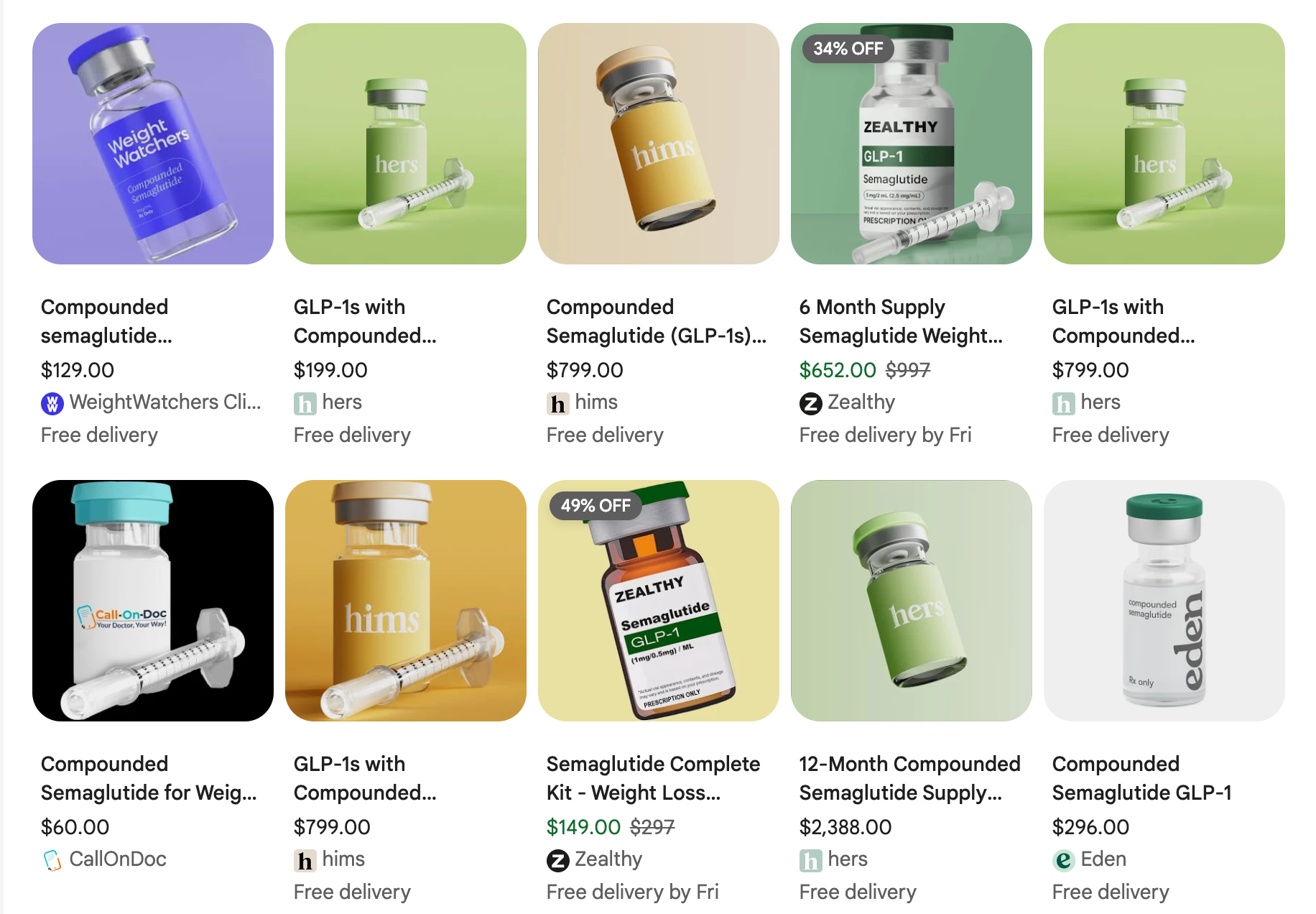
Before GLP-1s, personalizing generally meant things like removing a dye in a pill that a patient is allergic to. But some telehealth companies are advertising personalized GLP-1s in noncommercial doses or paired with other supplements — which happens to be a cheaper way for patients to access popular drugs — blurring the line between being a 503A and 503B.
“I can tell you based on guiding some of these companies, they don’t know the difference. They just want to know, ‘Can I do it or can I not?’” said Darshan Kulkarni, a regulatory and compliance attorney who represents FDA-regulated companies.
Kulkarni said if doses are truly customized for a particular patient, there’s nothing wrong with doing it. But if customization is just a pretext for selling a particular product, compounders may be exposing themselves to actions from the Department of Justice, the FDA, or drugmakers.
“I could see courts definitely hold you responsible for it, and that could shut down your business very quickly,” Kulkarni said.