The vending machine industry is getting hot
Consumer desire for fast, healthy meals is ushering in a new era of machine-ready eats.
Every nation gets the vending machines it deserves. In 2017, a French seaside town set up a machine to give out oysters on the go, shucking not included. In Japan, which has one machine for every 23 people, everything from ramen and sake cups to dashi broth can be purchased with a crisp yen note. In the US, one could easily point to the ability to get ammunition dispensed in a supermarket as a fitting national symbol.
Vending machines are markers of our culture’s obsession with productivity and saving time. But the basement machines that proffer potato chips and peanut M&M’s are outdated technology. Instead, the industry is seeing a push toward healthier and more premium ready-made meals. And consumers are liking what they see.
Machines like the ones from Farmer’s Fridge, a Chicago-based firm with over 1,600 refrigerated salad-dispensing machines nationwide, are “more like a restaurant in the fast-food sense than they’re not,” Luke Saunders, the company’s CEO, said. “With all the investment in automated kiosks and ordering on phones, McDonald’s is more like a vending machine than it used to be.”
As those lines blur, the only given is that it’s a prime moment for the sector to find ways to make better food a reality. The time savings that the machines offer is worth a lot to the vast array of Fortune 500 companies and mom-and-pops operating them. The National Automatic Merchandising Association found that the $18.2 billion industry maintains 3 million machines, or 15 for every fast-food restaurant in the country. While the typical machine generates only $525 a month in revenue, stocking salty snacks and soda has become a trendy side hustle: a recent Wall Street Journal article found vending-machine entrepreneurs swapping tips on YouTube.
And the evolution from shelf-stable snacks to fresh, hot meals has opened another avenue for growth and profit, helping the industry recover and exceed its prepandemic revenue levels.
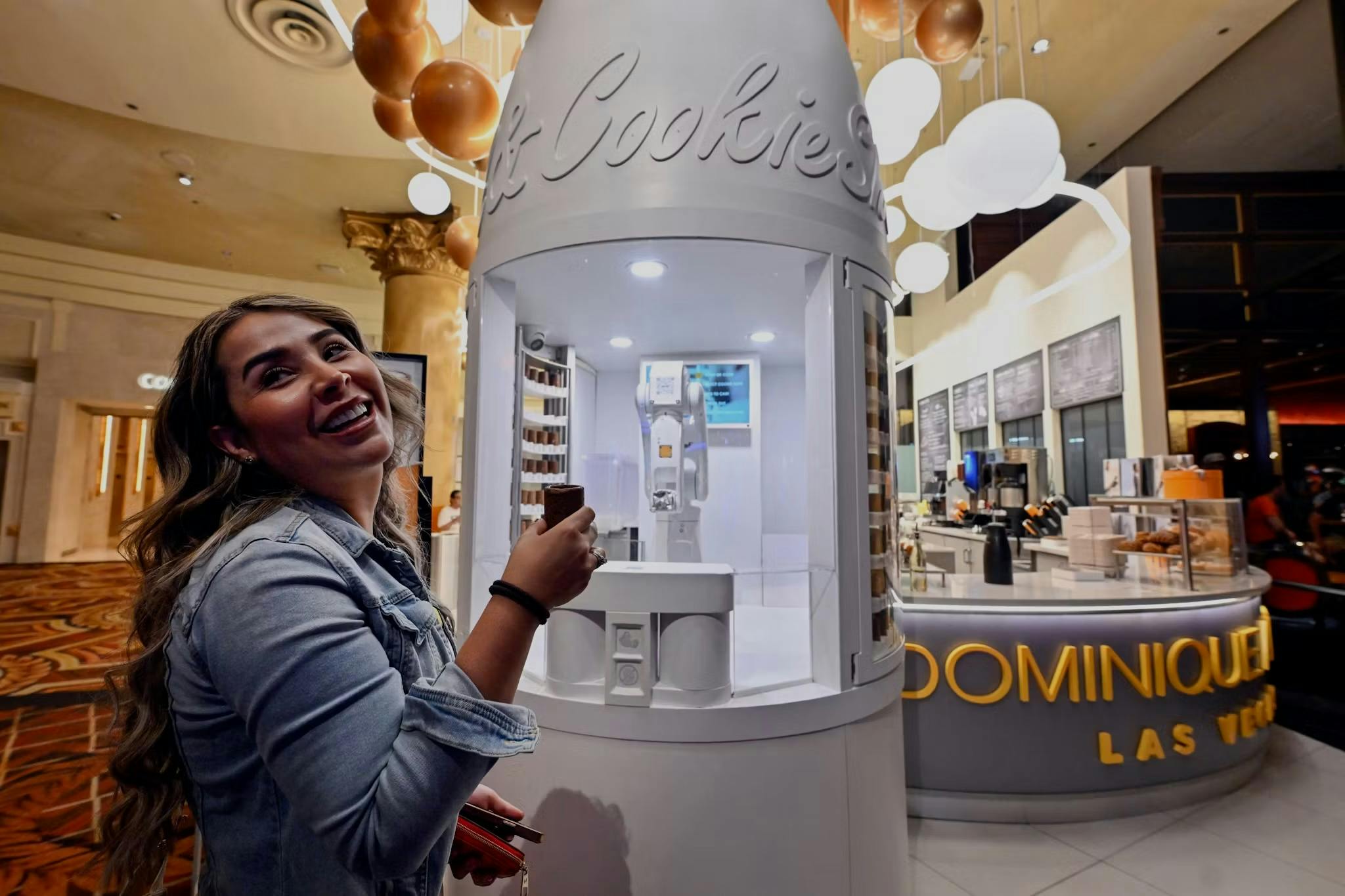
The hot-food vending-machine sector in the US and Canada is worth $4.8 billion, Future Market Insights data shows. That figure is set to double in the next decade, with a significant assist from machines that offer better fast-dining options. There are machines that prep and dispense everything from pastas and pizzas to bao buns that range from $35,000 to $50,000 apiece. RoboBurger, a “fully autonomous robotic burger machine,” spits out a burger in four minutes. (Interested parties can lease a machine for $3,000 a month.)
Byte, a San Francisco-based firm that helped usher in grab-and-go fridges in Silicon Valley, started testing an evolved version of a vending machine in 2015. It stocked its refrigerated smart kiosks with wraps, breakfast burritos, and other healthy items at hundreds of tech offices. The trial run was a success and the firm began selling their machines nationwide. Each fridge or freezer costs $5,500, with items ranging from $13 salads to $8 wraps. Some companies subsidize these healthy meals, so prices can vary widely.
“The public needed something better than the candy bars and chips and sodas, and that’s what this new generation of operators provides,” Lee Mokri, the founder of Byte, said.
The country’s labor shortage has also driven the growth of the vending industry. In many institutional settings, including hospitals and universities, hiring someone to staff a cafe for night owls is ever more challenging, and vending machines can fill the void. Mokri said he’s seeing universities shutter cafeterias and cafes and replace them with banks of smart fridges.
Farmer’s Fridge has applied technology to nearly the entire process of keeping its fridges, which retail for $10,000 apiece, running. While the machines advertise fresh items, including guacamole, the company’s logistics software ensures that only 6% of the items stocked are composted as food waste. The firm’s single kitchen, a 100,000-square-foot refrigerated box near Chicago’s Midway Airport, processes crates of lettuce, avocados, and 150 other ingredients to make items like blueberry chia overnight oats and Napa chickpea wraps, with the pesto pasta bowl remaining their most popular dish.
There’s no standard day in the life of one of these machines, since the locations and usage patterns vary so much. A busy airport fridge might be restocked twice a day, since they’re typically slammed during late-night hours when they’re one of the few options available. A slower fridge in a hospital might need refreshing only every few days. There’s even one at Rikers Island, New York City’s prison island in the East River.
Big players in the food-service industry are betting on the benefits of self-service and automation. Sodexo inked a deal with Automated Retail Technologies to deploy Just Baked food-service kiosks at thousands of hospitals, schools, and company cafes. Both Sodexo and competitor Aramark have been on a vending-machine buying spree, acquiring smaller firms because the vending and micromarket segments of their earnings provided “significant, impactful growth,” CEO Pat Liebler said. During an earnings call last year, COO Carl Mittleman said tech and AI-enabled micromarkets “have been very popular in our US business for years, but have really grown a lot.”
Benoit Herve, CEO and founder of LBX Food Robotics, started in the US with a vending machine that dispensed hot baguettes for $3.75, but gradually created a series of devices that can dish out pizza, croissants, hot meals, and pasta dishes 24/7. He says his firm has doubled in growth every year for the last few years.
“The two major reasons why people are going to autonomous food is, first, they don’t have the people,” he said. “We have nearly full employment, so who wants to work at 2 in the morning selling a sandwich at an airport? And you have equipment that’s probably 10x less expensive than it would cost to set up and run a small cafe.”
The food-service industry greatly benefits from extending the hours it can move product — think juice companies setting up machines in gyms, or small restaurants or bakeries offering meals or pies in multiple locations. In Clanton, Alabama, a small bakery, Pies By Mike, has its own vending machine and self-service pie room available around the clock. Mokri said he’s seeing small restaurants use smart-fridge options to expand their reach and compete better against national chains.
Corporate cafes and food-service operations have also adapted to appease a hybrid workforce. While office catering has increased more than 6%, with bosses betting free meals can lure workers back, on-site food service and other perks have been cut back, Mokri said, who argues that firms see fresh-food vending machines as a way to cut labor costs. But labor remains a significant factor for the smart-fridge operators: Farmer’s Fridge pays delivery staffers $20 to $25 an hour.
New robotic cooking devices have integrated artificial intelligence and machine learning, and optimized micromarket setups can automatically bill customers for the items that are removed from shelves. But the biggest tech advances in the vending-machine industry include cashless payments, the rapidly declining costs of digital display technology, and more streamlined logistics and real-time inventory management to cut down on food waste, Saunders said. Firms like Redbox and Coinstar walked so a new generation of touch-screen machines could run.
One market researcher, Adroit, predicts the fresh-food vending segment will reach nearly $8 billion by 2029. That sustained growth will offer many more ways to dine fast without making a sacrifice in quality, at least from a nutritional perspective.
“We’re all working too much; we don’t have enough time to cook anymore,” Saunders said. “But what customers are caring about is what’s going into their body.”
Patrick Sisson is a reporter covering cities, businesses, and technology.