China is building a video game juggernaut. It’s also a silo.
Chinese developers are hungry for world domination, but they’re also becoming less international. Can they keep making hits while ignoring the rest of the world?
In case there was any question, we are firmly in the era of Chinese gaming.
Remember “Black Myth: Wukong,” one of the most popular Steam games of all time? As we wrote last year, the game was entirely developed in China. Meanwhile, Chinese developer MiHoYo has cornered an entire market with games like “Genshin Impact” and “Zenless Zone Zero.” The newest salvo from across the Great Firewall is “Marvel Rivals,” developed by NetEase, a Chinese tech giant that’s spent the past few years investing tens of billions of dollars into the global gaming industry.
But it’s not as simple as saying Chinese game companies are releasing blockbusters and raking in billions. They definitely are — “Marvel Rivals” made an estimated $136 million in its first month. But the trajectory of the game paints a much more complicated picture of China’s gaming industry.
Yes, Chinese developers are hungry for world domination, but they’re also clearly turning inward and becoming less international. This leads to the question: can China keep making hits while ignoring the rest of the world?
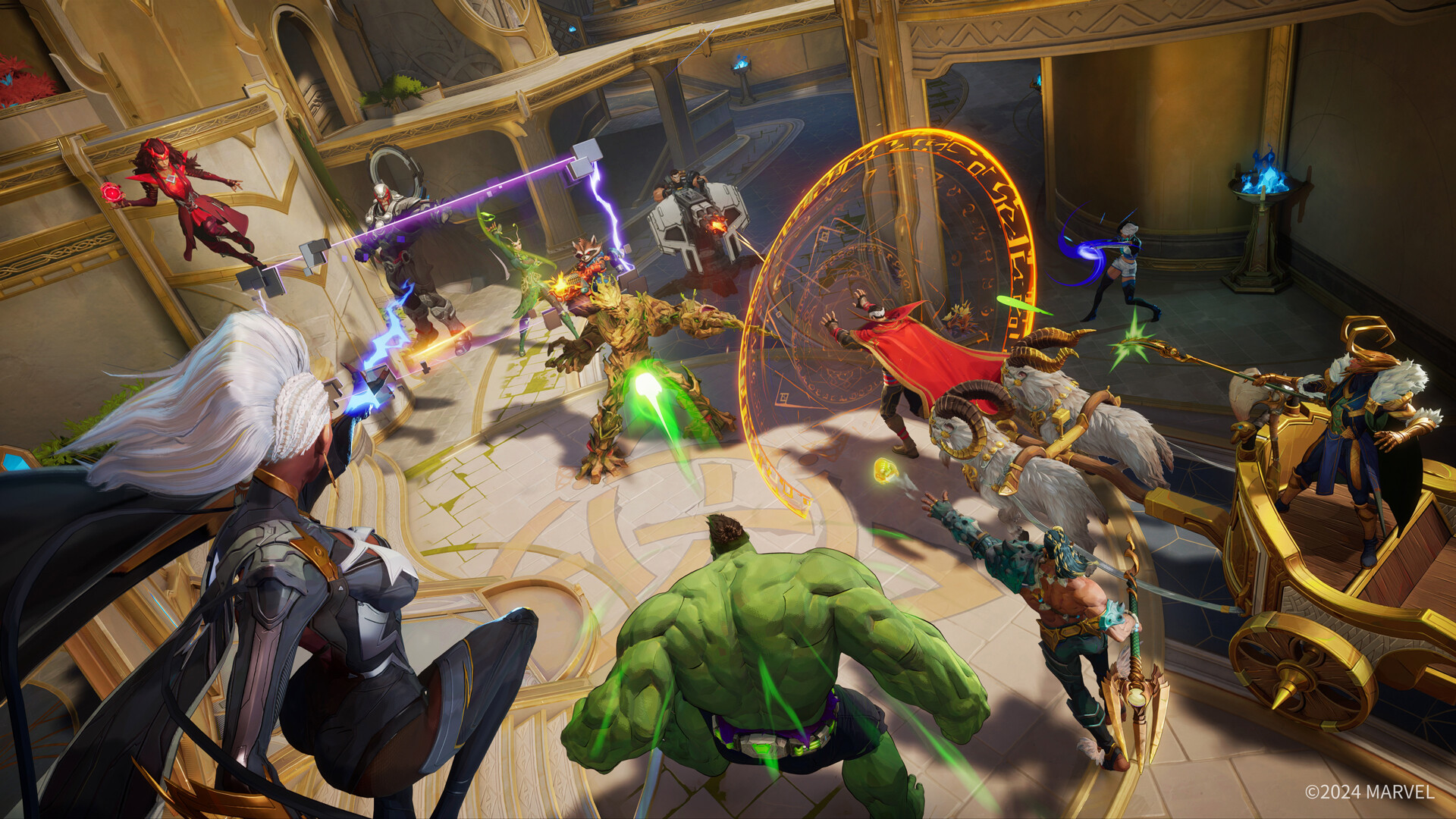
“Marvel Rivals” was released on December 6 and became an immediate smash hit. The game is a multiplayer shooter where players fight in teams made up of characters from Marvel comics, each of whom have unique abilities based on their superpowers. According to the developers, 10 million players tried the free-to-play game in its first three days, and its Steam figures alone were enough to mark it as one of the platform’s most popular games ever. In its first month, the game never fell below 300,000 concurrent players on Steam. Those numbers increased once the game began its first “season,” reaching an all-time high of over 600,000 people playing the game at once.
Impressive, for sure, but not super out of the ordinary for a buzzy new game — especially one using Marvel’s intellectual property (which is owned by Disney). And “Marvel Rivals” has never reached the heights of “Black Myth: Wukong,” which launched last year to over 2 million simultaneous players. But “Wukong” was a single-player game, which tends to mean gamers will move on once they’ve completed the story. Within a month, playing averages for “Wukong” on Steam had dropped by 65%.
Multiplayer games don’t have the same kind of dramatic swings, but they also usually can’t sustain the same popularity over time. For instance, in the past year, “Helldivers 2” and “Palworld” have both experienced similar drops after their initial success, losing over 50% of average players within two months. In the same time frame, however, “Marvel Rivals” has lost only about 25% of its players and is still in the echelon of Steam’s most popular games. Some shrinking is inevitable, but it seems the game is here to stay.
There are a few reasons for the game’s quick ascent. The aforementioned Marvel IP is definitely a factor. Another is the game’s niche. It’s effectively an updated version of once popular “hero shooters” like “Apex Legends” and “Overwatch,” managing to earn money faster than either game despite charging less for key microtransactions like its “Battle Pass” system. “Overwatch” in particular has become a common point of comparison, as its community has never recovered from the compromised rollout of its not-quite-sequel. And “Marvel Rivals” has learned from its worst mistakes and avoided issues like paywalling characters. Instead, it makes money from custom skins and battle passes.
There’s also the China factor. A 2022 Reuters report outlined how NetEase and WeChat developer Tencent had both started new game companies around the world and significantly invested in others. In May of that year, Bloomberg revealed that NetEase wanted a financial stake in a quarter of all global AAA releases.
Less than three years later, they seem to be retreating. Last August, NetEase revealed it was significantly decreasing its investments in Japanese gaming, with signs Tencent was planning on following suit to focus on domestic efforts. And on February 18, shortly after reports that China accounted for over 25% of first-month revenue for “Marvel Rivals,” the developer confirmed news that it had fired an entire American team that worked on the game.
In a statement, NetEase said the firing was done to “optimize development efficiency” and that the game’s primarily Chinese team would be “investing more, not less” into the game, which VentureBeat described as a strategic pivot away from developing games anywhere but China. This seems to be partially motivated by the government’s strict import policies, which require approval for each foreign game that gets sold in China. But NetEase, it seems, is also betting against the (non-Chinese) video game industry in general.
In a self-fulfilling prophecy, these bets are contributing to a general downturn in the industry. Sources estimate that over 14,000 developers around the world were laid off in 2024, the worst year on record and a 40% increase from 2023. The layoffs have affected every sector of gaming, with 41% of development teams reporting losing personnel.
That makes NetEase’s bet look pretty good — and has likely revealed the playbook for Chinese developers going forward: cut off spending basically everywhere outside of China, focus on games that work in China first and everywhere else second, and wait out the slump.
And, if the Steam metrics for “Marvel Rivals” are anything to go by, the company has a big enough player base now to weather the storm.
Go deeper on gaming:
Garbage Day is an award-winning newsletter that focuses on web culture and technology, covering a mix of memes, trends, and internet drama. We also run a program called Garbage Intelligence, a monthly report tracking the rise and fall of creators and accounts across every major platform on the web. We’ll be sharing some of our findings here on Sherwood News. You can subscribe to Garbage Day here.