Business
US-TRANSPORT-AUTOMOBILE-TESLA-MUSK
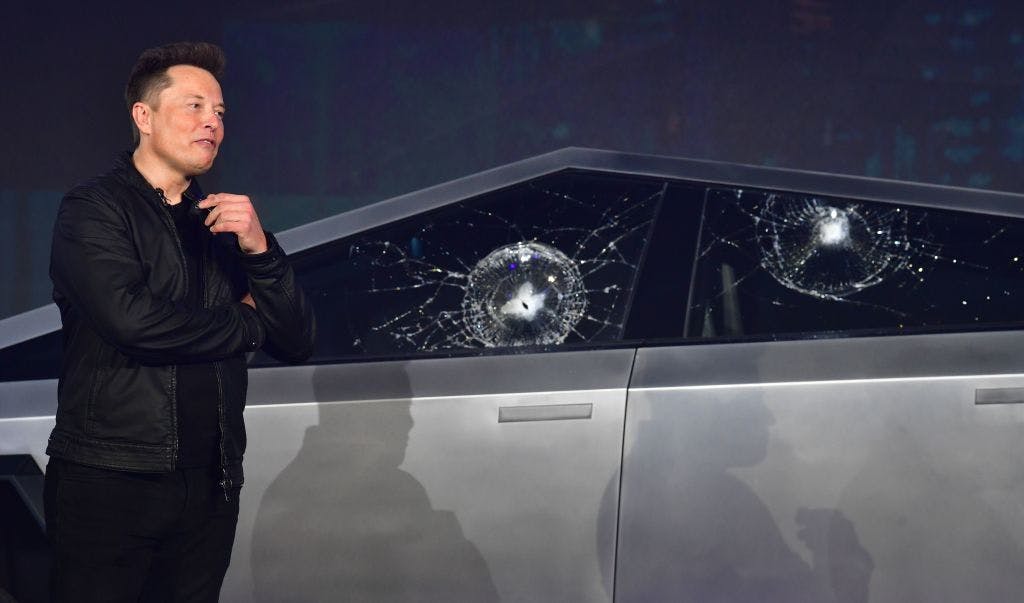
(Frederic J. Brown/AFP via Getty Images)

Tesla’s terrible 2024 isn’t boding well for 2025

A look back at last year’s fundamentals doesn’t make this year look so hot.

So much of Tesla’s swollen stock price is predicated on its potential future — fully self-driving cars, autonomous taxis, humanoid robots, AI, its CEO ingratiating himself so much with the future president that he won’t go through with policies that directly harm it. But looking back on what it actually did last year, things don’t look so hot.

“2024 fundamentally has been an utter disaster for Tesla,” CEO and founder of GLJ Research Gordon Johnson told Sherwood News. “The reality is their fundamental business is imploding.”

Tesla has long been a stock that doesn’t trade on fundamentals, Morningstar strategist Seth Goldstein said, noting that for Tesla, 2024 was “not a great year — at best an OK year.”

“As long as there’s market enthusiasm for upcoming businesses — and Musk has appeared to bet the company on the successful launch of the Robotaxi and full self-driving software — I think we will see the share price respond accordingly,” Goldstein said.

The stock had been up more than 70% since Trump, whose campaign Musk heavily contributed to, won the election, though recently it has come down a bit.

It should also be noted that Musk has a long history of promising things that haven’t actually come to pass, including unassisted full self-driving and a solar business. Its existing features don’t always work as promised, either, as the feds are currently investigating its Actually Smart Summon (A.S.S.) feature. And its future products are unproven.

That makes Tesla’s fundamentals especially important. While Tesla’s full 2024 financial picture won’t be out till the end of the month, looking at the first three quarters as well as analyst estimates, it’s pretty disappointing: its annual deliveries declined for the first time in more than a decade, discounts are eating into its revenue, and margins were down.

It looks like that reality might be starting to kick in for some. Today Bank of America downgraded Tesla’s stock recommendation from “buy” to “neutral” thanks to the company’s already sky-high valuation and the high risk on whether it’ll actually be able to execute its plans.

A company that’s priced for exponential growth just saw a decline

Tesla’s annual delivery numbers came out last week and they missed both analysts’ and Tesla’s own expectations, shrinking for the first time since the company went public, from 1.81 million in 2023 to 1.79 last year.

“A company valued for exponential growth just went ex-growth,” Johnson said. “In any normal time a company valued at this multiple that saw its units decline would get annihilated.”

As much as Elon Musk tries to shift investors’ focus to the company’s future products, the fact remains that electric vehicles are still its main revenue source, representing about 80% of its revenue last quarter.

Morgan Stanley blamed the miss on a “relatively aged product and increased availability of lower priced competition globally.” Meanwhile, most other car companies sold more electric vehicles than normal. Unlike Tesla, the couple of European automakers who experienced a dip in EV sales saw their stocks go down.

Even Tesla’s latest model, the much hyped Cybertruck, seems to have had lackluster sales. The company claimed to have more than a million reservations for the Cybertruck, which came out in the beginning of 2024, but only managed to sell about 40,000 before letting people without reservations buy the truck, according to an estimate by EV publication Electrek. Electrek also suspects that Cybertruck sales declined in Q4 versus Q3 despite opening up reservations and offering cheaper models.

While Tesla has delayed its affordable cars, its regular vehicles are going for less

Despite Musk’s preference for future products, such as an affordable Cybercab and a less expensive Model Y, it’s not as if Tesla isn’t trying its best to sell its existing cars. The company has been offering numerous discounts on its existing fleet as well as pushing zero percent financing heavily last year. It doesn’t appear to have helped move cars — just push down how much the company is making on those cars.

On average, its vehicles were going for $41,000 a piece, according to estimates from FactSet last quarter — about half what they once did.

The company’s margins aren’t what they used to be

Despite a jump last quarter, the company’s operating margins aren’t what they used to be. Analysts are expecting 10% operating margins in Q4, according to Bloomberg data, down from 16% a couple years ago.

That’s despite strong regulatory-credit sales. Tesla notably gets a huge chunk of its profits from selling regulatory credits to other automakers. Last year’s discounts won’t make things better.

Going forward, things could get worse if Trump goes forward with his plan to lower emissions standards. If other companies no longer have to buy those regulatory credits off electric-only Tesla, it would be a huge dig at its margins.

Johnson believes the company’s margins are in for a hugely negative move: “Their margins are likely going to show a bloodbath drop.”

No one actually knows what will happen with Tesla’s future. What we do know is what’s already happened, and for Tesla that doesn’t look great.

More Business

See all Business
business

JM Smucker says it sold $1 billion worth of Uncrustables in FY2026

After years of booming sandwich sales, JM Smucker has finally earned a billion-dollar crust.

On Tuesday, the company reported results for fiscal year 2026, highlighting better-than-expected profits driven by higher prices for coffee and sweet baked goods. However, at another point on the earnings call, CEO Mark Smucker pointed to one particularly jammy figure: in line with previous forecasts, the company sold $1 billion worth of its (almost always) crustless sandwiches, Uncrustables, in the last year alone.

business

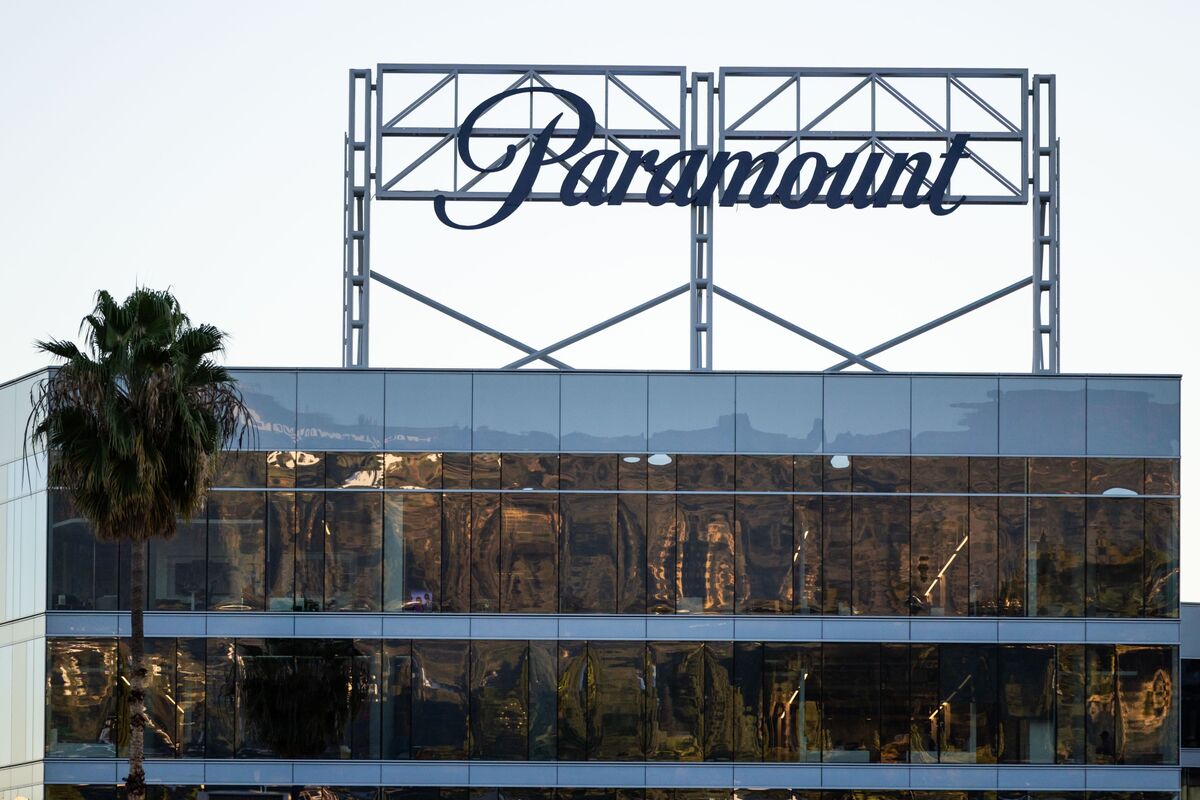
Paramount reportedly offers concessions to resolve multistate antitrust investigation

Paramount has reportedly offered up some concessions in an effort to prevent an antitrust lawsuit by California and about 10 other states, according to Bloomberg reporting on Monday.

Reuters first reported on the potential suit from a group of unnamed states last week, which could throw a wrench in Paramount’s plans to buy rival Warner Bros. Discovery in a Hollywood megamerger.

The list of concessions is unknown, though Bloomberg previously reported that Paramount is open to divesting some of its kids TV assets to appease EU regulators.

Late last month, reports said US regulators appeared likely to approve the $110 billion merger, following a meeting between Paramount CEO David Ellison and DOJ antitrust staffers.

The list of concessions is unknown, though Bloomberg previously reported that Paramount is open to divesting some of its kids TV assets to appease EU regulators.

Late last month, reports said US regulators appeared likely to approve the $110 billion merger, following a meeting between Paramount CEO David Ellison and DOJ antitrust staffers.

$98B ⛽

The IATA released its latest financial outlook for the airline industry over the weekend, forecasting a $98 billion jump in the sector’s collective fuel bill. The world’s largest trade group representing airlines expects the oil spike to halve profits by 49% from last year to $23 billion.

The group also expects profit margins to halve year over year, falling from 2025’s 4.2% to 2%. Still, revenue is expected to climb to $1.17 trillion from $1.07 trillion.

A surge in the cost of jet fuel has rocked US and global airlines this year, leading Delta Air Lines, United Airlines, American Airlines, Southwest Airlines, JetBlue, and others to raise fares and ancillary charges like bag fees. Low-cost carriers, which operate on smaller margins, have been squeezed the hardest, resulting in Spirit’s shutdown.

“It’s a tough year for all airlines, especially those whose balance sheets had not yet recovered from COVID. And, of course, for those operating in the Gulf,” said IATA Director General Willie Walsh, who added that demand is holding up and about half of passengers expect to spend more on travel this year. “That bodes well for a strong northern summer peak season. The big unknown is how long travelers and shippers can tolerate the higher costs of connectivity.”

Hollywood Exteriors And Landmarks - 2025

1 year into the Switch 2, we might’ve seen the top of the console market

The Switch 2 launched on this day in 2025. Amid a rough year for consoles, Nintendo has logged a good one.

business

GM has reportedly rehired more than 100 former Cruise employees, 18 months after shuttering the robotaxi unit

GM has rehired more than 100 employees it let go early last year when it shuttered Cruise, its former robotaxi business, according to reporting by The Information.

The hiring spree, which also includes employees from Nvidia and Uber, is geared toward ramping up GM’s plans for personal-use self-driving vehicles and not robotaxis. The former had been the focus of Cruise, prior to GM shuttering it in 2024.

Reporting last fall revealed that GM was attempting to rehire some former Cruise employees, but the scope of that effort wasn’t clear. More than 1,000 employees were laid off when the automaker scrapped Cruise, which it invested $10 billion into.

Google’s Waymo, Cruise’s former chief rival, is now worth $126 billion after a $16 billion funding round earlier this year. The company says it’s serving 500,000 paid robotaxi rides per week in the US.

Reporting last fall revealed that GM was attempting to rehire some former Cruise employees, but the scope of that effort wasn’t clear. More than 1,000 employees were laid off when the automaker scrapped Cruise, which it invested $10 billion into.

Google’s Waymo, Cruise’s former chief rival, is now worth $126 billion after a $16 billion funding round earlier this year. The company says it’s serving 500,000 paid robotaxi rides per week in the US.

Latest Stories

Sherwood Media, LLC and Chartr Limited produce fresh and unique perspectives on topical financial news and are fully owned subsidiaries of Robinhood Markets, Inc., and any views expressed here do not necessarily reflect the views of any other Robinhood affiliate, including Robinhood Markets, Inc., Robinhood Financial LLC, Robinhood Securities, LLC, Robinhood Crypto, LLC, Robinhood Money, LLC, Robinhood U.K. Ltd, Robinhood Derivatives, LLC, Robinhood Gold, LLC, Robinhood Asset Management, LLC, Robinhood Credit, Inc., Robinhood Ventures DE, LLC and, where applicable, its managed investment vehicles.